Storming Heaven: LSD and the American Dream
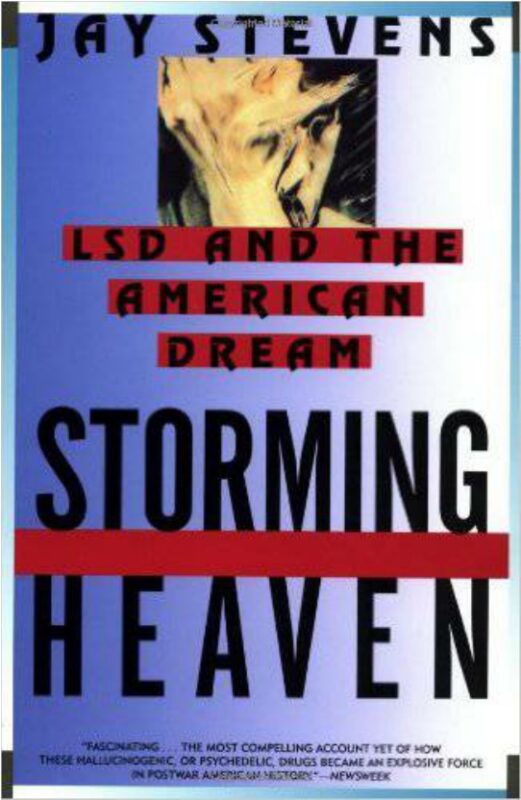
Storming Heaven: LSD and the American Dream by Jay Stevens ignites an investigation into how a molecule synthesized in a Swiss laboratory reoriented the American imagination. Hofmann’s accidental discovery of lysergic acid diethylamide in 1943 catalyzed a seismic shift in both scientific inquiry and cultural narrative. Stevens traces the molecular thread from the laboratories of Sandoz Pharmaceuticals in Basel to the pulse of San Francisco’s countercultural awakening. With clarity and urgency, he charts the confluence of chemistry, psychology, and American longing, arguing that the LSD revolution—far from a historical curiosity—redefined the scope and stakes of the American Dream.
Origins: The Swiss Catalyst
Albert Hofmann, searching for new medicines from the ergot fungus, synthesizes LSD-25. He absorbs a trace, experiencing intense sensory phenomena. Compelled by his experience, he repeats the experiment on April 19, 1943, measuring out 250 micrograms and embarking on the bicycle ride that etches “Bicycle Day” into psychedelic history. Hofmann’s methodical approach, rooted in twentieth-century scientific rigor, yields a compound with staggering potency. The event reverberates through scientific and cultural circles, compelling researchers to explore not only the physical effects but the potential for probing consciousness itself.
Early Research: From Lab to Clinic
Pharmacologists at Sandoz investigate LSD’s physiological effects on animals and humans. Werner Stoll, a psychiatrist, observes that small doses facilitate the emergence of repressed memories in therapy. Reports multiply: LSD grants access to realms of the psyche that traditional analysis cannot touch. Sandoz markets the compound as Delysid, supplying it to clinicians and researchers across Europe and America. Psychiatric pioneers deploy LSD as a tool for understanding schizophrenia and other altered states, positing that the drug’s effects simulate certain psychoses, thus unlocking fresh routes for diagnosis and treatment.
Cultural Crossroads: The Rise of Psychedelic Consciousness
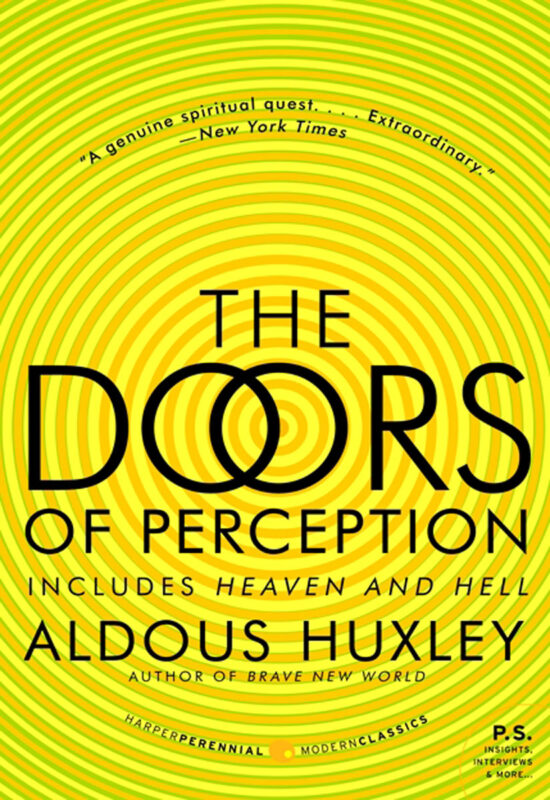
Stevens chronicles the American postwar climate—a nation intoxicated by progress and haunted by existential anxiety. A generation of scientists, poets, and mystics yearn to transcend the psychic confines of the “normal.” Huxley, Ginsberg, and Leary seize upon LSD’s potential, reconfiguring it as a means of awakening. Huxley frames the molecule as a doorway to the “antipodes of the mind,” advocating controlled experimentation for self-knowledge. The intellectual ferment of the 1950s and 1960s produces a matrix in which scientific investigation converges with spiritual longing.
Harvard and the Quest for Higher Mind
At Harvard, Timothy Leary and Richard Alpert initiate the Psilocybin Project. Their research, at first sanctioned, quickly accelerates beyond institutional limits. Leary extols LSD as a catalyst for personal and collective transformation. The slogan “Turn on, tune in, drop out” emerges as both invitation and provocation. Leary’s persona fuses evangelism with showmanship, driving national fascination and anxiety. The boundaries between laboratory, church, and commune blur. Stevens foregrounds the debate between Leary’s charismatic advocacy and institutional resistance, asserting that the resulting friction pushes the psychedelic conversation onto the national stage.
Counterculture: Haight-Ashbury and the New Tribalism
The Haight-Ashbury district crystallizes into the world’s most famous psychedelic neighborhood. Psychedelics, communal living, and avant-garde art interweave, forming a living laboratory for a new vision of society. Musicians, poets, and activists coalesce, forging a language of liberation and self-discovery. The Human Be-In at Golden Gate Park, January 1967, signals a high-water mark. Ginsberg, Leary, and countercultural leaders gather thousands in a utopian pageant, linking the drug experience to collective consciousness. The event’s ecstasy—described in Stevens’s detailed reportage—embodies a generational wager: that consciousness expansion can yield social harmony, creativity, and transcendence.
Psychedelic Science and the Search for the Sacred
Researchers dissect the mechanisms by which LSD alters perception and personality. Some describe the “ego-dissolving” effect, the emergence of archetypal imagery, and experiences of unity indistinguishable from those reported in mystical traditions. Psychologists debate the role of set and setting, the interaction of expectation, environment, and neurochemistry. Mystics, citing ancient traditions, declare the visionary state accessible to anyone willing to risk dissolution and rebirth. The scientific establishment, both intrigued and unsettled, launches conferences, symposia, and controlled studies, as well as risk warnings. The dialogue between empiricism and spirituality animates Stevens’s narrative, driving the reader through a labyrinth of revelation and peril.
The Politics of Consciousness: Law, Order, and the Culture War
National attention sharpens. Media reports dramatize both the promise and the perils of the psychedelic wave. Parents, educators, and lawmakers voice alarm over the rapid spread of LSD use among the youth. Political actors, sensitive to the shifting moral landscape, pursue prohibition. Congressional hearings, medical advisories, and popular exposés shift public sentiment. President Lyndon Johnson signs legislation criminalizing LSD. The new laws drive psychedelic research underground, but the social movement persists, reframed as resistance. Stevens identifies the moment as a cultural inflection point: the state asserts authority over consciousness itself, and the American Dream absorbs a new dialectic—between the sanctioned real and the forbidden visionary.
Decline, Fragmentation, and the Legacy
The Summer of Love fades. The pressures of criminalization, commercial exploitation, and internecine conflict splinter the movement. Incidents of psychological crisis, exploitation, and violence tarnish the utopian promise. Leaders scatter—some retreating into spiritual communities, others rejoining mainstream professions. The popular narrative shifts: the dream of universal enlightenment recedes, replaced by cautionary tales and nostalgia. Yet Stevens contends that the molecular revolution’s imprint persists. Researchers continue to pursue the therapeutic and cognitive potential of psychedelics. Spiritual seekers and artists mine the psychedelic legacy for inspiration. The debate over personal freedom, societal norms, and the nature of reality endures, enriched by the audacity and failures of the psychedelic era.
The American Dream, Transfigured
The American Dream, in Stevens’s telling, acquires new contours as LSD challenges received narratives of success, progress, and happiness. The dream becomes mutable, encompassing visions of transcendence, community, and evolutionary leap. Stevens argues that the convergence of chemistry, consciousness, and culture exposes both the strengths and fragilities of the American project. The search for meaning, intensified by psychedelics, becomes a project of personal agency and collective experiment. The very structure of ambition, identity, and hope undergoes transformation.
Innovation and Experimentation: Art, Music, and Technology
The psychedelic movement shapes the cultural output of a generation. Musicians from the Grateful Dead to the Beatles incorporate LSD-inspired themes into song, composition, and performance. Visual artists experiment with new media, color, and form, seeking to capture the ineffable geometries of the trip. Writers channel the altered state into poetry and narrative, expanding the language of experience. Stevens tracks these influences with precision, showing how the chemical imagination pervades painting, sculpture, literature, and cinema. The creative ferment catalyzes innovations in technology and design, seeding developments in computing and multimedia. The pursuit of heightened awareness fuels a culture of experimentation across domains.
Consciousness and Its Frontiers
Stevens explores the dialogue between neuroscience and mysticism. Researchers probe the neural correlates of altered states, mapping the brain’s response to LSD. The results challenge fixed conceptions of mind, suggesting plasticity, multiplicity, and interconnection. Spiritual teachers draw on ancient wisdom traditions, framing the psychedelic experience as a rite of passage and awakening. This confluence produces new forms of therapeutic practice, integrating talk therapy, meditation, and guided psychedelic sessions. The project of self-exploration, begun in laboratories and communes, enters mainstream psychology and medicine, influencing protocols for addiction, trauma, and depression.
The Enduring Questions
Stevens frames the psychedelic era as a chapter in a larger American quest: What lies at the frontier of the mind? Can individuals and societies transform through conscious intervention? What costs and responsibilities arise when humans claim the power to redesign perception and identity? The questions reverberate through subsequent generations, shaping debates on mental health, religious liberty, and scientific ethics. The search for expanded consciousness, once at the cultural fringe, now animates medical research and public policy, carrying forward the tension between liberation and regulation.
The Convergence of Science, Spirituality, and Social Change
Storming Heaven: LSD and the American Dream asserts that psychedelic exploration revealed the deep structures binding science, spirituality, and social aspiration. Stevens’s account locates the psychedelic movement within the American tradition of innovation and dissent. The movement’s failures and excesses, as well as its breakthroughs, belong to a cycle of ambition and reckoning. The drug’s journey—from Sandoz’s laboratories to the Human Be-In, from Harvard to Haight-Ashbury, from legal research to prohibition and renewal—illustrates the dynamism of American culture, always reaching toward what lies beyond the horizon of the known.
Epilogue: The Psychedelic Legacy in Contemporary America
The psychedelic era’s aftermath enters a new phase in the twenty-first century. Clinical research into LSD, psilocybin, and other entheogens resumes under rigorous protocols. Writers, philosophers, and technologists revisit the lessons of the 1960s, seeking both caution and inspiration. Social movements incorporate insights from the psychedelic experiment into broader struggles for justice, sustainability, and human flourishing. Stevens’s narrative, dense with incident and analysis, closes on a note of continuity: the American Dream, restlessly inventive, retains a taste for storming the gates of heaven.