The Vice of Kings: How Fabianism, Occultism, and the Sexual Revolution Engineered a Culture of Abuse
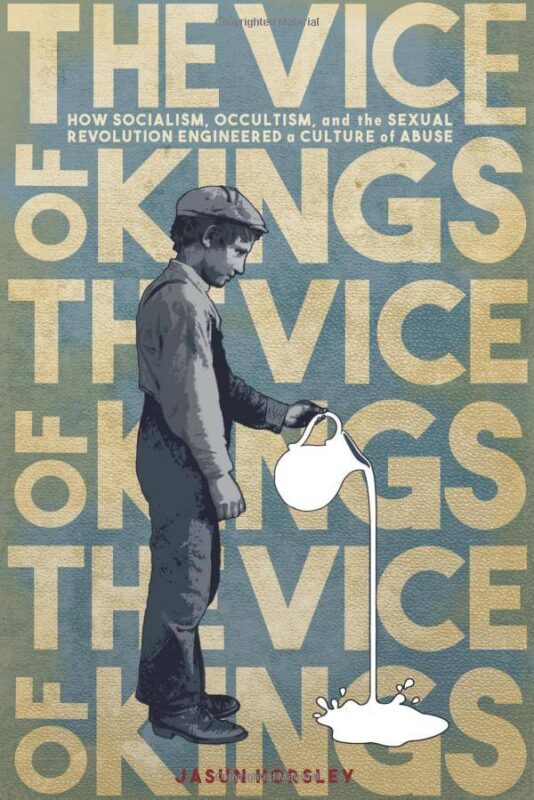
The Vice of Kings: How Socialism, Occultism, and the Sexual Revolution Engineered a Culture of Abuse by Jasun Horsley exposes the intricate architecture of twentieth-century cultural transformation through the lived experience and historical inquiry of its author. Horsley moves from the privileged world of his own family, with its ties to business, politics, and the Fabian Society, into the deeper mechanics of social engineering, occult influence, and institutional abuse that shaped British society and, by extension, Western culture. The book insists on the reader’s confrontation with the roots of power, the design of privilege, and the rituals—both public and clandestine—that sustain cycles of abuse and silence.
Family, Class, and the Architecture of Privilege
Jasun Horsley roots his analysis in the generational story of the Horsley family. Alec Horsley, the author’s grandfather, stands as a central figure whose connections span the world of British industry and progressive politics. Alec founded Northern Dairies (later Northern Foods) and embedded himself within the Fabian Society, a collective of reformist thinkers and power-brokers whose influence stretched from the halls of Oxford to the policy rooms of government. The family’s upward mobility relied on strategic relationships with other elite actors, blending Quaker rhetoric, socialist advocacy, and the operational logic of business expansion. Family gatherings attracted figures from arts, politics, and even the criminal underworld. The environment normalized experimentation, boundary-crossing, and open secrets.
What happens when the children of privilege receive, along with wealth, the legacy of unresolved trauma and the coded transmission of values? The Horsley household, awash in ideals of reform and expressions of tolerance, also harbored a tolerance for vice and transgression. As Jasun uncovers, the lines between public virtue and private corruption blur in environments that prize social engineering above individual welfare. Within these networks, allegiances form around shared interests, ambitions, and sometimes illicit practices. The family’s connection to notorious figures—such as Jimmy Boyle, the Kray twins, and the infamous Jimmy Savile—emerges not as anomaly, but as consequence.
Fabian Society and the Mechanisms of Social Engineering
The book delineates the Fabian Society’s project of gradualist transformation. Fabians designed policy, founded institutions, and cultivated partnerships to reshape British society. The society’s stated goal—a “scientifically planned society”—enabled elite management of education, social services, and cultural values. The organization wove its agenda into the fabric of British political life, influencing the Labour Party, championing eugenics, and supporting world government through international organizations. Jasun Horsley details how the Fabian Society aligned with powerful families, financiers, and intelligence services, embedding its members into strategic nodes across media, academia, and governance.
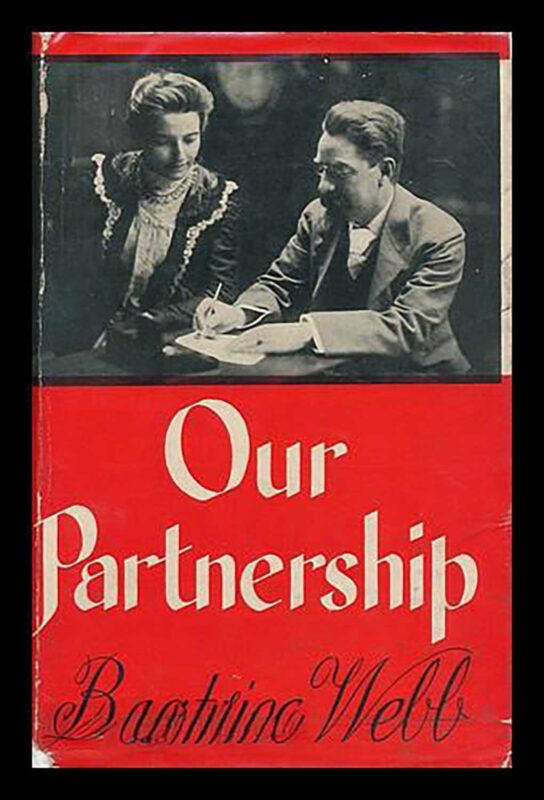
The Fabians’ preference for infiltration over agitation shaped their legacy. They cultivated cross-party alliances and drew in wealthy patrons while claiming disinterest and humility. Through this strategic humility, the society expanded its reach, avoiding direct confrontation and instead gradually altering the terms of debate and policy. Elite members, including the Webbs, George Bernard Shaw, and their successors, wielded networks that crossed borders and fields, enabling the society’s values to permeate public life. The convergence of progressive rhetoric with the interests of business magnates, bankers, and technocrats provided cover for the society’s deeper ambitions: control over the direction of national life and the shaping of collective consciousness.
Occult Influence, Sexual Revolution, and the Cultivation of Vice
Horsley traces the role of occult philosophy and psychosexual experimentation in the evolution of elite culture. He examines how figures such as Aleister Crowley—whose reputation as an occultist, sexual libertine, and cultural provocateur echoes through the corridors of British high society—shaped both underground currents and visible trends. Occult groups, far from marginal, operated as laboratories for new forms of self, sexuality, and social organization. Crowley’s influence, preserved and circulated within elite networks, encouraged the fusion of ritual, art, and the breaking of taboos.
The book reveals how the sexual revolution drew intellectual and material support from the same circles that directed policy and shaped public morality. Advocates of sexual liberation, including psychosexual researchers like Havelock Ellis and cultural gatekeepers at institutions such as the London School of Economics, provided the rationale for reimagining childhood, consent, and sexual boundaries. The Fabian project, intersecting with these forces, supported the transformation of family, education, and social norms. In this framework, transgression becomes both a tool of liberation and a technique of control. By recasting taboo-breaking as art, progress, or science, elites mask the instrumental logic that turns trauma into spectacle and vice into glamour.
Institutional Abuse and the Logic of Complicity
Horsley investigates the persistence of abuse within institutions designed to nurture, educate, or protect. He foregrounds the case of Jimmy Savile—media personality, charity fundraiser, and prolific sex offender—as a paradigm for understanding systemic complicity. Savile’s rise to national icon status depended on the active endorsement of institutions, government officials, and the media, who awarded him honors, granted access to vulnerable populations, and ignored or suppressed allegations of abuse. The machinery of reputation management operates as both shield and sword, insulating abusers while discrediting or silencing victims.
The narrative examines how social and political capital enable predators to operate in plain sight. Institutions, designed for accountability, transform into zones of immunity when managed by those invested in the maintenance of status and silence. Investigative failures, legal maneuvering, and the normalization of “eccentricity” or “artistic license” serve to deflect scrutiny and maintain the façade of respectability. In this context, abuse is not an aberration; it emerges as the logical outcome of privilege untethered from meaningful oversight.
The Interplay of Trauma, Glamour, and Social Order
Throughout the book, Jasun Horsley reflects on his brother Sebastian’s life as an artist celebrated for self-destructive spectacle. Sebastian embodied the fusion of trauma, glamour, and defiance—turning personal ruin into public performance and, in doing so, reflecting the broader cultural trend of glamorizing vice. The author contends that art and celebrity often function as mechanisms for the concealment and perpetuation of trauma. Family history, elite privilege, and the machinery of fame converge to produce figures whose pain becomes currency and whose destruction generates myth.
This dynamic extends beyond individuals to the formation of collective memory and cultural identity. The book invites readers to question the meaning of success, the nature of creativity, and the costs exacted by systems that reward transgression while hiding its true source. The legacy of the sexual revolution, the reconfiguration of childhood, and the redefinition of morality are shown as parts of a calculated program—a system of social engineering whose results manifest in widespread alienation, dislocation, and the propagation of cycles of abuse.
Networks of Influence, Media, and the Reproduction of Silence
Jasun Horsley documents how media, education, and political institutions function in symphony to create narratives, deflect investigation, and sustain the interests of those in power. The control of information—through editorial selection, manufactured scandal, or the cultivation of celebrity—enables elites to direct attention and shape public perception. The endorsement of transgressive artists, intellectuals, or politicians works as a mechanism for both legitimizing elite values and discrediting dissent. Where secrets intersect with privilege, the logic of denial reigns, and the mechanics of complicity grow more refined.
The book uncovers patterns of association that link key figures in politics, business, academia, and the arts. The sharing of honors, the rotation of leadership among related organizations, and the interlocking of charitable and commercial interests establish a closed circuit of power. Within this circuit, loyalty is secured through the threat of exposure, the promise of advancement, or the ritualization of taboo. The result is a system capable of self-defense and self-renewal.
Conscious Conspiracy, Unconscious Drives, and Historical Agency
Horsley interrogates the boundaries between conscious intent and unconscious drive in the operation of elite networks. He observes that the outcomes of policy, ritual, and social reform frequently diverge from stated aims, yet reflect deeper, less visible logics. The book introduces the concept of an “unconscious conspiracy”—a system in which collusion arises from shared interests, implicit codes, and the synchrony of self-serving behavior. The question shifts: What produces alignment among diverse actors in the service of social transformation? The answer lies in a synthesis of ambition, opportunity, and the managed diffusion of responsibility.
Historical agency, in this context, emerges as a product of convergent action, where actors pursue power, influence, or survival within pre-existing structures. The book resists the reduction of historical causality to mere “cock-up” or “conspiracy,” instead treating the recurrence of abuse, secrecy, and engineered consent as evidence of structural design. The interplay of personal ambition, institutional logic, and ideological fervor produces the system’s distinctive patterns. Outcomes, rather than intentions, define the landscape.
Toward Reckoning: Refusing Silence, Reclaiming Narrative
In the final movement, Jasun Horsley asserts the imperative of testimony and reckoning. His own refusal to participate in the culture of silence emerges from the recognition that denial and complicity reinforce the very systems that perpetuate harm. The act of narrating family history, exposing institutional rot, and connecting the dots between power, vice, and cultural mythology represents a form of resistance—a stand against the programming that grooms generations for compliance. The book insists on the necessity of confronting the realities beneath the glamour, the trauma behind the art, and the logic that enables vice to reign under the mask of virtue.
The Vice of Kings: How Socialism, Occultism, and the Sexual Revolution Engineered a Culture of Abuse offers a rare and incisive synthesis of memoir, investigative journalism, and cultural theory. The book’s analytical reach spans family and nation, past and present, surface and depth. Horsley crafts a narrative in which the personal is inseparable from the political, and the mechanisms of power reveal themselves not through explicit proclamation, but through the convergence of interests, rituals, and silence. The work demands not only attention but reckoning, inviting the reader to trace the lines of complicity and to seek, amid the ruins of glamour, a new understanding of agency and truth.