The Innocence of Kaiser Wilhelm II
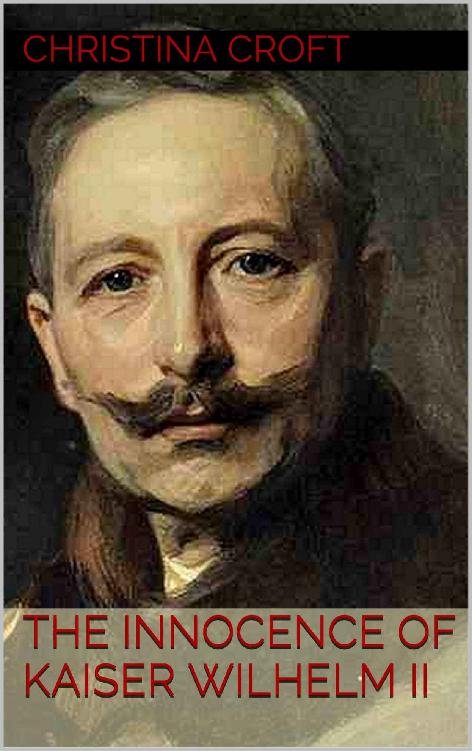
The Innocence of Kaiser Wilhelm II by Christina Croft interrogates the foundational assumptions that have governed historical memory of Germany’s last Emperor. Croft centers the story of Wilhelm II within the entangled web of European royalty, diplomatic missteps, familial discord, and the ideological currents of the late nineteenth and early twentieth centuries. She compels the reader to ask: What forces actually shaped the Emperor’s reign, and where do responsibility and agency converge in the catastrophe of the First World War?
A Childhood Shaped by Affliction and Expectation
Wilhelm’s life began in the glare of public hope and dynastic duty. Born the first grandson of Queen Victoria and son of the progressive Princess Royal (Vicky) and Crown Prince Friedrich of Prussia, Wilhelm entered the world with immense promise. A traumatic birth left him with Erb’s palsy, rendering his left arm partially paralyzed and stunting its growth. This early injury set in motion a chain of psychological and emotional challenges. Under the pressure of his parents’ ambitions and the interventionist zeal of Queen Victoria, Wilhelm endured harsh physical therapies and ceaseless medical attention throughout his formative years. His mother’s anxiety about his prospects and physical appearance became a defining influence, etching a pattern of insecurity and strained affection into the boy’s character.
Inside the palaces of Berlin and the windswept corridors of Osborne House, Wilhelm absorbed the lessons of duty, discipline, and familial rivalry. Otto von Bismarck’s influence loomed over the Hohenzollern household, engineering a regime in which Vicky’s liberalizing agenda clashed with Prussian conservatism. Bismarck’s political maneuvering isolated Vicky and Friedrich from the court, and the Iron Chancellor’s propaganda set Wilhelm against his mother’s “English” sympathies. The resulting emotional distance fused with Wilhelm’s longing for approval, catalyzing a lifelong tension between private vulnerability and public bravado.
From Student to Sovereign: Formative Experiences
Wilhelm’s education unfolded in the shadow of these familial and political crosscurrents. His tutors imposed a rigid, Spartan discipline, but they also exposed him to a broader world. Through excursions to factories and interactions with working-class Germans, Wilhelm internalized the complexities of industrial society and social hierarchy. Academic achievement came in bursts, especially in subjects that captured his imagination—history, archaeology, and languages. He mastered French and English, enabling him to converse and correspond across the royal courts of Europe.
His adolescence coincided with the rise of Germany as an industrial powerhouse. Wilhelm’s exposure to the economic and technological dynamism of his country instilled a conviction that Germany could, and should, take a leading place among the nations. Croft identifies in these experiences the seeds of Wilhelm’s reformist and modernizing ambitions. He perceived his royal status as a sacred charge, a belief reinforced by dynastic tradition and religious conviction.
The Road to the Throne: Politics, Power, and Perception
Wilhelm ascended the throne in 1888, inheriting a Germany unified under Bismarck but increasingly restive under the surface. Croft’s narrative traces the young Emperor’s commitment to advancing social reforms—improved labor conditions, welfare provisions, and agricultural renewal. Wilhelm promoted industrialization and technological progress. He sought to integrate the working class into the national project, strengthening both the economy and the stability of the monarchy.
The German constitution limited the Kaiser’s political agency, subordinating his authority to the Bundesrat and the Reichstag. Wilhelm wielded significant symbolic power, but real governance depended on the Chancellor and legislative bodies. Within this structure, he balanced competing interests: industrialists, Junkers, socialists, and the military. His reign opened with overtures to peace and international cooperation. Wilhelm declared his intention to maintain friendly relations with Germany’s neighbors, invoking shared Christian values and mutual benefit.
Diplomacy and the Limits of Goodwill
Wilhelm’s tours of European courts unfolded as exercises in personal diplomacy. He visited the leaders of Italy, Russia, Sweden, Denmark, Austria-Hungary, and Great Britain, offering assurances of peace and collaboration. The press reported his speeches and gestures as evidence of his statesmanship and goodwill. In the United States, where millions of German emigrants had settled, newspapers described Wilhelm as a promising, modern monarch. He toasted alliances, praised common traditions, and sought to transcend the animosities lingering from the Franco-Prussian War.
Diplomatic engagement intersected with military modernization. Wilhelm invested in the navy, viewing maritime power as essential for securing trade and projecting German influence. He articulated a doctrine that combined military preparedness with an aversion to aggressive war. The German military existed, in his conception, as a deterrent—a guarantee against invasion and disruption of commerce.
Propaganda, Perception, and the Manufacture of Blame
Croft exposes the persistent work of Allied propaganda in constructing Wilhelm’s image as the “madman” and “warlord” of Europe. She details how British, French, and later American media portrayed the Kaiser as the chief architect of global catastrophe. Wartime posters, headlines, and editorial campaigns imprinted his visage as the embodiment of German militarism and brutality. Croft interrogates the primary sources and personal letters that reveal a more ambivalent, often reluctant, figure behind the myths.
Family relationships played a pivotal role in shaping public narratives. Disputes with his mother—amplified by Vicky’s correspondence with Queen Victoria and by hostile ministers at the German court—spilled into public discourse. Croft sifts through the documentation surrounding the illnesses and deaths of Wilhelm’s father and grandfather, uncovering the degree to which miscommunication, court intrigue, and grief shaped events. Critics of Wilhelm seized on moments of tactlessness or perceived ambition, embedding them in the record as evidence of cruelty or hunger for power.
Crisis, Abdication, and Exile
The closing days of the First World War brought Wilhelm’s reign to a shattering end. As defeat loomed and revolution swept Germany, Wilhelm abdicated and sought asylum in the Netherlands. Croft reconstructs the humiliating flight across the Dutch border and the psychological toll of exile. Queen Wilhelmina’s refusal to extradite him to the Allies saved Wilhelm from prosecution and probable execution.
In the aftermath, the Treaty of Versailles formalized the narrative of German guilt, and Wilhelm’s personal culpability became a fixture in Allied discourse. Croft demonstrates how diplomatic expediency and the desire for retribution shaped the writing of history. Political leaders in Britain, France, and the United States pursued narratives that satisfied public outrage and justified harsh peace terms. Wilhelm’s personal writings and testimony proclaim his innocence; Croft positions these claims within a wider contest over memory and meaning.
Reassessing Responsibility: Agency, Structure, and Historical Judgment
Croft’s investigation draws on an array of contemporary witnesses—diplomats, generals, ministers, and members of royalty. She weaves together testimony from Ottokar von Czernin, George Bernard Shaw, and numerous court insiders. These sources, she asserts, disclose Wilhelm’s consistent preference for peace, his horror at the devastation of modern war, and his belief in the moral obligations of monarchy.
Wilhelm understood himself as the guardian of the German people, tasked with advancing their material and spiritual welfare. He invested in educational reform, promoted the arts, and fostered scientific research. In economic policy, he balanced the interests of capital and labor, striving to maintain social harmony. Croft asserts that the complex architecture of German governance—its overlapping jurisdictions, electoral innovations, and entrenched interests—bounded the Kaiser’s agency and often frustrated his intentions.
Personal Character and Political Action
Wilhelm’s emotional life shaped his public actions. Croft delineates the influence of early trauma, the desire for maternal approval, and the pain of physical disability. The Emperor’s need for validation colored his relationships with ministers, generals, and foreign leaders. Episodes of impulsiveness and insecurity punctuated his reign, sometimes undermining his diplomatic initiatives. Yet, Croft identifies a through-line of earnestness and idealism—an effort to bridge tradition and modernity, authority and popular legitimacy.
The Kaiser's extensive correspondence, preserved in archives across Europe, reveals a man acutely conscious of his historical role. He agonized over the direction of German policy, wrestled with competing counsel, and weighed the cost of war in human terms. His interventions in foreign affairs—sometimes celebrated, often misunderstood—reflected a struggle to reconcile personal conviction with geopolitical reality.
Historical Convergence: The Legacy of Innocence
In the century since Wilhelm’s abdication, his image has crystallized into symbol and caricature. Croft contends that the persistence of this image reveals more about the anxieties and imperatives of postwar Europe than about the man himself. The construction of guilt, the search for scapegoats, and the politics of historical memory coalesced to shape the narrative.
Croft invites the reader to re-examine foundational assumptions about causality, responsibility, and the nature of leadership in times of crisis. Where do the boundaries between individual agency and structural constraint lie? How does the dynamic of personality and circumstance produce outcomes that later seem inevitable? The life of Kaiser Wilhelm II, situated at the crossroads of tradition and modernity, progress and reaction, ambition and limitation, offers a lens for interrogating these questions.
Social Reform and Economic Vision
Wilhelm’s domestic policies signaled an intent to foster prosperity and social cohesion. He championed legislation for workers’ welfare, old-age pensions, and accident insurance. He supported technological advancement in steel, chemicals, and agriculture, reducing dependence on imported food and stimulating industrial growth. Croft documents the resulting gains: rising wages, declining emigration, and enhanced global competitiveness.
The Kaiser recognized the necessity of a contented and productive workforce for sustaining national power. His reforms navigated the tension between the demands of capital and the rights of labor. He promoted education and cultural development, supporting universities, artists, and scientists who propelled Germany to the forefront of European intellectual life.
Familial Networks and the International System
Wilhelm’s reign unfolded amid a network of royal relationships. As the grandson of Queen Victoria, cousin to King George V and Tsar Nicholas II, he participated in a transnational aristocracy that both facilitated and complicated diplomacy. Croft highlights how familial bonds shaped alliances, personal animosities, and the calculations of statecraft. She underscores the role of royal gatherings, correspondence, and intermarriage in the architecture of European politics.
These relationships did not guarantee harmony. Rival interests, divergent national priorities, and the pressures of mass politics generated friction and misunderstanding. Wilhelm’s attempts at personal diplomacy, while sincere, could not arrest the drift toward confrontation as the alliance system ossified and the specter of war loomed.
The Anatomy of Scapegoating
In the aftermath of war, the search for culprits followed the logic of victors’ justice. Political leaders, journalists, and historians seized upon Wilhelm as the human face of collective trauma. The vilification of the Kaiser served the needs of peace settlements, domestic politics, and the moral economy of a battered continent. Croft challenges the durability of this narrative, marshalling evidence that calls for a more nuanced reckoning.
She concludes that the legacy of Kaiser Wilhelm II invites a return to the archives, a re-engagement with sources, and a willingness to recognize complexity over caricature. The convergence of personality, politics, and circumstance in the Emperor’s life provides a case study in the limits of individual agency and the construction of historical memory. Croft asserts that the search for innocence, blame, and meaning continues to animate the study of the Great War and its aftermath.
SEO keywords: Kaiser Wilhelm II, Christina Croft, German Emperor biography, World War I history, European royal families, German social reforms, Allied propaganda, history of scapegoating, Treaty of Versailles, royal family relationships, German modernization, Bismarck influence, First World War causes, modern German history, historical legacy Kaiser Wilhelm