The Holy Terror
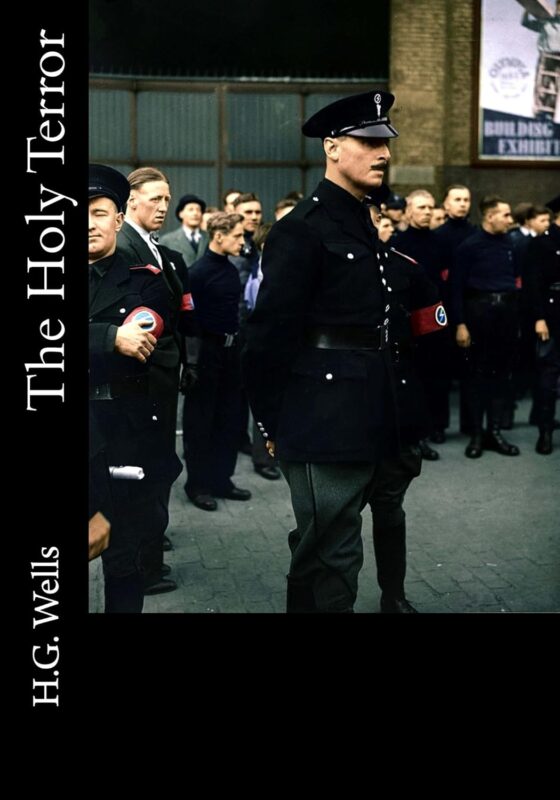
The Holy Terror by H. G. Wells examines the genesis and rise of a dictator through the life of Rudolf “Rud” Whitlow, tracking his psychological evolution from childhood to public prominence. Wells locates the roots of authoritarian leadership within the fabric of family, school, and society, developing a character whose ambitions, frustrations, and unchecked drives converge with historic forces to shape a new era of mass politics and charismatic domination.
The Genesis of Power: Rud Whitlow’s Childhood
Rud Whitlow begins life as a “problem child,” his aggression and inventiveness alarming adults and confounding familial attempts at discipline. Wells explores how Rud’s impulses manifest in physical outbursts, calculated defiance, and relentless pursuit of control over siblings and peers. The domestic sphere, rather than tempering these traits, inadvertently sharpens them. Rud’s mother, torn between affection and exasperation, and an over-involved aunt, cycling through faddish theories, alternate between coddling and psychoanalyzing, neither producing change nor self-awareness in the boy. The domestic stalemate, defined by Rud’s repeated assertion of will and the family’s inability to restrain him, sets the groundwork for later pursuits of dominance.
Education, Competition, and Early Fantasies
At Hooplady House, Rud encounters institutional authority. The school’s emphasis on examinations, its lack of investment in character formation, and the culture of competitive achievement supply Rud with new arenas for ambition. His remarkable memory and linguistic gifts make him a standout in academic settings, but his aggression transforms—less physical, more tactical. He ceases loud protest and adapts, channeling energy into top marks, manipulation, and social maneuvering. Rud idolizes conquerors and strongmen, absorbing stories of Caesar, Napoleon, and Alexander. He internalizes the logic of domination and power, rehearsing fantasies in which he becomes both commander and judge, the arbiter of loyalty and punishment. The absence of effective moral or emotional anchors in these early settings does not produce introspection but hardens his desire for public recognition.
Social Turbulence and Emerging Ambition
Rud’s adolescence unfolds amid economic and political unrest. His father’s financial struggles, his siblings’ drift into mediocrity or piety, and the collapse of traditional social certainties feed Rud’s sense of grievance. He demands sacrifices for his advancement, insisting on his entitlement to opportunity and threatening self-destruction if thwarted. The Whitlow family’s resources, already stretched, come to focus on Rud’s ambitions, reinforcing his conviction that he stands at the center of unfolding history. These formative years, shadowed by the decline of once-assured paths to success, orient Rud toward public life as a field for assertion, contest, and ultimate control.
University Life: From Isolation to Oratory
At Camford, a fictional analogue for Oxford or Cambridge, Rud enters an environment steeped in tradition but destabilized by historical shock. The old order, based on privilege and continuity, erodes under the pressure of war, the rise of new social classes, and proliferating ideologies. Rud at first struggles to reconcile personal ambition with the uncertainty of the times, but quickly adapts. He attends debates, studies political movements, and reads voraciously. His break comes when, during a heated debate on collectivism, he rises to speak. The act transforms him: words flow, his anger electrifies the room, and his rhetorical skill wins applause. Recognition cements his identity as a leader. In that moment, the pattern of private fantasy merges with public performance, and Rud senses his ability to move crowds and shape events.
Psychological Roots of Leadership
Wells delves into the psychology of mass politics by tracing how Rud’s talents and pathologies combine with social conditions to create a new kind of leader. Rud’s motives arise not from intellectual conviction but from resentment, desire for visibility, and contempt for the “old men” who mismanaged the world. His oratory, steeped in patriotic indignation and unfulfilled promise, channels the frustrations of a generation disillusioned by economic collapse and institutional decay. Wells draws attention to the audience’s complicity: listeners, desperate for direction and meaning, respond to Rud’s certainty and emotional intensity. The reciprocal dynamic between leader and led grows, forming the substrate for charismatic authority.
The Lure and Dangers of Ideology
Political and religious factions vie for Rud’s allegiance. Liberals, conservatives, Fabians, communists, and even fascist sympathizers attempt to recruit him, each seeking to harness his gifts. Rud remains circumspect, extracting information and tactical advantage but refusing full commitment. He identifies ideology as a vehicle for personal advancement, rather than a source of values or purpose. Wells exposes how charismatic figures, unmoored from principle, manipulate movements while cultivating a public persona. Rud’s encounters with anti-Semitic agitators, pacifists, and zealots underscore his selective engagement: he avoids physical confrontation when outmatched but maintains a posture of fearless readiness when safe. The play of intimidation, opportunism, and rhetorical force foreshadows his trajectory toward dictatorial power.
Mass Society and the Collapse of Restraint
Wells links Rud’s rise with broader historical patterns. The disintegration of old institutions, the spread of anxiety, and the erosion of shared beliefs open a space for new forms of collective identity and action. The population, unsettled by joblessness, insecurity, and the fading promise of steady progress, grows receptive to strong leadership and sweeping solutions. Rud embodies the energies and anxieties of this transitional period. He turns frustration into action, catalyzing movements that promise redemption or revenge. The convergence of personal pathology and collective crisis propels him from student politics to public notoriety, intensifying the cycle of speech, recognition, and mobilization.
Satire, Social Critique, and the Fragility of Democracy
Wells’s tone fuses irony and urgency. Through pointed dialogue, parodic scenes, and incisive characterization, he dissects the rituals and failures of British society. The family’s well-meaning confusion, the school’s ritualized ignorance, and the university’s hollow traditions expose the brittleness of social order in the face of dynamic personalities and historic shocks. Rud’s career dramatizes the vulnerability of democratic institutions to manipulation, spectacle, and the abandonment of critical thought. What happens when institutions designed for continuity and moderation encounter a figure willing to exploit their weaknesses for personal ascendancy? The question reverberates through the narrative, growing sharper as Rud’s influence expands.
Historical Insight and Prophetic Warning
Wells anticipates the mechanisms by which dictators arise: the intersection of psychological need, social disorder, and the seductions of mass mobilization. Rud’s evolution from misunderstood child to public agitator parallels the destabilization of the political order. His talent for capturing the mood of the moment, reframing collective grievances as personal crusades, and projecting certainty amidst confusion models the trajectory of demagogues in the 20th century. The setting, though fictitious, echoes real-world patterns: economic collapse, the decline of elite authority, and the magnetic pull of simplistic solutions draw crowds to those who promise action. Wells asserts that the dangers do not lie solely in the individual’s character or society’s failures, but in the alignment of both, which transforms latent energies into destructive force.
Consequences and Narrative Progression
The story follows Rud beyond his university triumphs into the realm of public life, where the skills and impulses honed in private find their ultimate expression. Wells structures the plot to heighten the interplay between personal ambition and social change, allowing tensions to accumulate and stakes to rise. Characters surrounding Rud—family, rivals, political opportunists—struggle to respond, oscillating between attempts at persuasion, appeasement, and resistance. Rud’s refusal to yield, his capacity to absorb and redirect opposition, and his shrewd reading of circumstance drive the narrative toward moments of crisis and transformation. The movement from private grievance to public action charts the stages by which charismatic figures consolidate power.
Language, Style, and Thematic Development
Wells employs direct, energetic prose, blending narrative detail with analytical insight. Dialogue reveals character motivation, institutional inertia, and ideological conflict. Descriptions of setting—schools, debates, domestic interiors—anchor the story in a plausible, recognizable world while signaling the undercurrents of change. The novel’s structure allows themes to emerge organically: the inadequacy of traditional responses to new realities, the dangers inherent in the collapse of shared norms, and the role of rhetoric in constructing collective identity. Wells’s control of pacing and focus ensures that tension mounts within scenes and across chapters, drawing the reader forward into the heart of crisis.
The Holy Terror in the Canon of Political Fiction
The book occupies a distinctive place among early 20th-century explorations of totalitarianism, mass psychology, and the cult of personality. Wells writes from a vantage point informed by firsthand observation of the social and political ferment of his time, synthesizing insights from contemporary history, psychology, and his own experience as a critic of utopian and dystopian currents. The story advances an argument about the origins and mechanisms of dictatorship, rooting them in both the texture of private life and the structure of public institutions. The narrative provides both a case study and a warning, mapping the pathways by which charismatic individuals exploit systemic vulnerabilities.
Why Study The Holy Terror Today?
What draws readers to Wells’s narrative lies in the precision with which he analyzes the mutual formation of leaders and movements. The questions he poses—about the sources of ambition, the adaptability of institutions, the susceptibility of crowds to rhetorical manipulation—retain their urgency in contemporary times. Wells demonstrates that the rise of destructive power cannot be attributed solely to monstrous individuals or abstract social forces; it emerges through the intersection of biography and history, personality and crisis. How do societies generate the conditions for their own undoing? Where does personal ambition become public catastrophe? The Holy Terror provides a framework for exploring these problems, demanding attention from readers concerned with the fate of democracy, the ethics of leadership, and the dynamics of social change.
Enduring Relevance and Literary Legacy
Wells’s insights echo through the literature of political warning. The portrait of Rud Whitlow as a figure shaped by familial failure, educational dysfunction, and social upheaval anticipates later studies of authoritarian personalities and populist movements. The clarity of Wells’s analysis, the narrative momentum he sustains, and the moral urgency underpinning the novel secure its status as a foundational text in the literature of power and its discontents. Readers seeking to understand the sources of charisma, the logic of mass movements, and the fragility of civil society will find in The Holy Terror a vivid, unsettling, and illuminating guide.


https://youtu.be/C3DLaK1VhO8