Illiberal Reformers: Race, Eugenics, and American Economics in the Progressive Era
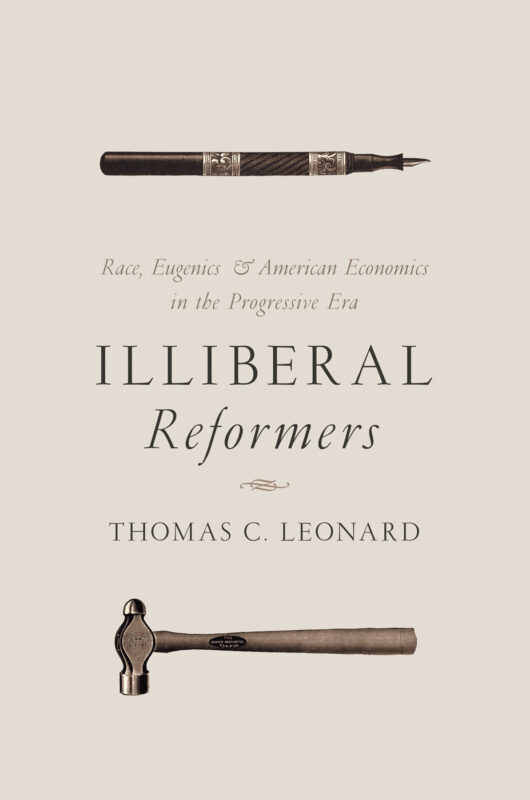
Illiberal Reformers: Race, Eugenics & American Economics in the Progressive Era by Thomas C. Leonard exposes how Progressive Era reformers leveraged scientific authority to redesign American political economy while embedding exclusionary ideologies within the architecture of the modern administrative state. The book traces the intellectual and institutional ascent of progressive economists who, under the banner of rational planning and efficiency, recast economic governance and justified policies that curtailed the rights of marginalized populations.
Redefining Economic Life through Expertise
Leonard opens with the economic tumult of the post-Reconstruction period, identifying the collapse of laissez-faire ideology as the entry point for a new generation of reformers who positioned themselves as experts. These progressive economists, many trained in German universities, rejected classical liberalism’s emphasis on natural rights and autonomous markets. They constructed economics as a scientific discipline rooted in historical contingency and collective outcomes. Their training endorsed the state as the proper arena for social remedy, and they translated that belief into institutional reform.
Progressives did not argue over whether the state should intervene—they organized around how to do it. They created mechanisms to manage labor markets, regulate business, and systematize social investigation. The emerging administrative state absorbed their ideology, staffing itself with economists who regarded themselves as both neutral scientists and moral agents.
Building the Fourth Branch of Government
The transformation of American governance accelerated between 1880 and 1917. Economists and reformers moved swiftly to embed technocratic authority within the federal structure. They helped erect the Federal Reserve, the Federal Trade Commission, and the Tariff Commission. They justified income taxation and laid the groundwork for antitrust enforcement, workplace regulation, and social welfare programs.
This expansion altered the function and composition of government. Courts and parties ceded influence to agencies run by credentialed experts. These experts claimed detachment from interest-group politics, presenting their work as the expression of objective reason. Their authority depended on scientific framing, but their designs imposed value-laden hierarchies on American labor and citizenship.
Exclusion as Economic Hygiene
Leonard reveals how the same reformers who championed minimum wages, child labor laws, and factory inspection also rationalized policies to eliminate what they labeled the “unemployable.” This term collapsed categories—immigrants, African Americans, women, the disabled—into a single economic liability. The logic of labor uplift required a boundary: for the American workingman to rise, competition from those deemed biologically or culturally inferior had to be curtailed.
The effort to exclude operated through legal, institutional, and discursive means. Minimum wage laws functioned as exclusionary devices, as reformers explicitly sought to price low-productivity workers out of the labor market. Immigration restrictions deployed race science to construct hierarchies of desirability. Reproductive control and sterilization campaigns merged eugenics with public health. Reform became synonymous with classification, separation, and controlled breeding.
Eugenics, Darwinism, and Social Control
Economic reformers adopted evolutionary science as a conceptual framework. They recast inequality as an outcome of heredity rather than circumstance. Darwinism supplied metaphors—competition, selection, fitness—that reformers repurposed to evaluate labor and citizenship. Eugenics translated these metaphors into action.
Experts became arbiters of genetic worth. Their work in economic planning fused with policies to steer human reproduction. They developed and applied statistical tools to assess mental fitness, tracked “feeblemindedness” in families, and wrote economic justifications for sterilization. In doing so, they turned economic institutions into instruments of biopolitical control.
Inventing the American University and the Think Tank
The university system offered progressives both sanctuary and power. With backing from new industrial wealth, universities like Johns Hopkins and the University of Wisconsin became laboratories for social science. Economics departments multiplied. Faculty drafted laws, advised legislators, and shaped curricula that fused economics with ethics.
At the same time, new entities—the American Economic Association, the Bureau of Labor Statistics, and the Russell Sage Foundation—channeled this academic energy into public policy. Reformers built networks between academia, government, and philanthropy that defined what counted as expertise. These networks amplified their influence, embedding their ideas within the machinery of state.
Labor Reform and the Moral Economy
Progressives framed their reforms as defenses of labor’s moral worth. They believed that dignified work required fair wages, safe conditions, and protection from exploitative practices. But their concept of labor had boundaries. It excluded those who did not fit the mold of the autonomous male breadwinner. Women’s employment was pathologized. Racialized workers were dismissed as incapable of contributing to the national stock.
Reformers created metrics to evaluate the efficiency and fitness of workers. These metrics converted social judgments into economic data. The moral economy they pursued depended on excluding classes of workers whose existence challenged their categories.
The Social Gospel and Scientific Salvation
Many progressive economists emerged from Protestant households, trained in a tradition of moral uplift. They replaced theological authority with scientific language but retained the missionary impulse. Their goals—national redemption, social harmony, virtuous citizenship—demanded new tools, and they found those tools in statistics, surveys, and administrative procedures.
They treated scientific management as a sacred calling. Expertise became a form of priesthood, and the administrative state became its church. Within this framework, intervention took the form of guidance. Reformers did not ask what people wanted; they declared what was good for society and organized the state to enforce it.
The Intellectual Legacy of Illiberal Reform
Leonard presents a genealogy of American liberalism transformed through technocratic power. The experts of the Progressive Era redefined governance as a function of managerial capacity. Their innovations—regulatory agencies, labor standards, data collection, and economic modeling—still structure public policy. Their faith in expertise, their preference for institutional design over political debate, and their emphasis on measurable outcomes continue to shape how policy problems are framed and solved.
The book raises a fundamental question: what happens when reform proceeds without accountability to those it governs? Leonard shows that even the most idealistic projects can entrench inequality when built on unchecked assumptions about who counts and who does not. He challenges readers to consider how expertise operates within power, how science can function as ideology, and how progress can legitimize exclusion.
Embedding Bias within Institutional Form
Progressive Era reforms institutionalized categories that persist in law and policy. Definitions of employability, intelligence, and productivity acquired administrative form. Agencies developed procedures to evaluate populations, enforce norms, and justify interventions. These procedures encoded assumptions about race, gender, and class into governance.
Leonard identifies a structural pattern. Reformers pursued rational control over economic life. To implement that control, they had to define normalcy. Defining normalcy required demarcating deviation. Once deviation was measured, policy followed. The state acquired tools not just to support or regulate, but to categorize and exclude.
An Economy of Moral Authority
Progressive economists claimed that economic management required moral insight. They believed markets did not reward virtue, and that science could restore justice. Their economics was not only analytical—it was prescriptive. They sought to transform desire, discipline behavior, and elevate character.
This transformation required centralized authority. Reformers created that authority in the form of commissions, boards, and departments. They designed institutions to guide labor, shape citizenship, and promote efficiency. These institutions reflected their beliefs, implemented their judgments, and extended their reach.
Contemporary Relevance and Unresolved Tensions
Leonard closes by showing how the foundational structures of the administrative state endure, even as the biological theories that once supported them have collapsed. The vision of government as a site of expertise, regulation, and planning remains dominant. The challenge lies in confronting the legacy of its origins.
Can a society committed to democratic equality rely on institutions designed through exclusionary principles? What forms of accountability can rebalance expert authority with public consent? Leonard’s analysis does not provide easy answers. It equips readers to ask sharper questions, to see ideology within technocracy, and to recognize that institutional design is never neutral.


About the Book
Liberty Weekly – Economics, Eugenics, and the Minimum Wage Ep. 14