Prolonging the Agony: How The Anglo-American Establishment Deliberately Extended WWI by Three-and-a-Half Years

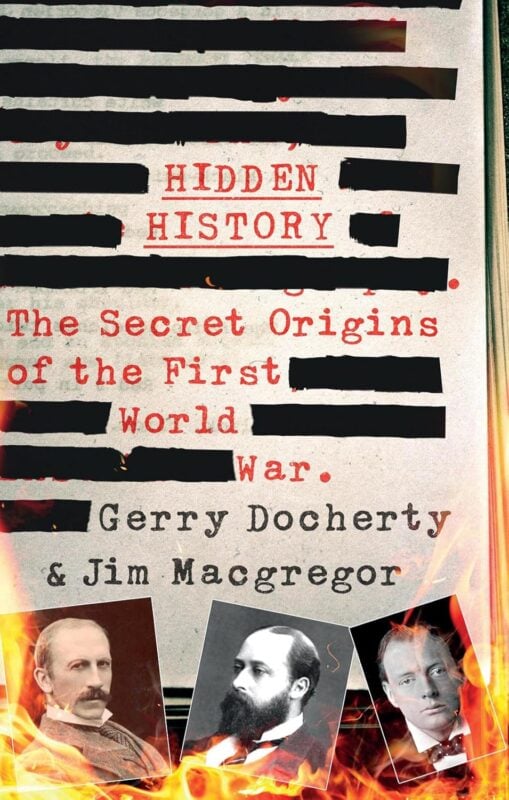
Prolonging the Agony by Jim Macgregor and Gerry Docherty opens a historical case against the accepted narrative of World War I, asserting that a covert Anglo-American alliance orchestrated and extended the conflict to destroy Germany’s ascent. The authors trace decisions, alliances, and concealed strategies that prolonged the war from what could have ended in 1915 to its devastating close in 1918. The argument unfolds through documentary evidence, insider testimony, and patterns of political orchestration anchored in financial and imperial ambitions.
The Secret Engine of Empire
Cecil Rhodes initiated the secret society that forms the core of Macgregor and Docherty’s thesis. He envisioned a network of elites committed to expanding British imperial control globally. This group evolved into what the authors identify as the Secret Elite—bankers, aristocrats, and policymakers unified by a strategic objective: eliminate Germany as a rival economic and imperial power. Alfred Milner assumed leadership, backed by the financial resources of the Rothschilds and the media influence of William Stead. Their influence penetrated the British Cabinet, the Foreign Office, the War Office, and leading universities.
How did this elite achieve such control without public exposure? Through direct manipulation of party leadership, silent control of press organs, and academic capture. The Times became their mouthpiece, Oxford their recruiting ground. They dominated foreign policy by embedding figures like Edward Grey, Richard Haldane, and Arthur Balfour into the top posts. These men shielded military mobilizations and diplomatic alliances from parliamentary scrutiny.
Operational Secrecy and Strategic Deception
The alliance with Belgium was formalized in secret years before the war. British military attachés coordinated with Belgian generals to prepare for German movement through the lowlands. British intelligence gathered detailed topographical data, planned logistics for troop deployment, and fixed financial terms for soldiers stationed in Belgium—years before Germany invaded. The supposed violation of Belgian neutrality became the moral justification for war, though the arrangement was long in place.
The Secret Elite also manipulated alliances with France and Russia. French President Raymond Poincaré and Russian Ambassador Alexander Isvolsky received covert funding and strategic direction. Through these operatives, Britain ensured that both nations would confront Germany regardless of regional provocations. The Franco-Russian military preparations reached full mobilization before Germany moved its army. Russia escalated by massing troops on Germany’s eastern border, pushing German leaders into a defensive posture. When Germany responded, Britain had its public pretext.
The Machinery of Prolongation
The war could have ended by early 1915. Germany’s initial advances had stalled, and opportunities for negotiation emerged. Yet the Secret Elite took steps to prolong the conflict. British and American financiers funneled essential supplies—oil, food, and munitions—into Germany through neutral countries. Dutch and Scandinavian intermediaries played critical roles in sustaining the German war effort, all under tacit Allied approval. This lifeline allowed the Central Powers to continue fighting far beyond what their internal resources allowed.
British political leadership under Lloyd George, shaped by Elite influence, ignored peace overtures and sabotaged diplomatic alternatives. American entry into the war, presented as a defense of democracy, followed sustained propaganda campaigns crafted in London and New York. The Balfour Declaration secured Zionist support while promising contradictory outcomes to Arabs and Jews, ensuring further instability that distracted from peace efforts. The Lusitania incident, widely misrepresented, added another layer of justification, though its circumstances remain opaque under suppressed evidence.
Monetary Incentive and Manufactured Consent
Twenty-one thousand new American millionaires emerged during World War I. Industrial firms with connections to British and American elites secured massive contracts. Banks reaped interest on loans extended to European powers. Each day the war continued, wealth accumulated. The longer the war lasted, the more thoroughly Germany could be broken—and the more money could be extracted from the suffering. These financial incentives aligned with geopolitical goals.
Consent was manufactured through media saturation. Newspapers filled with fabricated atrocity stories about German barbarism. Recruitment posters and war films targeted emotional responses, suppressing dissent through patriotism and fear. School curricula and academic appointments mirrored government positions. Even memoirs and official histories were censored or ghostwritten. The Secret Elite shaped what was taught as history to ensure their role remained concealed.
The Role of the Military Establishment
Kitchener’s War Office executed the Elite’s design for prolonged attrition. Rather than preparing for short engagements, he demanded mass conscription and a strategy built on sustained, grinding offensives. Military leadership, largely drawn from Milner’s protégés—John French, Douglas Haig, Henry Wilson—shared the strategic assumption that victory required total exhaustion of the enemy, regardless of cost. These generals committed to offensives with minimal tactical gain but maximum human loss, all to achieve a condition in which Germany could never rise again.
Dissenters emerged but were suppressed. Siegfried Sassoon publicly accused military authorities of prolonging the war for unjust aims. His testimony was dismissed as psychiatric instability. Others who questioned the war’s direction found their reputations ruined or their careers ended. The establishment closed ranks, enforcing compliance from politicians, journalists, and soldiers alike.
Postwar Suppression and Historical Erasure
When the war ended, records vanished. Letters from King Edward VII and Alfred Milner disappeared. War Office documents were “weeded.” Belgian archives that could verify prewar agreements were relocated or destroyed. The Secret Elite buried the traces of their orchestration. Herbert Hoover, under the guise of academic preservation, shipped troves of European documents to the United States aboard empty food ships, limiting access to selective scholars.
Academic history became a tool of misdirection. Oxford and Cambridge chairs in politics and history fell under Elite patronage. Biographies of major figures excluded sensitive affiliations. Popular narratives focused on heroism and sacrifice, displacing the origin story with tales of trench camaraderie and enemy cruelty. The core claim—that a British elite initiated, directed, and extended World War I for imperial gain—remained outside sanctioned discourse.
The Legacy of Concealment
Why did so few question the costs or purpose of the war? The architecture of power relied on invisibility. When structures remain unseen, outcomes seem inevitable. This illusion of inevitability protected the agents of war from accountability. The deaths of millions appeared as historical misfortune, not strategic design. Schools taught this version. Families absorbed it. The press reinforced it.
The authors identify a continuity of Elite governance that survived the war and shaped the modern order. Their influence persisted through global financial institutions, policy think tanks, and supranational alliances. The claim is not abstract: the same families, banks, and corporate interests who shaped the war's trajectory continue to inform the policies of Western powers.
To understand World War I as a failure of diplomacy or a clash of empires is to misread its origin. The decisions that led to its outbreak and the strategies that ensured its extension followed a clear path marked by intention, planning, and resource alignment. This was not a drift into disaster. It was a guided descent, orchestrated by men who held the levers of government, finance, and culture, and who made war profitable and peace untenable. The authors provide the names, dates, and mechanisms that reveal how deliberate design masked itself in patriotic sacrifice. The war was prolonged because the architects of empire required its devastation.