Fabian Freeway High Road to Socialism in the USA
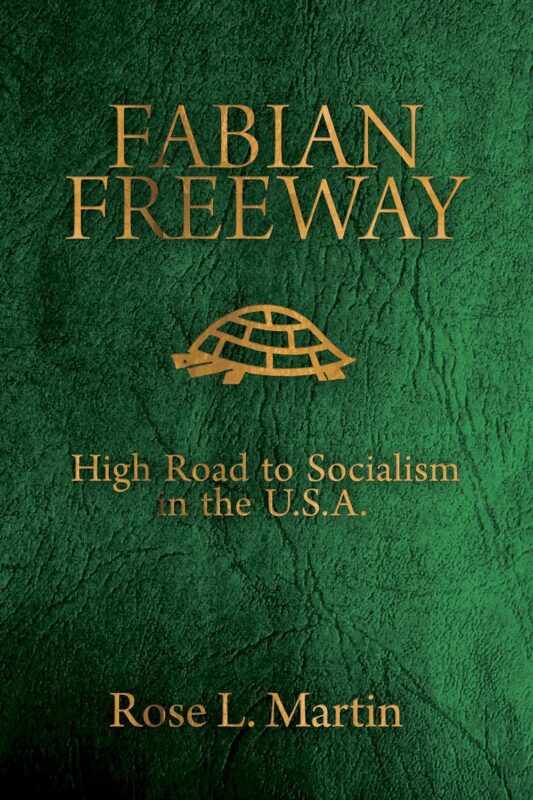
Fabian Freeway High Road to Socialism in the USA by Rose L. Martin investigates the roots, strategies, and long-term influence of the Fabian Society on British and American social, political, and economic structures, arguing that gradualist socialism has reshaped twentieth-century governance and policy under the guise of respectability and reform.
Origins of the Fabian Society and Its Philosophy
Rose L. Martin traces the Fabian Society’s birth to 1884 London, when a group of ambitious, disaffected, and intellectual young men and women gathered to discuss “the higher things of life.” They named themselves after the Roman general Quintus Fabius Maximus, who delayed direct confrontation in favor of long-term victory. This founding impulse—favoring patience, incrementalism, and institutional penetration over revolutionary zeal—shaped the society’s enduring approach. The Fabians envisioned an educated elite directing the slow reorganization of society, prioritizing cultural respectability and strategic infiltration.
Strategies of Influence: Education, Research, and Elite Penetration
The society’s leadership—figures such as Sidney and Beatrice Webb, George Bernard Shaw, and Graham Wallas—identified elite institutions as the crucial battleground. They founded the London School of Economics, deploying it as an engine for training and credentialing future administrators, civil servants, and policymakers. The school’s research and teaching programs broadcast a collectivist orientation that soon shaped the intellectual foundation of Britain’s Labour Party. The Fabians invested heavily in “Fabian research,” a method combining exhaustive fact-gathering with persuasive advocacy, creating tracts and pamphlets that supplied ideological ammunition to sympathetic politicians and public figures.
Fabianism’s priority: win over those who would shape legislation, oversee public agencies, and direct public debate. The society developed systematic techniques of “penetration”—placing Fabians within existing political parties, administrative structures, and decision-making bodies, where their first loyalty remained with the society’s aims. “Permeation” strategies encouraged Fabians to influence decision-makers who were not society members, guiding them to enact policies aligned with Fabian objectives. These methods produced durable, compounding influence, as each generation of elite converts initiated further institutional transformation.
British Political Transformation and the Triumph of Gradualism
The society’s emphasis on infiltration and gradual reform achieved results across the twentieth century. Fabians, by shaping Labour Party doctrine and mentoring its leadership, drove key phases of nationalization, welfare expansion, and the dismantling of the British Empire. They identified municipal governance, public education, and the civil service as strategic points for experimentation and leverage. From gas and water utilities to economic planning boards, Fabians seeded administrative innovation and the bureaucratization of public life, defining policy debates for generations.
The Webbs’ volumes on trade unionism, local government, and Soviet-style planning provided operational blueprints. Their focus on research-backed advocacy secured credibility within parliamentary circles and lent their proposals a veneer of inevitability. As Labour Party officials, they embedded collectivist assumptions in statutes, regulations, and the unwritten expectations of government actors. Fabian “Summer Schools” and university chapters nurtured recruits, creating a self-reinforcing network of trained, ideologically consistent administrators.
Transatlantic Diffusion: The American Experience
Martin documents the migration of Fabian principles and personnel to the United States. The American context, with its traditions of federalism and entrepreneurialism, presented distinct challenges. Fabian strategies evolved, emphasizing terminology that avoided direct reference to socialism—favoring “liberalism,” “progressivism,” and “social justice.” Yet the operational core remained intact. American Fabians—often academics, lawyers, and policy advisors—shaped three decades of expanding federal government through the New Deal, the proliferation of regulatory agencies, and the transformation of public expectations about the state’s role.
Organizations such as the League for Industrial Democracy, Americans for Democratic Action, and various academic centers functioned as operational analogs to the London School of Economics. Martin traces their leaders’ direct connections to British Fabian mentors. American Fabians, often in policy roles rather than legislative seats, cultivated executive branch influence, using administrative discretion and federal grants to effect systemic change. By shaping judicial interpretation and harnessing the powers of appointment, these networks altered the operational logic of government without direct confrontation.
Fabian Research and the Manufacture of Consent
The book highlights Fabian mastery in the generation and deployment of research. The society’s tracts and pamphlets—rooted in voluminous, data-driven analysis—shaped elite consensus and marginalized dissent. By monopolizing “expert” discourse on labor, welfare, and planning, Fabians discredited opposing perspectives as reactionary or uninformed. This approach, replicable in the U.S., enabled key organizations to set the boundaries of public debate and insulate their priorities from electoral volatility.
The adoption of the “long march through the institutions” meant that by the 1960s, the offspring of Fabian research defined curricula in leading universities, informed legal arguments in the Supreme Court, and guided bureaucratic norms in federal agencies. Professional societies and think tanks, often led or advised by Fabian-linked figures, standardized a managerial vocabulary that framed centralized planning as technical necessity rather than ideological preference.
Convergence with International Socialism and the Question of Final Outcomes
Martin asserts that the operational goals and ultimate trajectory of Fabian Socialism converge with those of international communism. She documents the alliances, both personal and institutional, that linked British and American Fabians to the broader Socialist International. She notes the recurrent pattern wherein “respectable” socialism creates political and administrative conditions that facilitate more direct forms of collectivism.
The book argues that Fabian Socialism, by advancing collectivist policies under the banner of benevolent reform, paves the road for the expansion of centralized power and the diminishment of individual liberty. The relationship between Fabian Socialists and open communists, observed in Britain and mirrored in the U.S., reveals a dynamic in which gradualist reformers and revolutionary militants collaborate to reorder society along statist lines. The analogy of military tactics—socialists softening the ground for the communist advance—appears repeatedly in Martin’s account.
Impact on American Governance and Society
The enduring legacy of Fabian Socialism in the U.S. reveals itself in institutional structures and public attitudes. Martin lists the multiplication of federal agencies, the expansion of the welfare state, and the normalization of executive-branch policymaking as direct outcomes of Fabian influence. She catalogs the appointment of numerous Fabian-affiliated officials—often operating under the broader label of “liberal”—to high positions in American government. The book names Americans for Democratic Action, the American Civil Liberties Union, and similar groups as vehicles for Fabian-inspired leadership and policy development.
The convergence of administrative expertise, legislative gradualism, and judicial activism transforms the American state. The rise of regulatory agencies, the proliferation of federal grants, and the integration of social science research into public administration reflect a Fabian logic. These processes shift the center of gravity in political life toward expert-managed, centralized decision-making. The layering of incremental changes produces a cumulative revolution, altering both the mechanisms of government and the expectations of citizens.
The Symbolism of Gradualism: From Tortoise to Freeway
The book’s title, Fabian Freeway, evokes the evolution of the movement’s self-understanding. Where the original society adopted the tortoise—an emblem of slow, steady progress—the modern context demands rapid and coordinated action. Martin tracks this transformation, arguing that the once-conservative pace of reform accelerates with technological and organizational innovation. The analogy of the freeway suggests coordinated, high-speed, multi-lane transformation rather than solitary, incremental advance.
Martin portrays the society’s enduring adaptability—shifting from literary salons to academic departments, from parlor debates to global conferences—as its central strength. By cultivating a network of mutually reinforcing actors across domains, Fabians engineer environments in which collectivist solutions appear both natural and necessary.
American Resistance and the Challenge of Exposure
Martin urges readers to recognize the covert character and strategic patience of Fabian Socialism. The book asserts that only by understanding the society’s methods—penetration, permeation, research-driven advocacy—can citizens counter its influence. She observes that the proliferation of loaded epithets (“reactionary,” “extremist”) functions to discredit critics and insulate Fabians from scrutiny. By controlling the vocabulary of debate, Fabians shape both public sentiment and elite consensus.
Martin identifies a central dilemma: How does a society committed to constitutional liberty and decentralized power respond to a movement that prefers subversion to confrontation, adaptation to open contest? The book calls for “clarity” and “healthy distrust” as prerequisites for the defense of traditional freedoms. She frames the question with urgency: What happens when the architects of reform no longer hide their objectives, and when the cumulative effect of gradual change becomes visible as a new orthodoxy?
Lessons from History and the Structure of Political Change
Martin’s narrative, moving from Victorian London to Cold War Washington, presents a structure of causality: ideas incubate in closed societies, diffuse through elite networks, take form in research and teaching, and emerge as policy through persistent advocacy and administrative action. The legacy of Fabian Socialism, in her analysis, lies not only in its doctrines, but in the operational logic it pioneered—the capacity to direct change without popular upheaval, to build new realities under the sign of continuity.
The book closes with a warning that the forms of prosperity and freedom familiar to Americans risk dissolution when the institutions safeguarding them have been reoriented from within. Martin posits that the structural revolution engineered by Fabian Socialists does not announce itself; it is apprehended only in the altered relations of government to citizen, and in the quiet normalization of what once seemed radical.
The Enduring Relevance of Fabian Freeway
Martin’s work stands as a study of method—how small, determined networks shape the destinies of nations by working through institutions, leveraging research, and cultivating elite converts. Fabian Freeway High Road to Socialism in the USA documents a pattern of convergence, adaptation, and transformation, demonstrating how the slow work of patient reformers can yield rapid change once key thresholds are crossed.
Martin’s analysis of the interplay between gradualism, research-driven advocacy, and elite coordination anticipates the challenges facing societies subject to ideologically-driven institutional transformation. The book’s central claim: Structural change unfolds not as spectacle, but as sequence, and those who grasp the order of that sequence hold the keys to its future.

About the Book