All Art Is Propaganda
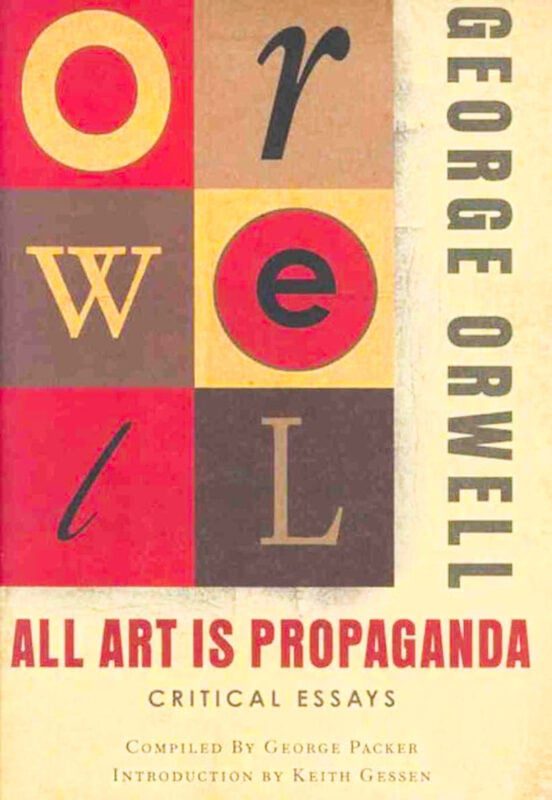
All Art Is Propaganda by George Orwell assembles a formidable collection of essays that define the author’s role as both critic and moral observer. Orwell advances his belief that literature functions as both artistic expression and political statement. His essays strip away the veneer of neutrality that often shrouds discussions of literature, confronting readers with the undeniable influence of ideology in creative work. This collection reveals Orwell’s sharp insight into the cultural, political, and literary undercurrents shaping modern thought.
The Power of Critical Essays
George Orwell uses the essay as a precise instrument for dissecting society, politics, and art. His essays do not merely reflect on literature—they intervene in the ongoing dialogue about cultural authority and truth. Orwell’s direct prose unravels hidden assumptions behind revered authors, widely accepted historical narratives, and prevailing political myths. He applies the essay’s flexibility to confront questions of language manipulation, social justice, and the responsibilities of writers.
His criticism extends beyond literature. Orwell maps the contours of propaganda, tracing how language becomes a tool of power. He investigates how words can distort, obscure, and coerce. His essays make clear that defending language from decay is inseparable from defending human freedom.
Writers at the Intersection of Art and Politics
Orwell situates literature within the wider struggle for intellectual integrity. His examinations of Charles Dickens, Rudyard Kipling, and T. S. Eliot reveal how writers, intentionally or unconsciously, reflect and shape social structures. Orwell reads these figures with both admiration and interrogation, recognizing their artistic brilliance while exposing their limitations and biases.
In his essay on Dickens, Orwell identifies the novelist’s radical critique of social injustice while acknowledging the absence of systemic solutions in Dickens's work. Kipling, in Orwell’s assessment, reveals the enduring power of imperial ideology masked by poetic skill. Through Eliot, Orwell confronts the tension between literary accomplishment and ideological rigidity.
Orwell constructs these critiques as part of a broader inquiry: how can literature challenge injustice if it remains tethered to the power structures that produce it? His essays suggest that genuine literary achievement depends on both artistic precision and moral clarity.
Propaganda as a Cultural Force
The collection interrogates propaganda as a pervasive cultural mechanism. Orwell’s famous essay Politics and the English Language dissects how bureaucratic jargon, euphemisms, and linguistic obfuscation corrode truth. He tracks how imprecise language infects thought, enabling political deception and authoritarian control.
Orwell demonstrates that propaganda does not rely solely on overt lies. It flourishes in passive constructions, inflated rhetoric, and meaningless phrases. He argues that clear language forms a necessary defense against political manipulation. This insight resonates across his essays, as he traces the relationship between language decay and the erosion of democratic values.
From the crude slogans of totalitarian regimes to the subtle distortions of Western media, Orwell’s work reveals propaganda’s many faces. His essays urge readers to recognize these forces, resist intellectual complacency, and reclaim linguistic integrity.
The Writer’s Role in an Age of Crisis
Throughout the essays, Orwell defines the writer’s task as inseparable from the moral imperatives of their time. The essays reflect a world grappling with fascism, communism, war, and cultural upheaval. Orwell situates himself within these struggles, acknowledging that neutrality is impossible for the engaged writer.
In his reflections on the Spanish Civil War, Soviet totalitarianism, and British imperial decline, Orwell underscores the writer’s responsibility to confront oppression, expose hypocrisy, and defend human dignity. His essays convey that literature must serve as both art and witness.
His critique of artistic quietism, most vividly illustrated in his essay Inside the Whale, cautions against retreat into aesthetic detachment. Orwell contends that withdrawal from political engagement, no matter how artfully justified, concedes ground to tyranny.
Examining the Literary Landscape
The collection explores the literary culture of Orwell’s time with unflinching clarity. His essays scrutinize the social function of popular fiction, the moral evasions of certain literary elites, and the cultural conditions shaping artistic production.
In The Art of Donald McGill, Orwell analyzes the bawdy humor of British seaside postcards, exposing how mass-produced kitsch reflects deeper anxieties and hypocrisies. Through this seemingly trivial subject, Orwell uncovers how popular art both reinforces and subverts dominant moral codes.
His essay Good Bad Books celebrates the enduring appeal of genre fiction and unpretentious storytelling. Orwell elevates accessible, often critically dismissed literature as a vital part of cultural life, rejecting elitist boundaries between high and low art.
Confronting Literary Orthodoxy
Orwell approaches literary criticism as a means to interrogate orthodoxy rather than uphold it. His essay Writers and Leviathan explores how the writer negotiates political constraints without forfeiting integrity. He examines the pressures to conform, compromise, or retreat from contentious issues, offering an uncompromising call for intellectual independence.
Orwell’s critiques of figures like Salvador Dalí and W. H. Auden illustrate his skepticism toward those who separate artistic achievement from moral responsibility. He refuses to insulate art from the ethical judgments demanded by historical reality.
Language as Battlefield
Across the essays, Orwell reveals how language operates as a contested space of power. He emphasizes that imprecise, corrupt, or ideologically loaded language facilitates oppression. His essays trace how authoritarian systems manipulate language to control thought, rewriting reality through euphemism and false clarity.
In Politics and the English Language, Orwell identifies linguistic corruption as both symptom and instrument of political decay. He offers practical steps to resist this erosion, advocating for plain speech, direct expression, and intellectual rigor.
His critique extends to literary language. Orwell exposes the ways in which ornate, opaque, or pretentious prose can obscure truth as effectively as political doublespeak. He affirms that clear, honest language sustains both artistic integrity and democratic values.
Legacy of Literary Resistance
All Art Is Propaganda positions Orwell as a writer committed to the inseparability of art and moral struggle. His essays offer more than literary analysis—they form a sustained meditation on truth, language, and the responsibilities of the artist.
The collection embodies Orwell’s belief that writing is both craft and conscience. His essays insist that literature cannot exist apart from the social and political forces shaping its creation. Orwell compels readers to recognize that artistic expression functions within structures of power, ideology, and resistance.
His unwavering prose, analytical precision, and moral clarity establish Orwell as a writer uniquely equipped to navigate the cultural and political turmoil of his time. His essays resonate across generations, offering readers tools to confront propaganda, defend language, and uphold the transformative potential of literature.
Why Does Orwell Still Matter?
The questions Orwell raises in these essays echo across contemporary society. The manipulation of language, the seduction of propaganda, and the erosion of intellectual independence remain defining challenges. His insights equip readers to interrogate political narratives, resist linguistic distortion, and uphold the vital link between language and liberty.
Orwell’s work reminds us that literature does more than entertain or enlighten. It intervenes in public life, confronts injustice, and defends human dignity. His essays demonstrate that writers bear both the privilege and the burden of speaking truth in a world hungry for deception.
Orwell crafts a vision of the writer as a vigilant observer, a cultural critic, and a defender of language as the foundation of freedom. His essays in All Art Is Propaganda embody this vision, offering readers a powerful guide for navigating the intersection of art, politics, and truth.


About the Book