Influence: The Psychology of Persuasion
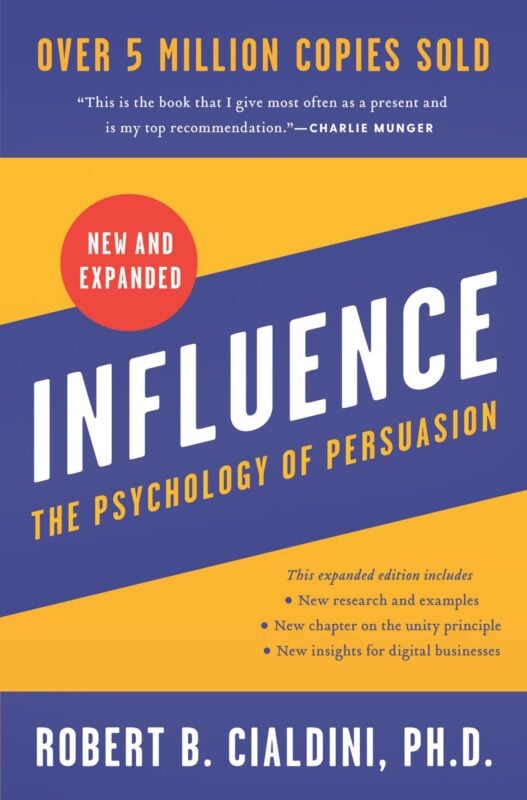
Influence: The Psychology of Persuasion by Robert B. Cialdini, PhD, unlocks the mechanics of compliance, exploring the psychological levers that drive people to say yes and shaping the landscape of persuasion across commerce, relationships, and leadership. Cialdini’s years of immersion in the world of sales professionals, marketers, and social scientists lead to a set of core principles that govern human behavior, revealing how individuals and organizations can create powerful change through carefully structured influence.
The Levers of Influence
Cialdini identifies seven principles of influence—reciprocation, liking, social proof, authority, scarcity, commitment and consistency, and unity—that operate as fundamental triggers of human compliance. Each principle activates a specific set of responses, transforming everyday interactions and business strategies into opportunities for action and alignment. Reciprocation emerges when a simple favor or gift prompts a person to return the gesture, often in greater measure. This principle governs interactions from workplace loyalty to global diplomacy, producing binding commitments rooted in a sense of obligation.
Liking exerts its pull when common ground, shared values, or positive regard create a connection that fosters agreement. A smile, a compliment, or a sign of similarity—these generate trust, shaping negotiations, friendships, and brand relationships. Cialdini traces these effects through narrative, experiment, and anecdote, demonstrating how liking influences purchasing decisions, hiring, and alliances.
Social Proof as a Guide to Action
Uncertainty breeds imitation. Social proof guides decisions by signaling what others believe or do in similar circumstances. People consult reviews, follow trends, and conform to visible behaviors, especially when information overwhelms or ambiguity clouds the path forward. This principle propels viral marketing, popularity surges, and group movements, structuring environments where consensus becomes its own argument. Cialdini’s research uncovers how social proof determines everything from tipping behavior to mass panic, while digital platforms amplify these effects through user ratings, testimonials, and influencer endorsements.
Authority and the Power of Expertise
Deference to authority shapes compliance through credentials, uniforms, titles, and symbols of expertise. Cialdini demonstrates that individuals routinely accept guidance from perceived experts, even in the absence of substantive evidence. Doctors’ advice, police commands, and professional endorsements wield decisive force. The book scrutinizes experiments in obedience, instances of catastrophic error in aviation, and the subtle signals that mark legitimacy in fields ranging from medicine to finance. Authority not only informs but compels, converting status into persuasion.
Scarcity and the Rule of the Few
People pursue what they perceive as scarce. Scarcity drives demand, urgency, and emotional engagement by restricting availability, time, or access. Cialdini dissects the mechanisms behind limited-time offers, exclusive memberships, and dwindling supplies, observing how scarcity magnifies value and accelerates decision-making. When resources, opportunities, or products seem to vanish, individuals prioritize acquisition, fearing the regret of lost chances. Scarcity motivates action in auctions, launches, and high-stakes negotiations, shaping market behavior and personal priorities alike.
Commitment and Consistency: The Drive to Align
Individuals strive for internal consistency, aligning actions with prior commitments. When people articulate intentions, especially publicly, they invest in following through. Cialdini shows that even small steps—signing a petition, voicing agreement, or making a minor purchase—create a psychological impetus for larger, congruent actions. Commitment locks in preferences, solidifies identity, and structures long-term behavior. Consistency underpins effective goal setting, relationship-building, and brand loyalty, as people seek to be—and appear—reliable in their own eyes and the eyes of others.
Unity: The Power of Shared Identity
The principle of unity synthesizes social bonds, framing influence through shared identity and collective purpose. Cialdini’s expanded edition underscores the persuasive potency of the “we” connection. Family ties, group membership, and cultural alignment intensify compliance, as people trust and cooperate with those they perceive as part of their in-group. This mechanism activates tribal instincts, from patriotism to brand communities, drawing individuals into networks where belonging and influence converge.
The Automaticity of Human Behavior
Cialdini’s investigation reveals that much of human compliance operates on autopilot. People rely on mental shortcuts—judgmental heuristics—because analyzing every choice in a complex world demands more time and attention than circumstances allow. Fixed-action patterns, inherited from evolutionary and social learning, guide decisions with remarkable efficiency. Yet these shortcuts expose individuals to exploitation, as skilled influencers manipulate trigger features—price cues, authoritative symbols, engineered scarcity—to elicit desired responses.
Experimental insights anchor these observations. People pay more for products perceived as expensive, assuming quality; they obey expert advice without scrutiny when personal stakes seem low; they respond to the word “because” with automatic compliance, even absent meaningful justification. These patterns, observable across societies, foster both adaptive behavior and vulnerabilities.
The Ethics of Persuasion
Influence is value-neutral; it serves benevolent and manipulative purposes. Cialdini foregrounds the ethical dimensions of persuasion, urging readers to harness these principles for constructive, mutually beneficial outcomes. He details the tactics of “compliance professionals”—salespeople, fundraisers, recruiters—and highlights both the benefits and risks of strategic influence. Ethical application involves transparency, respect, and alignment with long-term interests, while exploitative use can erode trust, reputations, and relationships.
Practical Applications in Business and Life
The principles Cialdini describes offer actionable guidance for marketers, leaders, entrepreneurs, negotiators, and anyone seeking to motivate change. In sales, reciprocation can drive conversions by offering value before asking for commitment; scarcity can position products as premium; social proof can accelerate adoption. Leaders cultivate unity to foster collaboration and engagement. Brands design authority and trust into messaging and visual identity, while commitment strategies boost customer retention.
Personal relationships benefit as well. Expressing gratitude, initiating goodwill, and affirming shared identity nurture loyalty and cooperation. Recognizing influence attempts—whether in advertising, politics, or social circles—equips individuals to respond thoughtfully, rather than reactively.
Case Studies and Reader Experiences
Cialdini interlaces the science of persuasion with vivid case studies and firsthand reports. Readers learn how a misinterpreted price tag doubled jewelry sales, how a simple Christmas card prompted strangers to reciprocate, and how an airline agent’s misplaced joke altered volunteer rates by hundreds of dollars. Stories from professionals, students, and ordinary people illustrate the pervasiveness and practical impact of influence tactics.
The book’s expanded edition integrates the digital age, examining how e-commerce, social media, and online reviews create new arenas for persuasion. Cialdini explains methods for detecting fake reviews, evaluating expert claims, and navigating the informational noise of modern platforms.
Defensive Strategies Against Manipulation
Awareness transforms vulnerability into resilience. Cialdini provides clear strategies for recognizing and countering manipulative influence: question the context of offers, inspect the motivations behind gifts or favors, verify authority, and analyze scarcity claims for authenticity. Conscious reflection interrupts automatic compliance, restoring agency and enabling informed choices. In a world saturated with persuasive appeals, vigilance and critical thinking safeguard autonomy.
The Evolution of Influence
Cialdini situates persuasion within evolutionary, cultural, and technological trajectories. The reciprocity rule, embedded in human history, enabled cooperation, trade, and social advancement by creating networks of indebtedness and mutual support. Authority structured learning and knowledge transmission, while social proof coordinated collective action. Scarcity and unity responded to environmental pressures and group survival. As society accelerates and information proliferates, reliance on these principles grows, amplifying both their benefits and their dangers.
Search engines, social platforms, and digital marketing technologies now operationalize Cialdini’s principles at scale. Algorithms curate content based on popularity and endorsements, authority signals guide search rankings, and artificial scarcity fuels demand for products and experiences. The stakes for understanding and managing influence extend to politics, public health, and the architecture of social systems.
Leadership and the Responsibility of Influence
Cialdini calls on leaders and communicators to wield influence with responsibility. The power to shape beliefs, behaviors, and choices brings a duty to act with integrity and foresight. Persuasion achieves its highest form when it advances shared goals, honors individual dignity, and sustains the foundations of trust. Influence, applied thoughtfully, can align teams, mobilize communities, and resolve conflict, unlocking progress in both private and public spheres.
Continued Relevance and Enduring Value
Influence endures as a foundational text in psychology, business, and personal development because it decodes the architecture of persuasion in clear, actionable terms. Cialdini’s synthesis of experimental rigor and narrative insight equips readers to navigate complex interactions, anticipate outcomes, and design environments where positive change flourishes. His emphasis on practical application, ethical guidance, and real-world stories ensures lasting impact across industries and generations.
Readers seeking mastery over the forces that shape decisions—whether for professional advancement, relationship-building, or self-protection—find in this book a toolkit for conscious, strategic engagement. The dynamics of compliance, once hidden, become transparent and manageable, empowering individuals and organizations to thrive in a world defined by choice, persuasion, and influence.