Programmed to Kill: The Politics of Serial Murder
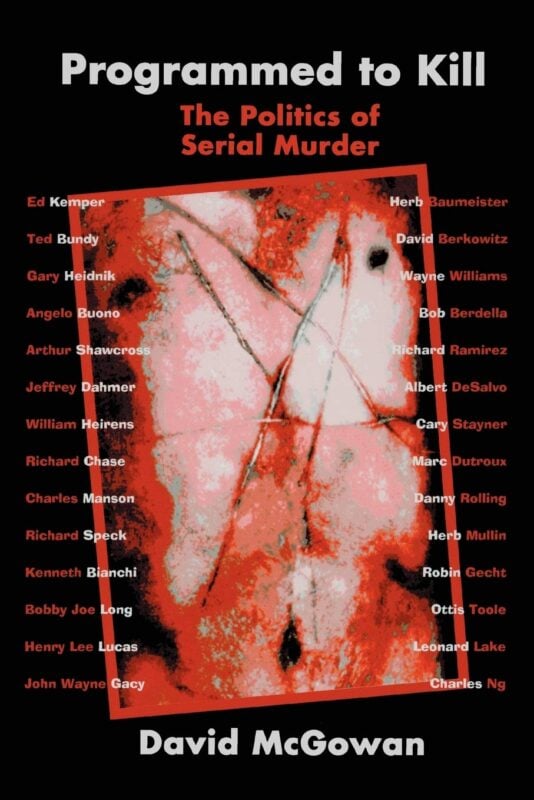
Programmed to Kill by David McGowan investigates the architecture of power that hides behind serial murder, organized child abuse, and covert psychological experimentation. McGowan documents the operational overlap between intelligence agencies, law enforcement, criminal syndicates, and elite social circles, arguing that many serial killer cases reflect engineered systems of control rather than isolated psychopathy. His analysis begins with the documented mind control research of the Central Intelligence Agency and extends into international networks of sexual exploitation, trafficking, and ritualized violence.
The Structure of Mind Control
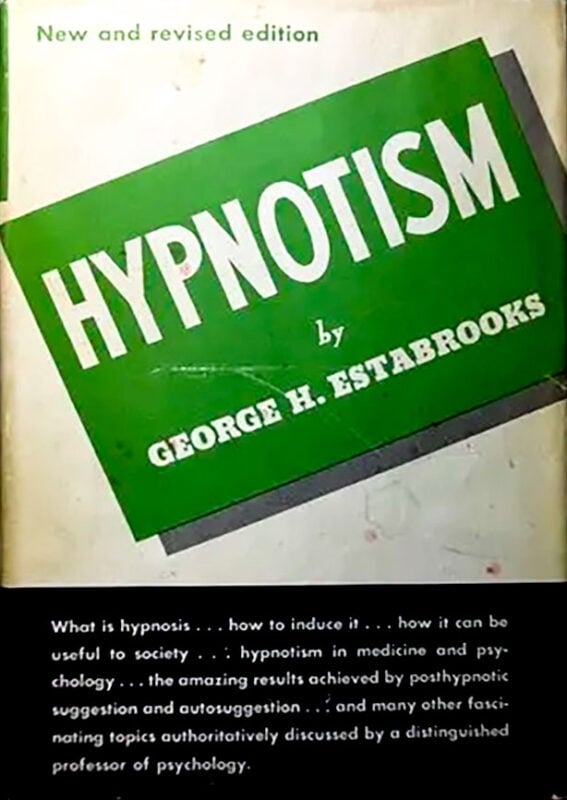
McGowan defines mind control as the deliberate creation and manipulation of dissociative states through trauma. He traces this process from the MK-ULTRA program, initiated by the CIA in the early 1950s, which sought to develop “specially gifted subjects” whose identities could be fractured and programmed. He cites the work of psychologist George Estabrooks, who demonstrated that hypnosis combined with trauma could divide personality structures, creating alter identities responsive to command. The resulting dissociation—known clinically as Multiple Personality Disorder and later as Dissociative Identity Disorder—formed the psychological foundation for controllable agents. McGowan presents this process not as theory but as an operational technology tested on children, prisoners, and psychiatric patients through prolonged drugging, sexual abuse, and sensory deprivation.
He reconstructs the bureaucratic continuity that linked Estabrooks’s wartime experiments to Cold War psychiatry and to the universities, hospitals, and research centers funded under MK-ULTRA subprojects. Figures such as Dr. Ewen Cameron, Dr. Wilder Penfield, and Dr. Paul Verdier populate this lineage. Their published works describe methods of “decortication,” “psychic driving,” and “repatterning”—euphemisms for destroying and rebuilding the human mind through pain, fear, and repetition.
Trauma as a Tool of Programming
The book positions childhood trauma as the core instrument of psychological control. McGowan describes how repeated sexual and physical abuse during early development shatters the continuity of memory, producing compartmentalized selves that can be accessed through cues, drugs, or hypnosis. He argues that this practice became institutionalized within covert operations. Intelligence handlers, he writes, used ritualized abuse both to generate programmable subjects and to maintain secrecy. The extremity of the acts ensured disbelief; the grotesque nature of the rituals guaranteed deniability.
McGowan draws on testimony from therapists, declassified documents, and survivor accounts to demonstrate how trauma-based programming produces amnesia, obedience, and emotional numbing. He cites the 2001 Melbourne study on Multiple Personality Disorder that measured distinct neurological changes between personalities, treating the phenomenon as objectively observable rather than metaphorical. Within this framework, trauma functions as both a weapon and a seal, destroying independent identity while insulating classified activity from exposure.
The Pedophocracy
From this psychological infrastructure, McGowan expands into the global landscape of organized sexual exploitation. The first case he dissects is the Marc Dutroux affair in Belgium, where a convicted pedophile operated a network of abductions, torture, and murder that implicated businessmen, police, and politicians. McGowan reconstructs the chronology: Dutroux’s early release in 1992 after serving three years of a thirteen-year sentence; his subsequent acquisition of multiple properties despite unemployment; the discovery of underground dungeons where kidnapped girls were imprisoned; and the systematic obstruction by police who ignored evidence, witness reports, and even videotapes documenting the crimes.
The book follows the investigative collapse after the dismissal of Judge Jean-Marc Connerotte and prosecutor Michel Bourlet, who had exposed links between Dutroux’s operation and high-ranking officials. McGowan records the national protests of October 1996, when 350,000 Belgians marched in Brussels demanding justice. He documents the destruction of evidence, the untested DNA samples, and the suppression of testimony from victims such as Regina Louf, who described ceremonies of torture and murder involving government ministers, bankers, and judges.
McGowan uses this case to illustrate what he terms a “pedophocracy”—a power system sustained through sexual blackmail and the exploitation of children. He cites parallel scandals: the Casa Pia orphanage in Portugal, where diplomats and media figures were charged with decades of abuse; the Latvian child prostitution network linked to government ministers; and Italy’s 2000 “Necros Pedo” investigation, which uncovered thousands of images of children raped and murdered for film.
Networks of Exploitation
Each chapter traces the institutional mechanisms that protect such operations. McGowan identifies recurring patterns: premature release of offenders, destruction of evidence, death of witnesses, and the transfer or suspension of investigating judges. He names political and corporate actors shielded by legal privilege, including European Commissioners, NATO officials, and clergy. The narrative extends to North America, referencing the Franklin Credit Union scandal in Nebraska, where child victims accused businessmen and politicians of sexual exploitation tied to covert operations.
He examines the False Memory Syndrome Foundation, whose founders included individuals accused of child abuse and whose advisory board contained psychiatrists formerly funded by the CIA. McGowan presents the Foundation as a counterintelligence front designed to discredit survivor testimony through the psychiatric construct of “false memory.” By institutionalizing skepticism toward victims, he argues, intelligence networks neutralized exposure of mind control projects and sexual blackmail systems.
Serial Killers and the Manufactured Narrative
The second section of the book reinterprets American serial killers within this framework. McGowan analyzes Henry Lee Lucas, Ottis Toole, Charles Manson, and others as subjects whose behaviors reflect patterns of conditioning, protection, and staged confession. He observes that many of these men possessed military or institutional backgrounds, moved freely despite parole violations, and often claimed association with secret organizations or cults. Lucas, for instance, confessed to hundreds of murders, recanted, and later received special privileges in prison; McGowan argues that his confessions functioned to close unsolved cases and divert investigation from organized networks.
He develops the thesis that the “serial killer” archetype emerged during the Cold War as a cultural instrument. By isolating violence within individual pathology, law enforcement and media diverted attention from systemic operations—assassinations, covert experimentation, and organized trafficking. The myth of the lone, compulsive murderer, McGowan asserts, replaced public inquiry with fascination and fear, transforming structural crimes into entertainment.
Ritual and Control
McGowan situates ritual abuse within both psychological and political dimensions. Ritual creates predictable trauma sequences, reinforcing dissociation while embedding ideological symbols that bind perpetrators through shared secrecy. He documents cases where victims described ceremonies involving uniforms, insignias, and coded language corresponding to military and intelligence structures. The pageantry of “satanic” motifs, he suggests, conceals procedural programming rooted in behavioral science rather than supernatural belief.
He cites Valerie Sinason’s 2000 study for the UK Department of Health, which confirmed ritual abuse among British victims and recorded instances of unregistered births used for sacrifice. McGowan integrates this with earlier accounts of CIA involvement in cult fronts, suggesting that certain occult groups operated as field laboratories for trauma conditioning. In this context, the demonic imagery of ritual serves psychological control, public ridicule, and operational secrecy simultaneously.
The Media as Custodian of Silence
Throughout the narrative, McGowan describes the press as an instrument of containment. He analyzes how major outlets reported initial revelations, then withdrew coverage as investigations reached political elites. He notes the repetition of framing language—“hysteria,” “conspiracy,” “urban myth”—used to delegitimize witnesses. In the Belgian and Portuguese cases, victims were portrayed as unstable, while officials who suppressed evidence retained authority. McGowan interprets this as structural censorship maintained through editorial hierarchies aligned with intelligence interests.
The author catalogues numerous disappearances of journalists, sudden deaths, and judicial dismissals that followed attempts to expose these networks. He details the role of disinformation—selective leaks, planted skeptics, and manufactured debates over false memory—to redirect inquiry. The result, he contends, is a managed perception in which horror becomes spectacle and accountability dissolves in ambiguity.
The Political Function of Terror
The convergence of mind control, sexual exploitation, and serial murder forms what McGowan calls a political economy of terror. By weaponizing trauma at both individual and collective levels, power consolidates through fear and moral paralysis. Child abuse and ritualized violence generate psychological fractures that replicate the mechanisms of control within society itself. The normalization of serial killer imagery, he argues, conditions the public to perceive violence as personal pathology rather than systemic governance.
He interprets these phenomena as expressions of statecraft: the deliberate cultivation of despair, obedience, and disbelief. Intelligence agencies perfect the art of creating both perpetrators and narratives, shaping public consciousness through crime as theater. McGowan’s documentation of interconnected scandals—Belgium’s Dutroux, Portugal’s Casa Pia, the U.S. Franklin network, and the Wonderland Club raids—reveals a transnational infrastructure of exploitation bound by secrecy and protected by authority.
The Continuity of Covert Power
The final chapters trace how these systems persist under bureaucratic transformation. When programs like MK-ULTRA were officially terminated, their personnel migrated into private research, psychological warfare divisions, and child protection agencies. The same techniques of induced trauma, sensory deprivation, and psychological fragmentation evolved into new forms of population management—media manipulation, pharmacological dependency, and the manufacture of fear through spectacle.
McGowan positions the “politics of serial murder” as a mirror of state policy. The compartmentalized killer reflects the compartmentalized operative; both act without conscious integration of purpose, serving designs beyond their understanding. The cover stories—whether psychiatric diagnosis or criminal motive—protect the architects who orchestrate the conditions of violence.
An Inquiry into Hidden Governance
Programmed to Kill advances a forensic question: what political structure requires the continuous production of controlled terror? McGowan’s answer lies in the intersection of intelligence, sexuality, and secrecy. Each case he presents—whether the Belgian protests, the Franklin investigation, or the proliferation of snuff networks—demonstrates the same pattern of exposure and suppression. The function of these crimes exceeds profit or perversion; they sustain obedience through the destruction of innocence and the manipulation of perception.
The book closes with a direct observation: the capacity to fragment minds, exploit children, and erase evidence defines modern governance. The architecture of control operates through institutions that present themselves as protectors—courts, clinics, and media agencies—while concealing the machinery of coercion they enable. McGowan leaves readers with a structural recognition rather than a conclusion: that power maintains itself through the orchestration of trauma and the management of disbelief.