Changing Belief Systems With NLP
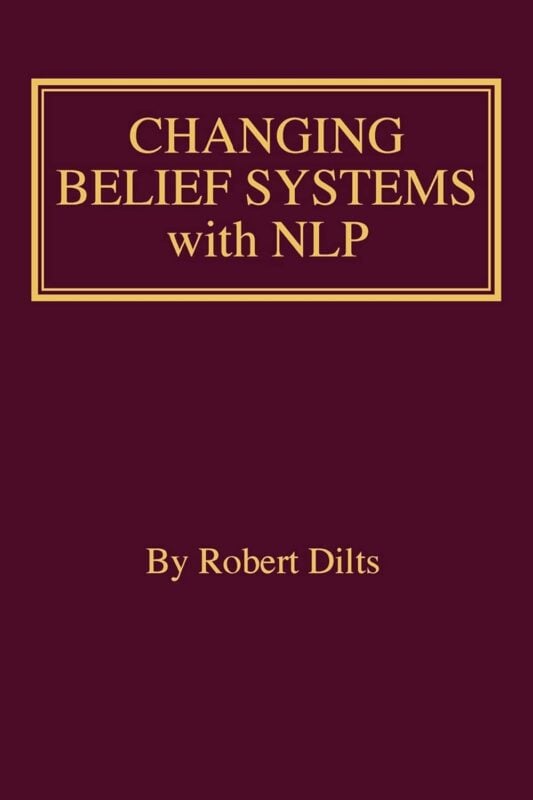
Changing Belief Systems With NLP by Robert Dilts explores the structural forces that shape human experience and capacity for change. Dilts places beliefs at the core of individual transformation, tracing their origins, operations, and the precise methods by which they evolve. He asserts that beliefs govern the boundaries of health, achievement, learning, and self-concept, and he advances a systematic model for decoding and reconstructing these mental architectures through Neuro-Linguistic Programming (NLP).
The Architecture of Belief
Robert Dilts grounds his inquiry in the assertion that beliefs organize human perception and behavior across distinct logical levels: environment, behavior, capability, values and beliefs, and identity. Each level mediates how individuals interpret challenges and orchestrate responses. Environmental factors present external constraints. Behavior channels interaction with these constraints. Capabilities determine strategic access to behavioral options. Beliefs pattern the value assigned to outcomes and processes, filtering what is possible, desirable, or permitted. Identity synthesizes these elements into the experience of self.
Within this hierarchy, change radiates upward or downward, creating ripples across levels. When a teacher tells a student, “You did poorly on this test,” the impact localizes at behavior. The statement, “You are not good at math,” penetrates to capability. When the message shifts to “You are a poor student,” it anchors in identity, transforming episodic setbacks into a narrative of self. Organizational contexts display parallel dynamics. Corporate initiatives flounder or flourish depending on the congruence of new ventures with entrenched beliefs about the firm’s purpose, products, and identity. Family systems exhibit structural echoes—children’s conflicts intensify as they transition from assimilating familial beliefs to forming independent identities.
How Beliefs Shape Outcomes
Beliefs function as generative engines. They define causality, assign meaning, and set limits. Dilts claims that beliefs exert decisive influence over health, as illustrated by the placebo effect and the survival stories of patients defying terminal prognoses. Placebos demonstrate the embodied reach of belief—individuals respond physiologically to inert substances when convinced of their efficacy. Bandura’s research into self-efficacy reveals that performance rises with belief in one’s effectiveness, and plateaus or regresses when belief wanes. Across life domains, those who anticipate success marshal their capabilities and persist through setbacks, while those who accept defeat or impossibility retract effort, confirming their expectations.
Beliefs produce their effects through three principal mechanisms: generalizations about causal relations, attributions of meaning, and the establishment of boundaries. A person confronting illness who interprets the cause as genetic, divine punishment, or stress constructs a different reality and selects interventions accordingly. The meaning assigned to adversity—failure as evidence of inadequacy or as an invitation to learn—shapes emotional and behavioral responses. Limits function as self-imposed thresholds, constraining what individuals pursue or permit themselves to attain. Dilts dissects these patterns, identifying hopelessness (“The outcome is impossible”), helplessness (“Others can succeed, but I cannot”), and worthlessness (“I do not deserve success”) as the dominant forms of limiting belief.
NLP as a Tool for Change
Neuro-Linguistic Programming operates as an applied epistemology of change, modeling the structure of subjective experience and designing interventions to recalibrate belief systems. Dilts develops practical techniques for identifying, deconstructing, and reassembling the “molecules” of belief—composite patterns of sensory and cognitive experience that maintain specific convictions.
Through exercises involving sensory access cues, submodalities, and internal dialogue, practitioners map the coordinates of limiting beliefs. For example, an individual associating a goal with failure may experience a confusing mixture of images, sounds, and feelings, fused into a synesthetic state. NLP methods separate and sort these sensory components, assigning each to its appropriate channel and spatial location, thereby disrupting the reinforcing loops of self-doubt or anxiety.
Once disaggregated, each sensory element undergoes a process of acknowledgment, adjustment, and integration. Feelings classified as “bad” become resources when reframed or repositioned. Internal voices that sabotage can be moved, modulated in tone, or recast as historical echoes rather than current reality. Visual memories associated with past failure can be evaluated for positive learnings and linked with successful experiences. This restructuring culminates in the creation of a new, resourceful synesthesia—a composite representation in which all elements reinforce the desired outcome. The goal moves from a dissociated, improbable fantasy to a tangible, compelling possibility, connected to memories of personal competence.
Casework and Demonstration
Dilts grounds his methodology in detailed demonstrations, including the case of Linda, whose experience of failure comprised a tangled sensory network. By guiding Linda to isolate and reassign each element—feelings to one direction, voices to another, memories to a third—Dilts enabled her to reinterpret failure as feedback. She integrated previous setbacks as stepping stones toward an updated goal, now perceived as both attainable and valuable. The process required connecting the restructured belief with positive reference experiences, establishing continuity between past success and future achievement.
Exercises and protocols outlined in the book formalize this sequence: identify the limiting belief at its sensory “address,” separate the components, examine and update the intention or message of each, and then reconstruct the composite belief using the template of a resourceful state or future-oriented certainty.
Belief, Environment, and Support
The trajectory of belief change depends on environmental reinforcement. Supportive contexts amplify new beliefs, providing validation and opportunity for embodied practice. Hostile or skeptical environments may resist and undermine emergent patterns, requiring additional strategies for resilience. Dilts recounts the example of his mother, who survived a severe recurrence of cancer while facing medical skepticism. Her persistence with NLP techniques and positive visualization, despite external discouragement, resulted in sustained health and ultimately influenced her physicians’ perspectives.
Practical Applications
Changing Belief Systems With NLP equips readers with actionable frameworks for transforming beliefs across health, learning, business, and relationships. The techniques of reimprinting, reframing, and belief integration offer pathways for:
- Translating self-defeating expectations into opportunities for growth and learning.
- Mobilizing capabilities by constructing belief structures that support experimentation and persistence.
- Revising organizational belief systems to align new initiatives with identity and values, avoiding conflict and fragmentation.
- Supporting individuals to reconnect with positive self-concepts, integrating experiences of failure as feedback, and sustaining motivation through periods of plateau or apparent stagnation.
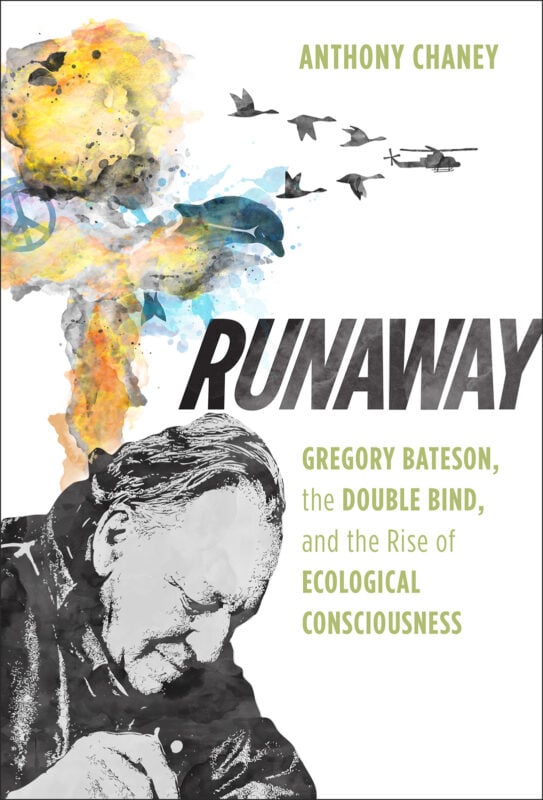
The book synthesizes influences from Gregory Bateson’s logical levels, Bandura’s self-efficacy theory, Gestalt Psychology, Virginia Satir’s family systems, and the core NLP strategies developed by Bandler, Grinder, and their collaborators. Dilts distills these sources into a coherent operational model, focused on utility and transferability.
The Dynamics of Identity
Belief change often converges at the level of identity. When individuals adopt limiting statements about who they are, these beliefs exert the strongest constraints and prove most resistant to challenge. Identity beliefs consolidate repeated experience, familial messages, and personal interpretation into stable patterns of meaning. Shifting these patterns involves differentiating inherited or imposed beliefs from self-authored convictions, generating new reference experiences, and asserting agency in the construction of self.
Change at the identity level initiates reorganization across all subordinate levels. As individuals reconceptualize their capabilities and values, behaviors and environmental responses realign. Family and organizational systems experience similar dynamics—new identities emerge through the integration of conflicting beliefs, resolution of systemic tensions, and alignment of values with lived action.
The Role of Readiness
Dilts identifies readiness as a decisive precursor for belief change. When individuals reach a threshold where they are “ready to change,” interventions produce dramatic results. This readiness often coincides with significant life transitions or cumulative frustration with prior strategies. Practitioners can pace and lead clients into this state, but cannot impose it by force or argument. Change arises from the convergence of internal willingness and the strategic alignment of beliefs, capabilities, and goals.
Repetition, Practice, and Reinforcement
Belief transformation unfolds over time through repetition, feedback, and the gradual accumulation of congruent experiences. Early attempts may yield incremental shifts; sustained practice and environmental reinforcement consolidate the new structure. Dilts advocates ongoing refinement, connecting new goals to an expanding base of positive experiences, and leveraging feedback from both success and setback.
Sustaining Transformation
Beliefs that support growth and health thrive when woven into the fabric of daily life. Practitioners and individuals alike can reinforce positive change by designing supportive routines, seeking environments aligned with their values, and maintaining vigilant attention to internal dialogue and self-representation. The iterative, recursive nature of belief change reflects the brain’s organization—new patterns develop as networks, self-reinforcing through repeated activation and conscious integration.
Conclusion: The Power and Reach of True Belief Change
Changing Belief Systems With NLP by Robert Dilts delivers a structural blueprint for personal and systemic transformation. Beliefs act as levers, directing capability, shaping identity, and creating self-fulfilling trajectories. With NLP, individuals and organizations gain precise tools to decode, challenge, and rebuild belief systems. As new beliefs take root, health, performance, and fulfillment rise in concert. The book’s synthesis of theory, demonstration, and practical exercises stands as a manual for those seeking to harness the full potential of human change—one belief at a time.