The Structure of Magic Volume II

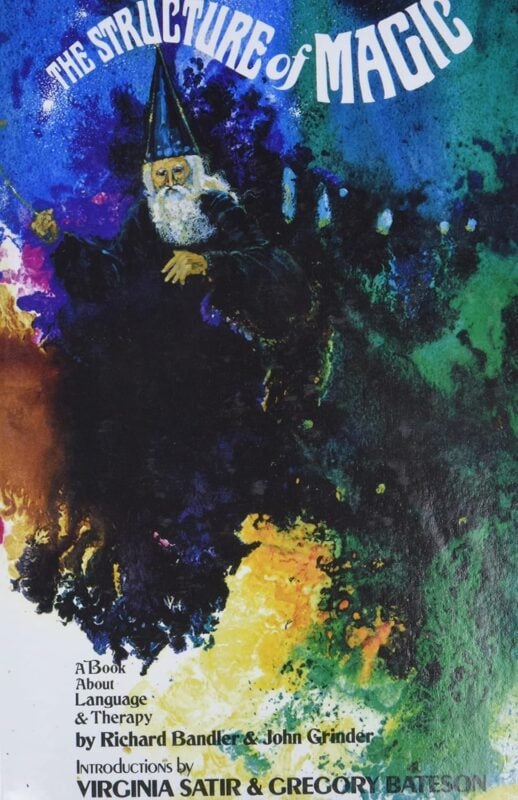
The Structure of Magic Volume II by John Grinder and Richard Bandler deepens the study of how people generate change and meaning through the interplay of language, perception, and behavior. Grinder and Bandler deliver a systematic manual that defines how therapists and communicators can harness representational systems to produce transformative results in human interaction. The text expands the foundational principles of Neuro-Linguistic Programming (NLP) with new levels of practical application and theoretical rigor.
Representational Systems: The Foundation of Human Experience
Human experience unfolds within maps constructed by representational systems. These systems—visual, auditory, kinesthetic, gustatory, olfactory, and linguistic—structure how people encode and retrieve the world. When a person receives input through the senses, information passes through these channels, resulting in complex, interwoven maps of reality. Grinder and Bandler demonstrate that the world of direct experience is filtered and shaped by generalization, deletion, and distortion. These mechanisms form the basis of the client’s model of the world, determining both the richness of experience and the constraints that generate suffering or growth.
Predicates and Language: Keys to Inner Mapping
Within conversation, the choice of words—predicates—signals which representational system a speaker privileges. A client who says, “I see what you mean,” operates from a visual map; one who says, “I feel stuck,” relies on kinesthetic coding. The therapist who detects these patterns can attune to the client’s internal landscape. Words do not merely refer; they enact the very processes by which perception and meaning arise. The authors delineate exercises for therapists to sharpen their detection of predicates and build awareness of the representational system active in any dialogue. By matching predicates, the therapist enters the client’s world on the terms most likely to produce resonance and trust.
The Map Is Not the Territory: From Structure to Transformation
Human maps remain partial, provisional, and distinct from the territory they depict. These maps act as guides for behavior, decision, and emotional response. The therapist’s central role becomes one of recognizing the limits of the client’s map and crafting interventions that expand, enrich, and reorganize those limits. Through the meta-model of therapy, Grinder and Bandler lay out an explicit strategy for transforming unhelpful generalizations, deletions, and distortions embedded in the client’s linguistic structures. The approach relies on stepwise procedures—each independently verifiable, applicable across contexts, and grounded in the structural properties of language and perception.
Trust Through Systematic Matching
Clients trust therapists who understand their experience and who use language that mirrors their representational systems. Trust arises not as an abstract ideal but as an operational outcome of precision in communication. When the therapist matches the client’s system—using kinesthetic predicates for a kinesthetically-oriented client, for instance—the client recognizes the therapist’s grasp of his world and opens to deeper change. Grinder and Bandler provide clear translation tables that enable therapists to map their intentions across visual, auditory, and kinesthetic terms. This method builds rapport and facilitates the therapeutic alliance by ensuring that both participants engage through mutually intelligible channels.
Meta-Tactics: Tools for Expanding Choice
Three tactical interventions enable the therapist to catalyze client change through representational systems. First, the therapist may match the client’s system, using congruent predicates to support trust and effective communication. Second, the therapist can prompt the client to switch systems, thereby shifting an experience from a limiting or painful channel to one that offers greater flexibility or resilience. For example, transforming a kinesthetically painful memory into a visual image can release suffering and increase resourcefulness. Third, the therapist can add new representational systems, guiding the client to integrate visual, auditory, and kinesthetic coding around a single experience. The addition of a new system dramatically increases choice, diversity of experience, and potential for action.
Congruence and Incongruence: Navigating Multiple Channels
Human communication operates across several simultaneous output channels: language, body posture, movement, voice tone, and tempo. Each channel conveys a message, and these messages—paramessages—may either converge (congruence) or diverge (incongruence). Grinder and Bandler advance beyond binary models that divide communication into content (verbal) and relationship (non-verbal). They assert that each channel offers a distinct, structurally valid message. Incongruence signals internal division or conflict in the client’s maps of the world. The therapist who detects incongruence can intervene with surgical precision, using exercises and structured inquiry to surface, integrate, or re-map these competing models.
Paramessages: A Model of Communication Complexity
Communication comprises a field of paramessages, each aligned with a specific output channel. This model enables the therapist to check for congruency or divergence across any number of channels. Rather than privileging one output over others, the therapist recognizes that each paramessage stands as a direct representation of the client’s present model. When paramessages align, the client experiences internal unity and clarity. When they diverge, the therapist gains an immediate diagnostic entry point for therapeutic work, targeting the representational system or systems responsible for internal conflict or stuckness.
Intervening in the Structure: Practical Techniques
Grinder and Bandler introduce exercises for identifying and working with predicates and representational systems. Therapists train their attention by listening for linguistic cues and observing shifts in posture, gesture, and voice. Exercises guide the therapist to ask precise questions: “Do you make pictures in your mind?” “Do you hear voices in your head?” “Do you feel what you are saying?” Such questions cut through abstraction, helping both client and therapist pinpoint the channel in use. Interventions proceed from diagnosis: the therapist may prompt the client to create new images, enact feelings, or shift sensory focus, depending on the structure of the presenting problem.
Case Studies: Structural Change in Action
Case illustrations clarify the tactical use of representational systems. In one scenario, a client suffering from a persistent headache experienced relief when guided to visualize the pain and then externalize it through breath and imagery. In another, a woman haunted by distressing images gained resolution by enacting the images kinesthetically, thus integrating them with her primary mode of experience. These examples underscore the claim that change results from deliberate mapping and remapping of experience across representational systems. The therapist acts as an architect of change, using language and sensory prompts to reconfigure the client’s internal structure.
Theory of Logical Types: Structural Integrity in Communication
Drawing on Gregory Bateson’s work, Grinder and Bandler analyze how messages sort into logical levels—content and relationship. They refine this theory, arguing that no paramessage stands meta to the others; each participates equally in constructing the client’s reality. This theoretical move eliminates ambiguity about which channel conveys the “real” message. Instead, the therapist reads congruence or incongruence as diagnostic signals, not judgments of truth. The focus remains on structure: how do channels interact, what patterns emerge, and where does intervention produce maximum leverage for change?
Implications for Therapy and Change Work
Therapists gain strategic power by mastering the structure of representational systems. This knowledge directs their choices in intervention, communication, and rapport-building. By working at the level of structure, the therapist generates experiences for the client that fall outside the limits of the client’s current map. This expansion—sometimes through guided fantasy, sometimes through enactment or re-mapping—enriches the client’s options and dissolves blocks to growth. The systematic nature of the meta-model ensures that interventions are replicable, teachable, and adaptable across contexts.
Expanding Human Potential Through Structural Mastery
Grinder and Bandler maintain that people operate at their current limits because their maps restrict their available choices. Therapy becomes a process of systematic expansion—making available new representational systems, bridging channels, and generating congruence where discord had reigned. As the client’s repertoire grows, so does the freedom to choose, act, and respond creatively. The therapist’s role shifts from expert to facilitator, empowering clients to access and utilize the full range of their sensory and linguistic capacities.
Applications Beyond the Therapy Room
The book’s relevance reaches into fields such as education, coaching, management, and personal development. Anyone involved in helping, teaching, or leading others benefits from the clarity and flexibility afforded by representational systems work. By recognizing and matching others’ preferred channels, communicators increase influence and foster genuine understanding. Interventions grounded in structural insight accelerate learning, resolve conflict, and support lasting change.
Conclusion: Structural Understanding as Transformative Power
The Structure of Magic Volume II defines the architecture of change, positioning structure—not content—as the key to effective communication, therapy, and growth. Through systematic application of representational systems, practitioners gain tools to map, match, and expand the experience of those they help. Grinder and Bandler’s approach stands as a model of operational precision, practical intervention, and profound respect for human complexity. By mastering the structure of magic, communicators access new levels of impact, creativity, and transformation in human interaction.