Thanks For The Memories … The Truth Has Set Me Free! The Memoirs of Bob Hope’s and Henry Kissinger’s Mind-Controlled Slave
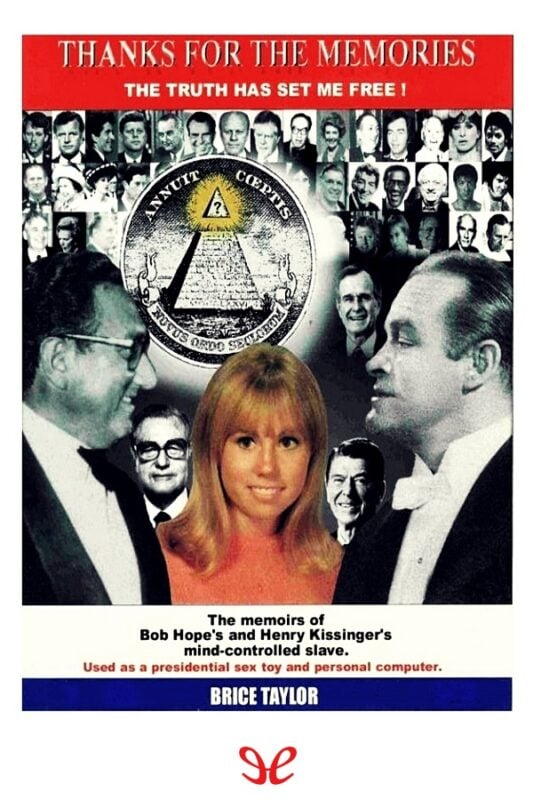
Thanks For The Memories The Truth Has Set Me Free by Brice Taylor explodes into public discourse as a testimony to government-sponsored mind control, covert psychological programming, and the exploitation of children for clandestine operations. Brice Taylor—born Susan Ford—frames her life as the product and eventual survivor of trauma-based programming, linking her narrative to historical developments in intelligence, psychiatry, and occult ritual abuse. As Taylor’s memories surface, her story moves through the intertwined worlds of celebrity, politics, intelligence, and spiritual warfare. The book drives a singular claim: hidden networks manipulate, exploit, and destroy lives for the sake of power.
A Hidden World of Trauma-Based Programming
Taylor asserts that her earliest memories reach back into a family system steeped in ritual abuse, generational secrecy, and an engineered dissociation designed to fracture identity. The book defines mind control not as a theoretical abstraction but as a deliberate, systematic method. Handlers inflict trauma—electroshock, sexual abuse, sensory deprivation, and hypnotic induction—to splinter the mind into “alters.” These distinct personality states, or compartments, respond to coded triggers, cues, or ritualized commands. Taylor claims programmers embedded these compartments with memories, skills, and secrets for later retrieval or deployment. She recounts years of conditioning orchestrated by her father and extended family, in collusion with intelligence operatives and cult networks.
Project Monarch, MKULTRA, and the Expansion of Control
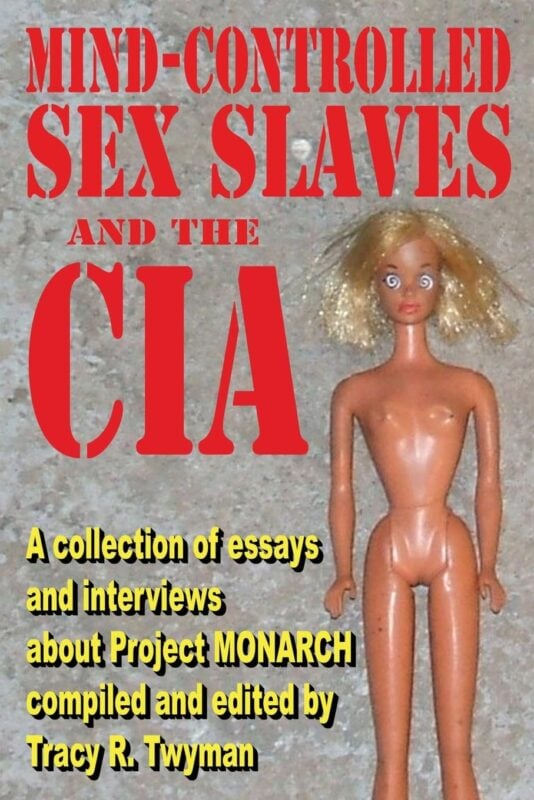
Taylor situates her narrative within a broader historical context, citing projects such as MKULTRA, ARTICHOKE, and BLUEBIRD. The text grounds itself in congressional testimony, declassified documents, and survivor accounts. Under Project Monarch—a term she uses to denote trauma-based mind control with multigenerational reach—she details techniques of fragmentation: electroshock administered before the age of six, ritualistic abuse, pharmacological manipulation, and the construction of alter systems. Taylor connects the post-WWII importation of Nazi scientists through Operation Paperclip with the rise of behavioral science at U.S. universities and military installations. These agents, Taylor claims, brought advanced techniques in dissociation and trauma-bonding, expanding the apparatus of covert psychological operations.
Celebrity Handlers and the Manufacturing of Slaves
According to Taylor, her childhood conditioning paved the way for selection as a “presidential model”—a category denoting high-functioning, programmable slaves capable of seduction, espionage, and secret-keeping. She alleges that entertainer Bob Hope and diplomat Henry Kissinger played central roles in her life, acting as handlers, “owners,” and mind programmers. Taylor recounts transportation across the United States, attendance at exclusive parties, and forced sexual encounters with political, military, and entertainment figures. She describes a parallel system of children raised for special assignments—“sex kittens,” “presidential models,” and “Manchurian candidates”—who function as mind-controlled assets in the service of elite agendas.
Symbolism, Programming Themes, and the Language of Control
Taylor explains that programmers employed a lexicon of symbols, stories, and cues to structure the internal worlds of their subjects. Monarch butterflies represent transformation, fragmentation, and the creation of new identities. Fairy tales, Disney films, and classic children’s literature serve as templates for alter systems—The Wizard of Oz and Alice in Wonderland dominate the architecture of her mind. Taylor contends that certain songs, television shows, and coded language operate as keys for accessing or activating programmed responses. Through repetition and association, these motifs embed themselves in the psyche, rendering the subject highly suggestible and responsive to their handlers’ commands.
The Mechanics and Hierarchies of Dissociation
Taylor analyzes the mechanics of alter creation, drawing from her therapy sessions, recovered memories, and corroborative accounts. Programmers divide the mind along the lines of trauma, installing “gatekeepers,” “programmers,” and “internal self-helpers” as organizational nodes. Hierarchies emerge, with core personalities shielded from traumatic memory while specialized alters perform designated tasks. Taylor describes “alpha” programming for general skills, “beta” for sexual servitude, “delta” for assassination, “theta” for psychic abilities, “omega” for self-destruction, and “gamma” for deception and misdirection. The system sustains itself through regular reinforcement, periodic programming “tune-ups,” and ongoing trauma.
Networked Abuse and Institutional Complicity
Taylor charges that mind control networks operate through a convergence of government agencies, military installations, religious fronts, and entertainment industry elites. She cites hospitals, universities, research labs, and military bases as programming sites, naming locations such as China Lake Naval Weapons Center, UCLA Neuropsychiatric Institute, and McGill University. Taylor claims the involvement of psychiatrists, intelligence officers, and prominent figures in orchestrating and concealing systemic abuse. She identifies patterns of ritualized violence, including Satanic ceremonies, soul-bonding, and the deliberate twinning of children for later psychic or operational pairing.
Survivor Testimony, Advocacy, and the Struggle for Recognition
The memoir positions Taylor as both a chronicler and advocate for other survivors. She references legal efforts, support networks, and ongoing attempts at deprogramming and healing. Taylor includes case studies, letters, and acknowledgments to therapists, investigators, and allies who contributed to her journey. The book names influential researchers, clinicians, and activists, such as Walter Bowart, Ted Gunderson, and Catherine Gould, who corroborate the patterns she describes and offer expertise in the treatment of dissociative disorders.
Legal Barriers and Judicial Blindness
Taylor critiques the American justice system and psychiatric establishment, exposing the structural challenges faced by survivors of ritual and mind control abuse. She points to the skepticism of courts, the reluctance of mental health professionals to engage with claims of deliberate programming, and the impact of lobbying groups such as the False Memory Syndrome Foundation. According to Taylor, these obstacles have resulted in the misdiagnosis, marginalization, and silencing of victims. She calls for legislative reform, comprehensive trauma-informed care, and the active prosecution of criminal networks implicated in mind control.
Spiritual Warfare and the Path to Restoration
The narrative integrates Christian spirituality as a central axis of healing and recovery. Taylor asserts that only through faith in God, forgiveness, and spiritual warfare can a survivor reclaim wholeness and agency. Biblical references and invocations of Jesus Christ punctuate the text. Taylor presents her decision to break the silence and publish her memoir as an act of obedience to divine guidance. She urges other survivors to seek both spiritual and therapeutic support, emphasizing the necessity of collective action to expose hidden crimes and restore fractured lives.
The Legacy of Trauma and the Future of Freedom
Taylor closes her account with an appeal for public awareness, survivor solidarity, and a renewed commitment to justice. She sees the exposure of mind control programs as crucial to safeguarding future generations from exploitation. The memoir documents patterns of multi-generational abuse, the targeting of children for secret experimentation, and the perpetuation of trauma cycles within families and institutions. Taylor proposes that only direct confrontation with hidden realities—through storytelling, advocacy, and legal action—can disrupt the machinery of control and facilitate genuine societal healing.
Historical Context and the Expansion of the Surveillance State
The book embeds Taylor’s personal story within a wider analysis of government secrecy, Cold War paranoia, and the growth of the surveillance state. She references the evolution of behavior modification research, the recruitment of Nazi scientists under Operation Paperclip, and the establishment of intelligence agencies like the CIA and NSA. Taylor contends that mind control represents an extension of the state’s pursuit of power over both bodies and minds, functioning as both a weapon of covert warfare and a tool of elite dominance.
Psychological Science, Psychiatry, and the Limits of Consent
Taylor interrogates the complicity of psychiatry and psychological science in the proliferation of mind control. She documents experiments conducted at leading universities, the development of psychotropic drugs, and the use of electroshock and sensory deprivation as research tools. The book highlights the blurry boundary between consent and coercion, especially when subjects are children or vulnerable adults. Taylor maintains that the language of “therapy” and “treatment” can obscure or enable the perpetration of abuse under scientific auspices.
Popular Culture, Media Manipulation, and Social Conditioning
Taylor explores the role of mass media, entertainment, and popular culture in normalizing dissociation and desensitizing the public to the reality of mind control. She identifies television, film, music, and advertising as vectors for programming triggers, symbolic messages, and cultural mythmaking. By embedding programming cues in widely consumed media, programmers both reinforce individual control mechanisms and cultivate societal acceptance of manipulation. Taylor calls for media literacy, critical engagement, and the reclaiming of narrative sovereignty.
Community, Memory, and the Healing of Dissociation
Throughout her account, Taylor emphasizes the importance of community—therapeutic, spiritual, and familial—in the recovery process. She describes memory as both a site of wounding and a tool for liberation, requiring skilled facilitation, trust, and courage. Taylor advocates for survivor-led support groups, trauma-informed therapy, and sustained advocacy for recognition and restitution. She maintains that the reintegration of fractured selves mirrors the work of mending a fractured society.
A Call to Conscience and the Defense of Freedom
Taylor concludes with a direct challenge to the reader: What will it take for society to acknowledge, confront, and dismantle the hidden systems of abuse and control? She asserts that truth, compassion, and action can transform both individual lives and collective destiny. The memoir issues a summons to conscience—demanding vigilance, responsibility, and solidarity in the face of structural evil. For Taylor, the act of remembering becomes both a form of resistance and a pathway to freedom.
Thanks For The Memories The Truth Has Set Me Free by Brice Taylor integrates personal narrative, historical research, and survivor advocacy to document and challenge the hidden machinery of trauma-based mind control. Through the lens of lived experience and corroborative testimony, Taylor illuminates a secret architecture of power, compelling the reader to reckon with the consequences of organized abuse and the urgent need for truth and transformation.