Base Nation: How U.S. Military Bases Abroad Harm America and the World
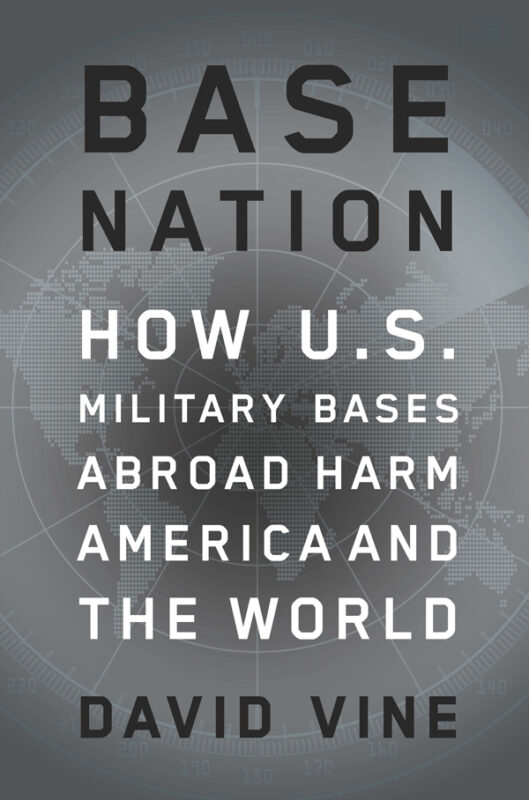
Base Nation by David Vine uncovers the hidden architecture of American military power by tracing the origins, expansion, and impact of the United States’ global network of military bases. David Vine moves from the razor-wired boundaries of Guantánamo Bay’s infamous prison to the quiet, suburban comfort of the American-style neighborhoods that surround it, then pulls the reader out to a planetary view: the United States maintains approximately 800 military bases in more than 70 countries, supported by hundreds of thousands of service members, family members, and civilian employees. The strategic, economic, and political implications of this network reach into the heart of U.S. foreign policy, affect domestic priorities, and shape the lives of millions worldwide.
Origins of an Empire of Bases
U.S. global basing emerged in the 20th century through strategic bargains and wartime exigency. The destroyers-for-bases agreement of 1940, which President Franklin D. Roosevelt negotiated with Britain, authorized American control over key naval and air facilities in the Atlantic and Caribbean, marking a transformation of the United States into a nation able to project power beyond its borders. As World War II accelerated, U.S. leaders pursued a strategy to acquire or construct bases across the globe. Military planners, responding to Roosevelt’s insistence, expanded their ambitions and moved with deliberate speed. By the war’s end, American forces maintained a presence on every continent, their supply lines and deployment capacity extended by a vast archipelago of installations.
After 1945, the logic of permanent readiness solidified. The United States embedded the notion of forward presence into its national security doctrine. Policy architects defined “the forward strategy” as an imperative: maintain large concentrations of military forces and installations near potential rivals to “contain” them. The base became the instrument of that strategy. Policy documents, military manuals, and the testimony of strategists reinforced the claim that security depended upon continuous, visible deployments on foreign soil.
Scope and Structure of U.S. Overseas Bases
The Pentagon’s official lists enumerate hundreds of “base sites”—a term defined as any location, facility, or installation used by the armed forces and under U.S. possession, lease, or control. These installations range from sprawling city-sized garrisons in Germany, Japan, and South Korea, to airfields, ports, repair depots, intelligence and drone facilities, communications posts, military hospitals, arsenals, and recreation centers, including over 170 golf courses operated worldwide. The true number of U.S. bases overseas exceeds public counts, since official records exclude secret installations, bases in conflict zones, and facilities with ambiguous legal status.
Other nations’ foreign bases appear minuscule in comparison. Britain and France control a combined total of about thirteen bases, Russia around nine, and other countries no more than one or two. The U.S. basing network thus forms the world’s dominant military footprint. Over half a million Americans live on or around these bases, which often replicate the suburban fabric of the United States with their own schools, shopping centers, fast-food chains, chapels, sports complexes, and entertainment venues.
Economic Costs and Domestic Impact
Sustaining this network demands a vast financial outlay. Annual costs to station troops and their families abroad reach at least $71.8 billion, with some analyses pushing the figure to $120 billion, particularly when incorporating indirect expenditures and operational surges during wartime. Stationing a service member overseas costs $10,000 to $40,000 more per year than basing that individual within the United States. The burden does not end with direct military spending: every dollar spent abroad circulates outside the domestic economy, reducing funds available for education, health care, infrastructure, and other public investments. These choices shape economic productivity and social well-being for decades.
Beyond the material expenditure, the personal cost falls upon service members and their families. Rotational deployments, frequent moves, and the psychological toll of extended separations impose enduring stress. Overseas bases present particular risks for servicewomen, who report heightened exposure to sexual assault and harassment, exacerbated by isolation and weak accountability systems. The base structure, designed for strategic advantage, engenders unintended consequences for the lives of those it houses.
Social, Environmental, and Political Effects Abroad
Local populations experience the presence of U.S. bases in ways that often produce tension, resistance, and sometimes long-term harm. The construction and operation of bases have displaced communities, disrupted local economies, and changed patterns of land use. In Okinawa, Germany, South Korea, Italy, and elsewhere, protests have targeted everything from environmental contamination to crime and violence involving American personnel. Military bases produce environmental damage through fuel spills, chemical leaks, and waste mismanagement; their legacy includes poisoned groundwater, devastated fisheries, and hazardous living conditions.
In several host nations, especially those lacking full democratic governance or sovereignty—such as Guam, Puerto Rico, and the Northern Mariana Islands—bases reinforce unequal power relationships. U.S. policy historically selected these sites for their strategic value, their legal flexibility, or the perceived weakness of local opposition. The result: new forms of colonial entanglement, as the host populations remain subject to federal control or indirect rule. The presence of foreign troops can also generate economic distortions, encouraging the proliferation of prostitution and black-market activity, and altering the trajectory of local development.
Political tensions do not stay confined to the host countries. The American base network shapes U.S. relations with other great powers. Base construction near Russia, China, or Iran influences the strategic calculations of these states, often provoking arms build-ups, reciprocal deployments, or diplomatic friction. American policymakers cite the need to deter threats and reassure allies, yet the very presence of bases sometimes accelerates instability and compels adversaries to respond. Base siting decisions therefore serve as flashpoints for geopolitical confrontation.
Legacies and Persistence of the Forward Strategy
The “base nation” concept, rooted in the early Cold War, endures through the consensus of military planners, policymakers, and much of the public. Policy documents from both major U.S. parties consistently invoke the stabilizing influence of forward-deployed forces. Presidents, defense secretaries, and congressional leaders assert that visible military presence abroad protects U.S. interests, deters aggression, and sustains alliances. The military builds infrastructure designed for indefinite use, investing in schools, family housing, and recreational amenities as instruments of retention and morale.
The proliferation of “lily pad” bases—small, often secretive installations used for intelligence, special operations, and drone warfare—has expanded the U.S. military’s reach into Africa, Central Asia, the Middle East, and beyond. These facilities typically rely on contractors, host-nation forces, or rotational deployments rather than large permanent garrisons, enabling the Pentagon to operate in politically sensitive environments and react rapidly to emerging crises. The infrastructure of war thus permeates global landscapes with a flexibility and endurance that previous empires rarely achieved.
Challenge and Critique
Despite longstanding consensus, voices of dissent have multiplied. Some military officials, defense analysts, and policymakers question whether overseas bases genuinely improve security or instead generate resentment, inspire attacks, and create new vulnerabilities. The economic opportunity cost grows sharper as budgets tighten. Veterans’ groups, anti-base activists, and citizens in host countries demand base closures, restitution for environmental and social damage, and a reorientation of U.S. engagement abroad.
Base-related scandals, ranging from environmental crimes to high-profile acts of violence, draw international attention and fuel arguments that overseas deployments undermine rather than promote security and democracy. U.S. bases have played roles in episodes that generated global outrage, such as the Abu Ghraib prison scandal, drone strikes producing civilian casualties, and the entanglement of military personnel with organized crime networks in places like Italy.
The Carter Doctrine and the Logic of Resource Protection
The logic of base construction in the Middle East reflects the ongoing centrality of resource security in U.S. strategic calculations. After the Iranian Revolution and the Soviet invasion of Afghanistan in 1979, the Carter administration defined the Persian Gulf as a region of vital interest, warranting “any means necessary, including military force” to prevent outside control. The ensuing decades saw the emergence of sprawling bases in Saudi Arabia, Qatar, Bahrain, and Kuwait, designed to support rapid deployment and operations across the region. The U.S. Central Command now manages wars, training missions, and security partnerships from a matrix of installations anchored in Gulf states.
American presence in the Middle East persists, independent of Cold War exigencies. The U.S. military positions itself as the guarantor of stability and access to the world’s largest reserves of petroleum and natural gas. These deployments bind local governments to Washington’s orbit, entrench American influence, and shape the outcomes of regional conflicts.
A State of Perpetual Mobilization
The base network sustains the United States in a condition of constant military readiness. Planners design operational concepts around the ability to project force instantly to any crisis, using bases as launch points, logistical hubs, and supply nodes. The doctrine of “total defense” means that no instability, no matter how distant, escapes the gaze of strategists or the reach of American power. The American state defines its security through the capacity to intervene worldwide, transforming the military into a permanently mobilized force.
This stance permeates domestic politics, allocating disproportionate resources to defense and justifying the continued expansion of the national security bureaucracy. The persistence of this posture shapes public expectations, normalizes military influence over foreign and domestic policy, and defines American identity through the lens of power projection.
Reckoning With the Costs
Base Nation compels a reckoning with the consequences of global basing. The financial, social, environmental, and political costs accumulate across generations, redirecting the nation’s priorities and constraining its future choices. The global visibility of U.S. installations broadcasts a specific message: the United States acts as both guardian and occupier, partner and overlord. For host nations, the bases bring economic benefits for some, but introduce enduring risks for others.
The base network acts as a catalyst for debate about America’s place in the world. The persistence of overseas deployments provokes questions: Does this posture deliver genuine security? Does it reflect the nation’s values and aspirations? Can a strategy grounded in permanent military presence adjust to a world of shifting threats, rising powers, and interconnected challenges?
Base Nation urges policymakers, citizens, and scholars to confront these questions, recognize the structural patterns of U.S. global engagement, and weigh the costs of a strategy built upon worldwide military basing. The convergence of economic constraint, social critique, technological change, and geopolitical evolution signals a moment of decision. The future of America’s base empire remains open—subject to the forces of democratic deliberation, international negotiation, and historical contingency. David Vine provides the evidence, analysis, and narrative to drive that deliberation forward.


About the Book