Born in Blood: The Lost Secrets of Freemasonry
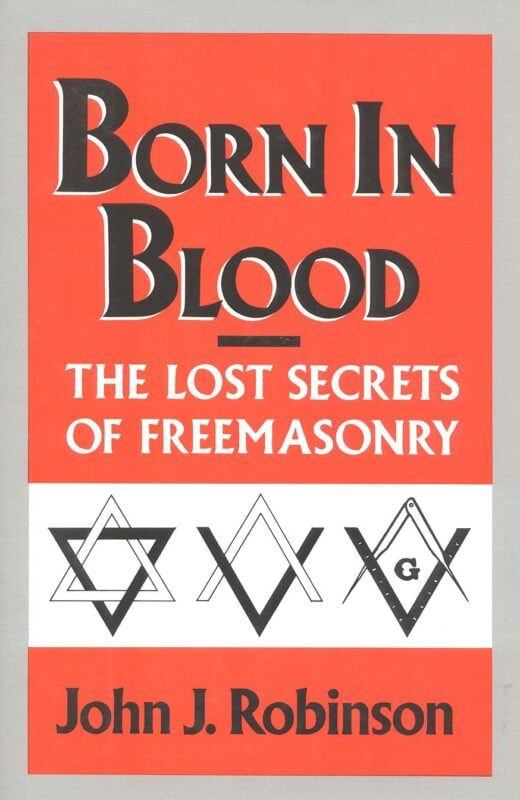
Born in Blood: The Lost Secrets of Freemasonry by John J. Robinson investigates the origins of Freemasonry through the lens of medieval upheaval, secret societies, and linguistic traces, forging a link between the suppressed Knights Templar and the rise of a fraternal order that transformed the social and political fabric of the Western world.
Origins in Upheaval
The catastrophic Black Death swept through Europe in the mid-14th century, killing between 35% and 40% of the population. Entire communities collapsed, leaving fields untended, manors empty, and power structures disrupted. English society, weakened by disease, faced continual warfare, economic dislocation, and religious fracturing. The government imposed new taxes to fund its military ambitions, fueling popular anger and resentment. The landowning elite and the Catholic Church tightened their grip on the surviving population, but the foundational order of feudal England grew unstable. Within this climate, networks of dissenters, secretive by necessity, found fertile ground.
The Peasants’ Revolt of 1381 erupted as authorities attempted to enforce harsh poll taxes. Leaders mobilized large segments of the population in a wave of violence that targeted both secular landlords and ecclesiastical institutions. Robinson draws attention to the striking organization behind the revolt: clandestine communications, coordinated attacks, and the invocation of an entity known as the "Great Society." What drove these masses to act in concert, and what mechanisms enabled such precision?
Knights Templar: From Suppression to Survival
In the century preceding the revolt, the once-mighty Knights Templar faced annihilation. King Philip IV of France, seeking to erase debts and consolidate power, orchestrated mass arrests of Templars in 1307. Torture, forced confessions, and executions followed. The pope disbanded the order and transferred its vast assets to the Knights Hospitaller. Many Templars escaped to England and Scotland, where royal responses to the papal order lagged or lapsed. Some blended into society; others vanished. The mechanisms of their survival depended on secrecy, discipline, and mutual trust.
Robinson claims that the Templar legacy persisted underground, maintaining their organizational skills and clandestine rituals. As social upheaval intensified, these methods offered both a blueprint and a refuge for others facing persecution. The author contends that the original Freemasonry did not emerge from craft guilds but from these covert networks, engineered for survival.
Secret Societies and the Architecture of Concealment
Freemasonry’s most distinctive features—passwords, secret signs, allegorical initiation, and the office of the Tyler (the outer guard)—mirror strategies necessary for Templar fugitives. These practices functioned as more than ceremony; they shielded members from religious and political authorities seeking to eradicate dissent. The ancient "Old Charges" of Masonry, which command members to protect the secrets and lives of their brothers, reflect an ethos of mutual protection, not simply craft regulation.
The book asserts that Masonic symbolism draws directly from the language and customs of the Templars. Robinson demonstrates that terms like “Tyler,” “cowan,” “due-guard,” and even “Hiram Abiff” have roots in medieval French and Templar usage. The linguistic evidence, supported by historical records that show the official language of English courts shifting from French only in 1362, indicates that Freemasonry’s mysterious vocabulary originated in the same era and region as the Templar suppression and subsequent underground activity.
The Religious Challenge
Freemasonry’s approach to faith—requiring belief in a Supreme Being, yet permitting diverse forms of worship—arose from necessity. The Templars, cut off from papal authority and branded heretics, could not rely on established religion. They needed a creed broad enough to include all who sought shelter from the church’s reach. This new doctrine, in Robinson’s account, became the defining feature of Masonic tolerance and a direct challenge to ecclesiastical control.
The church responded with escalating hostility. Successive papal bulls, culminating in Leo XIII’s “Humanum Genus” in 1884, identified Freemasonry as the enemy of Christian order, accusing it of spreading religious liberty, supporting secular education, and promoting government by popular consent. Robinson argues that these condemnations confirm the movement’s identity as a threat to the old order, rooted in the historical conflict between the church and secret societies.
The Peasants’ Revolt: Test Case for Organization
Robinson dissects the mechanics of the Peasants’ Revolt, revealing coded letters, prearranged signals, and coordinated actions spanning multiple counties. The timing and discipline suggest that the Great Society was more than a myth. Leaders like Walter the Tyler—whose name matches the title of the Masonic lodge sentry—played central roles, enforcing discipline and managing access to rebel councils. The movement’s targets included not just oppressive landlords but also the Hospitallers, heirs to the Templar estates, indicating a specific historical memory at work.
The revolt’s suppression did not destroy the impulse toward clandestine resistance. On the contrary, it demonstrated the value of secrecy and the necessity of rigorous initiation, allegiance, and protection for those who challenged entrenched power.
Ritual and Symbol: Encoded Memory
Robinson analyzes Freemasonry’s ritual language, symbolic regalia, and architectural references. The lambskin apron, gloves, mosaic pavement, and compass and square hold meanings that align with Templar rules and practices. The story of Hiram Abiff, slain for refusing to betray a secret, echoes the fate of Templar leaders who endured torture and death rather than yield their order’s hidden knowledge.
This symbolic system encoded survival strategies, moral lessons, and collective memory. By preserving them, Freemasonry maintained an underground historical narrative, linking initiates across generations and continents. The society’s rules on hospitality, charity, and secrecy express its roots as an organization designed to protect and support those under existential threat.
Freemasonry and the Rise of Civil Society
The collapse of feudalism, growth of towns, and rise of a cash economy fostered new forms of association. Merchant guilds, banking families, and professional fraternities proliferated, competing with both noble and ecclesiastical power. Freemasonry, as Robinson describes it, flourished within this emerging landscape, advancing values of merit, mutual aid, and trust—essential for commerce and urban governance.
The lodge functioned as a place of safety, instruction, and recruitment, offering members both material support and a sense of belonging in a dangerous world. Its secrecy protected not only individual lives but also subversive ideas: freedom of conscience, equality among brothers, and the legitimacy of self-government. These principles gained strength as the Reformation, the Enlightenment, and the age of revolutions spread.
Enduring Legacy and Global Expansion
Freemasonry’s ability to adapt and proliferate depended on its flexible doctrine and robust organizational model. Robinson traces the order’s evolution from a medieval survival mechanism to the world’s largest and most influential fraternal association. Its ideals and symbols migrated from Britain to continental Europe, the Americas, and beyond, influencing political movements, social reforms, and the development of civil society.
The persistence of Masonic traditions—ritual, language, secrecy, and mutual aid—demonstrates their utility and appeal across changing contexts. The antagonism of the church, preserved in official documents and public campaigns, highlights the order’s lasting challenge to hierarchical authority. Freemasonry’s blend of ritual mystery, historical depth, and ethical commitment sustains its influence and fascination.
Reinterpreting History
Born in Blood compels readers to reexamine assumptions about the origins of secret societies and their role in shaping history. Robinson asserts that the convergence of linguistic, ritual, and historical evidence points to a distinct lineage running from the Knights Templar, through the turmoil of the 14th century, to the institutionalization of Freemasonry. This legacy, grounded in survival, mutual protection, and principled resistance, produced an organization uniquely suited to endure and adapt.
What happens when persecuted elites, armed with discipline and shared purpose, transform adversity into a culture of secrecy and support? The answer unfolds in the story of Freemasonry: an order born in violence, sustained by brotherhood, and invested with symbols that bind memory and meaning across centuries.
The evidence presented by Robinson demands engagement, not merely as a historical curiosity, but as a living tradition whose impact continues to shape societies, inspire inquiry, and provoke controversy. The story of Freemasonry, as illuminated by its possible Templar origins, becomes a lens for understanding the dynamics of power, dissent, and association in Western history.
Conclusion: The Hidden Thread
Born in Blood unspools a hidden thread connecting the collapse of the Templars, the emergence of new forms of resistance, and the crystallization of an enduring fraternity. By tracing the practical and symbolic inheritance of these secret societies, Robinson articulates a vision of Freemasonry as a dynamic agent of change, invested in both survival and transformation. The resonance of its story, situated in a crucible of catastrophe and ambition, affirms its place at the intersection of history, legend, and living tradition.