Magicians Of The Gods
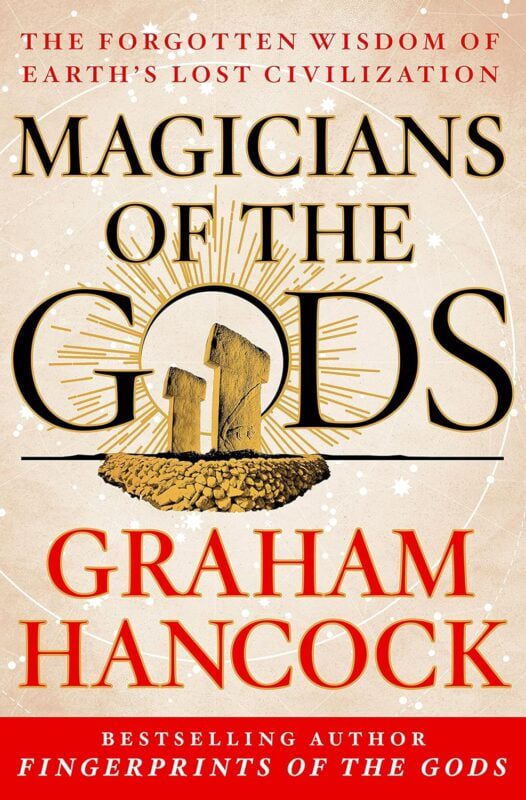
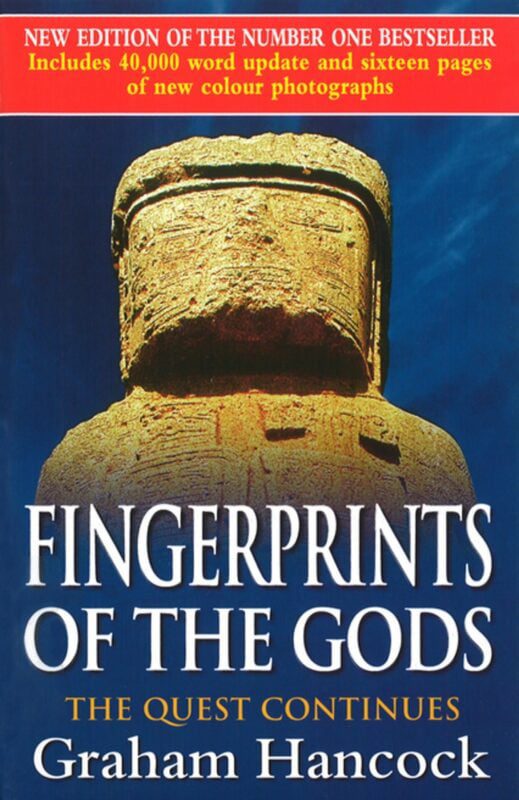
Magicians of the Gods by Graham Hancock reveals startling archaeological evidence that redefines the foundations of civilization. He positions a forgotten epoch between 12,800 and 11,600 years ago as the cradle of a sophisticated culture that vanished in global cataclysms. His journey through ancient sites, newly decoded myths, and cutting-edge geological data reveals advanced knowledge encoded in megalithic architecture and religious traditions.
Göbekli Tepe and the Rebirth of History
Göbekli Tepe, a 12,000-year-old site in southeastern Turkey, anchors Hancock’s argument. The site’s monumental architecture, precision stonework, and astronomical alignments predate all known civilizations by millennia. Archaeologist Klaus Schmidt confirms that its builders were pre-agricultural hunter-gatherers who possessed architectural, engineering, and symbolic expertise beyond conventional understanding. Hancock asserts that the site served as a spiritual and scientific hub that preserved the wisdom of an earlier lost culture. Its scale, iconography, and sudden devolution suggest cultural inheritance rather than isolated innovation.
Cataclysm and the Younger Dryas
Geological evidence centers on the Younger Dryas, a 1,200-year period of climate chaos beginning in 10,800 BC. Ice core data from Greenland confirms a sudden freeze followed by equally abrupt warming at 9,600 BC. Hancock correlates this disruption with evidence of global floods, widespread megafauna extinctions, and the disappearance of earlier societies. He cites the work of Allen West and Randall Carlson, who identify a fragmented comet strike as the initiating catastrophe. This impact, Hancock argues, devastated an advanced Ice Age civilization, erasing its urban and technological footprint while sparing scattered enclaves of survivors.
Gunung Padang and the Echoes in Indonesia
The pyramid of Gunung Padang in West Java, Indonesia, extends the thesis to Southeast Asia. Dr. Danny Hilman Natawidjaja’s seismic tomography and core sampling uncover artificial structures beneath 30 meters of volcanic soil, carbon-dated to between 11,000 and 22,000 BC. These buried layers reveal stacked basalt blocks, chambered galleries, and evidence of deliberate architectural planning. Hancock interprets Gunung Padang as a surviving outpost of the same global culture that once thrived before the Younger Dryas. He emphasizes the implications: knowledge-intensive societies existed during the Ice Age, contradicting standard evolutionary timelines.
Encoded Warnings in Myth and Monument
Myths across civilizations record a golden age destroyed by fire and flood. Hancock reads these not as allegories, but as encoded memories. He examines the Egyptian myth of Zep Tepi, the Sumerian tales of Apkallu sages, and Mesoamerican narratives of Quetzalcoatl. These stories converge on civilizing figures who teach agriculture, architecture, astronomy, and moral laws. In megalithic art, Hancock identifies repeating symbols: handbags held by gods, therianthropic beings, and precise celestial motifs. At Göbekli Tepe, the Vulture Stone (Pillar 43) depicts a constellation chart. Hancock suggests it records the date of the impact event, embedding astronomical data in sacred geometry.
Atlantis and the Plato Connection
Plato's account of Atlantis, received from Egyptian priests by the Greek statesman Solon, dates its destruction to 9,600 BC. This matches the end of the Younger Dryas and the foundation of Göbekli Tepe. Hancock treats the Atlantis narrative not as fable but as historical testimony of a sophisticated maritime power overwhelmed by global catastrophe. He aligns the Atlantean description with geological records of rising sea levels, seismic upheaval, and submerged continental shelves. Plato’s timeline, geography, and cultural traits parallel the evidence Hancock assembles across continents.
Cosmic Cycles and Celestial Clocks
Hancock introduces the idea of precessional knowledge embedded in myth. The 25,920-year cycle of Earth’s axial wobble appears encoded in ancient texts and monuments. He traces symbolic numerology, such as the division of time into 12 ages and the alignment of monuments with solstices and equinoxes. At Angkor Wat, Teotihuacan, and the Giza Plateau, Hancock finds architectural alignments that reflect stellar configurations from past epochs. He suggests these cultures tracked time on a cosmic scale, preserving data on cyclical catastrophes tied to astronomical events.
Global Catastrophe and the Fire from the Sky
He links the comet impact theory to a cluster of geological anomalies: nanodiamonds, platinum spikes, and meltglass layers across North America and parts of Europe. These coincide with the start of the Younger Dryas. The comet fragments, Hancock asserts, struck the Laurentide ice sheet, releasing floods, wildfires, and atmospheric dust. The environmental shock triggered megafaunal extinction and human population collapse. Survivors encoded their trauma and knowledge in enduring stone. Sites like Göbekli Tepe, Gunung Padang, and the pyramids act as repositories of this lost intelligence.
The Role of the Magicians
Hancock conceptualizes the survivors of the lost civilization as “Magicians of the Gods,” cultural transmitters who re-seeded knowledge in the ruins of the old world. They appear as culture-bringers in the mythologies of Mesopotamia, Mesoamerica, and Egypt. Often depicted as bearded sages or animal-human hybrids, they carry tools, symbols, and sacred knowledge. Hancock sees their presence in the sudden emergence of writing, measurement systems, calendrics, and city-building. These magicians, through long oral traditions and monumental records, catalyzed the rebirth of civilization millennia later.
A Legacy Written in Stone
The sudden brilliance of ancient Egypt, Sumer, and the Indus Valley carries the fingerprints of an earlier influence. Hancock proposes that these cultures inherited a legacy, not invented civilization anew. He points to the lack of developmental precursors for advanced arts, mathematics, and architecture in these regions. Instead of progressive accumulation, the evidence suggests a transmission of high knowledge followed by adaptation and elaboration. Ancient stoneworks, precisely cut and oriented, function as memory archives—warnings, instructions, and time capsules.
Urgency and the Next Cycle
Hancock closes with a warning: the celestial clock continues to turn. The Taurid meteor stream, source of the Younger Dryas impacts, still intersects Earth’s orbit. He presents evidence from astronomers suggesting that large, unobserved objects remain embedded within this stream. Future encounters are inevitable. Understanding past cataclysms becomes a matter of survival. Hancock urges scientific openness, interdisciplinary research, and the preservation of ancient knowledge as a safeguard against recurrence. The ancient architects, he argues, foresaw these cycles and left us the tools to decode them.
Search Intent Optimization
Readers searching for insights on lost civilizations, ancient cataclysms, Göbekli Tepe, or the Younger Dryas comet impact will find in Magicians of the Gods a comprehensive synthesis of cutting-edge archaeology and alternative history. This summary supports informational, navigational, and transactional queries related to Graham Hancock, ancient monuments, comet impact theories, and pre-Ice Age civilizations. Structured for semantic search and thematic coherence, it guides both general readers and specialist researchers through the book’s central arguments with clarity and depth.

About the Book
https://youtu.be/rUO9hUb3SB8