Nineteen Eighty-Four
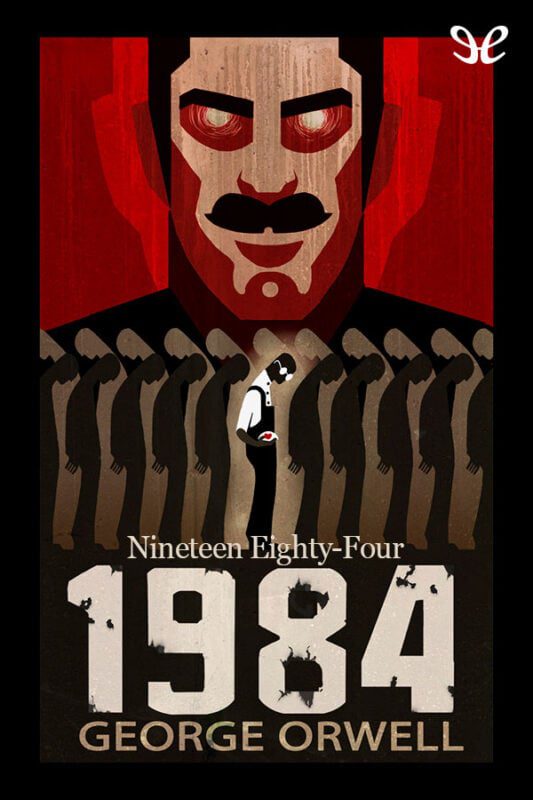
Total Power and the Mechanisms of Control
George Orwell sets his novel in Airstrip One, the chief province of Oceania, where the ruling Party organizes all life through the omnipotent figure of Big Brother. The state apparatus enforces discipline and conformity through omnipresent surveillance, where telescreens monitor homes and public spaces, and the Thought Police detect even private disloyalty. The Party’s unyielding authority reaches into memory, language, and personal identity, requiring loyalty above family, romance, and individual experience.
Winston Smith works at the Ministry of Truth, an engine of historical revisionism. By erasing, modifying, and recreating news, books, and documents, Winston and his colleagues align reality with the current Party doctrine. The concept of doublethink emerges from this constant rewriting—citizens must accept conflicting truths, perform intellectual gymnastics, and stifle dissenting memories. When the Party alters facts, the population accepts new realities without hesitation.
The Language of Control: Newspeak and Thought
Newspeak functions as a deliberate reduction of language. The Party eliminates words to limit the scope of thought and expression. Each edition of the Newspeak dictionary contracts available vocabulary, compressing complex concepts into basic terms and destroying subtleties. With every linguistic reduction, the possibility of unorthodox thoughts shrinks. The Party engineers language to suffocate the conditions for rebellion at their roots.
Who determines what is true when words lose their capacity to define experience? Winston confronts this dilemma in his personal struggle for clarity. By attempting to preserve old words, record forbidden ideas, and recall events erased from official history, he rebels against cognitive domination.
Personal Resistance and the Risk of Intimacy
Winston’s inner life burns with a search for meaning and autonomy. He buys a diary, risking severe punishment, and begins to record thoughts unsanctioned by the Party. Through his illicit relationship with Julia, he finds physical passion and emotional connection, which the Party regards as subversive. The couple seeks freedom not through political activism, but through private defiance—shared experience, secret meetings, and mutual trust.
They pursue hope by attempting to join the Brotherhood, a rumored underground resistance led by the mysterious Emmanuel Goldstein. O’Brien, an Inner Party member, offers encouragement and guidance. Winston trusts O’Brien’s intellectual charisma and apparent rebelliousness, sharing confidences and exposing himself to danger. The thrill of disobedience intensifies Winston’s resolve and his understanding of risk.
Surveillance and Betrayal
Winston and Julia’s hope for resistance proves a calculated trap. O’Brien’s mentorship conceals his loyalty to the Party. The Thought Police monitor every transgression, and the couple’s room above Mr. Charrington’s antique shop—a seeming haven—serves as the stage for their arrest. Every gesture, every word, every private moment falls under the gaze of authority.
Once inside the Ministry of Love, Winston endures brutal interrogation. O’Brien orchestrates his psychological dismantling, wielding logic and pain with surgical precision. Torture becomes both physical and epistemological. The Party’s victory depends on more than forced confession: Winston must sincerely accept Party doctrine, relinquishing the evidence of his senses and memories.
Psychological Transformation: The Power to Shape Reality
O’Brien demonstrates the Party’s philosophy with pitiless clarity. Truth arises not from observation or experience, but from power. If the Party decrees that two plus two equals five, this becomes reality. Winston, though battered, clings to private certainties. Yet as O’Brien manipulates his pain, fear, and longing, Winston’s last defenses collapse.
Room 101, the site of each prisoner’s greatest fear, confronts Winston with rats—a terror he cannot overcome. At this moment of extremity, he betrays Julia, begging O’Brien to inflict the punishment on her instead. The Party engineers this capitulation as a rite of passage: individual love dissolves in the face of survival. Loyalty to another must disappear so that nothing interferes with loyalty to Big Brother.
Society and Structure: Ministries, Classes, and Daily Life
The society of Oceania operates under the direction of four Ministries: Truth (propaganda and revisionism), Peace (war), Love (law enforcement and torture), and Plenty (economic management and rationing). The Inner Party crafts ideology, the Outer Party executes policy and technical tasks, and the Proles—those outside the Party—sustain production and population without access to privilege.
War remains constant, a means of consuming resources, directing attention away from internal problems, and stoking patriotic fervor. The Party’s slogans—War is Peace, Freedom is Slavery, Ignorance is Strength—embody its commitment to paradox, control, and the maintenance of hierarchy.
The Destruction of Family and Memory
The Party redefines loyalty and trust, placing the collective above kinship. Children serve as informers, rewarded for betraying parents who express unauthorized sentiments. Sex is regulated, intended for procreation, and stripped of pleasure. By controlling desire and affection, the Party narrows the scope of human relationships to itself alone.
Memory decays under relentless revision. Winston’s job at the Ministry of Truth offers him insight into the scale of falsification. As he edits documents, he wonders if any evidence of past events remains. The Party asserts that control over the present grants control over the past and future. When Winston meets an old man in a pub, the man’s inability to recall concrete details illustrates the triumph of engineered forgetfulness.
Identity, Loyalty, and the Triumph of the Party
Through torture and re-education, Winston surrenders his love for Julia, his faith in truth, and his individual perspective. Released into society, he sits in the Chestnut Tree Café, broken and docile, devoid of independent thought. When he contemplates a propaganda broadcast, tears of gratitude well up—he has come to love Big Brother. The process is complete. The Party’s success lies in this transformation of the soul.
Why does this conversion matter? The regime claims not only obedience but genuine devotion. To maintain its order, the Party must dominate the mind, ensuring no kernel of rebellion survives within its subjects. Submission requires internalization. Winston’s fate confirms the effectiveness of these techniques.
Propaganda, Ritual, and Spectacle
The Two Minutes Hate unites Party members in ritualized hostility, channeling rage against scapegoats and outsiders. Emmanuel Goldstein, the alleged leader of resistance, serves as a symbolic enemy, ensuring a perpetual focus for fear and hatred. Mass rallies, public executions, and orchestrated celebrations keep emotions volatile and predictable. The Party controls not only thought but feeling, orchestrating peaks of hysteria and loyalty.
Even language shapes participation. Newspeak erodes nuance and subtext, shrinking imagination and critical potential. As Winston reads passages from Goldstein’s forbidden book, he discovers the Party’s motives: the pursuit of power as an end in itself, unrestrained by ideology or moral principle. The text, though seemingly subversive, leads back to the inescapability of domination.
The Structure of Fear and the Limits of Hope
O’Brien describes the future as a “boot stamping on a human face—forever.” This vision stands as both warning and finality. The structure of power, having obliterated resistance, perpetuates itself by generating loyalty and fear. What possibility of renewal exists under such conditions? The narrative unfolds with a sense of inevitability, showing how structure, ideology, and force converge to extinguish opposition.
Yet Winston’s journey, his fleeting moments of defiance and passion, attest to the persistence of longing—for truth, connection, and selfhood. The struggle, though doomed, grants shape and urgency to his existence. Even under surveillance, desire for freedom flickers.
Conclusion: Endurance and Meaning in the Face of Power
The world of Airstrip One operates as a system designed to eliminate ambiguity, loyalty, and memory. Through surveillance, language manipulation, emotional regulation, and the destruction of family, the Party builds unassailable dominion. Winston Smith’s rebellion exposes the cost of this order. He pursues forbidden love, private thought, and history, only to encounter the full force of psychological and physical subjugation.
The Party’s achievement does not rest in the suppression of dissent alone, but in the conversion of dissenters into devotees. The fate of Winston reveals the mechanics of such transformation. In shaping reality, defining language, and dictating feeling, the Party claims absolute control. The lesson endures: power exercised with such reach creates its own reality and remakes those who live within it.
As readers witness the mechanisms by which the Party sustains itself—memory control, linguistic restriction, torture, and spectacle—they encounter the implications for societies shaped by similar forces. The presence of hope and the possibility of change persist in the margins of the text, carried by acts of writing, loving, and remembering, even as the narrative concludes with Winston’s surrender. The novel endures as a study in power and the relentless pursuit of human autonomy, rendered in stark, uncompromising terms by George Orwell’s vision.


About the Book
1984 Predicted The Technocratic Takeover & Great Reset – Jay Dyer Hosts Alex Jones