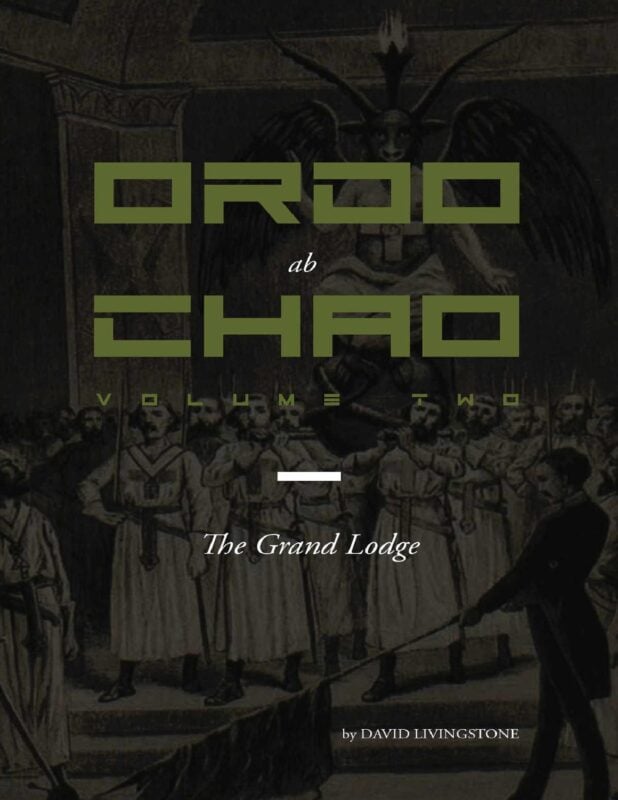
Ordo ab Chao: Volume One: The Dying-God
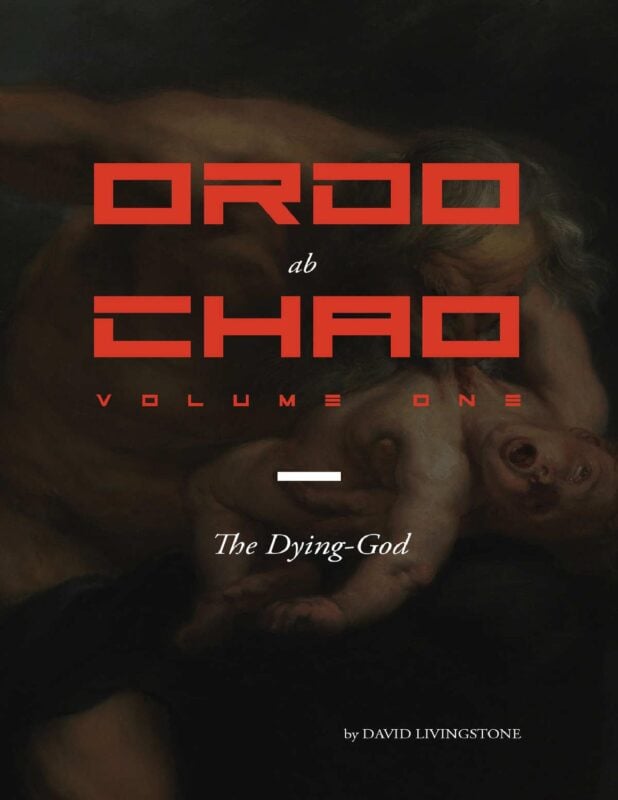
Ordo ab Chao Volume One: The Dying-God by David Livingstone presents a sweeping historical thesis that ties the arc of Western civilization to a long-perpetuated occult tradition, structured as a cosmic conspiracy. It identifies the persistence of esoteric beliefs from ancient Babylon through modern geopolitics, tracing them through secret societies, religious heresies, and ideological mutations that culminate in contemporary power structures. Livingstone proposes that these elements express an enduring metaphysical opposition to divine order, configured to manifest a messianic New World Order.
The Mythic Blueprint of Power
The book opens by confronting the popular myth of Western intellectual and political progress. Livingstone proposes that secular democracy functions as a performative illusion, masking deeper currents of oligarchic control. Through references to lobbying, militarism, and media manipulation, he establishes a framework in which historical events appear choreographed by hidden interests. The inquiry sharpens into a theological dimension: if observable institutions conceal deeper allegiances, what belief system governs them? The answer, he argues, lies in the occult traditions passed through mystery schools and secret societies.
At the foundation of this structure is the Dying-God archetype. Livingstone roots this myth in Babylonian cosmology, specifically the cults surrounding Marduk and the Anunnaki. He connects their seasonal death-rebirth rituals with the solar cycles and ties these ceremonies to the astrological framework of the Chaldeans. This mythic pattern, transferred through syncretism, becomes a vehicle for ideologies built on cyclical violence, divine kingship, and magical cosmogenesis.
Babylon, Kabbalah, and the Magi
The Exile of the Jews in Babylon provided, according to Livingstone, the matrix in which occult Judaism was forged. He identifies the Kabbalah as a heretical reinterpretation of monotheistic doctrine, formulated through exposure to Babylonian astrology and magic. This esoteric system reimagined divine revelation through numerology, symbolism, and angelic hierarchies, placing the practitioner in a role of cosmological co-creator. Livingstone portrays this innovation as a metaphysical rebellion: a reinstallation of the Dying-God cult within a monotheistic framework.
He traces the evolution of this current into Persian thought, where the Magi—initially Zoroastrian priests—absorbed Babylonian rituals and grafted them onto the figure of Mithras. This synthesis introduced the doctrine of dualism, positioning Ahura Mazda and Ahriman as cosmic opposites in perpetual struggle. The Magi’s Mithraic mysteries preserved the sacred king motif and transmitted it westward. In their rites, astrological timing dictated sacrifice and divine epiphany, reinforcing the mythic template through which political power achieved sacral legitimacy.
Secret Societies and the Architecture of Control
Livingstone follows these threads into the formation of Western esoteric orders. The Templars, Rosicrucians, and Freemasons inherit the theological and symbolic structure of the Kabbalah and Magian tradition. These groups position themselves as custodians of the “Great Work,” an alchemical reconstruction of Solomon’s Temple, which in occult terms represents the perfected cosmos. Freemasonry, in particular, encodes this mission within architectural symbolism, tracing its spiritual lineage to Hiram Abiff and the pillars of Boaz and Jachin.
The narrative expands into modern history through the influence of these societies on political movements. Livingstone presents evidence linking Masonic ideologies to the American and French revolutions, and later to fascist and neo-Nazi networks. He explores organizations such as Le Cercle, the Bilderberg Group, and Opus Dei, asserting that they converge in a unified pursuit: the enthronement of a global order governed by esoteric law. He argues that this aim includes the reestablishment of the throne of Jerusalem under a messianic king descended from a bloodline connected to King David and Babylonian royalty.
Occult Fascism and the Rise of the New Right
The latter chapters map these currents onto 20th and 21st century political developments. Livingstone details how right-wing think tanks, intelligence agencies, and corporate interests revived fascist strategies under democratic façades. The American Security Council and the John Birch Society figure prominently in his analysis, acting as intermediaries between domestic propaganda and international authoritarian alliances.
He explores the role of Raymond Abellio, Jean Parvulesco, and Alexander Dugin in formulating the ideological foundation for contemporary Eurasianism and synarchism. This worldview merges Christian mysticism, pagan nationalism, and authoritarianism into a doctrine of civilizational destiny. According to Livingstone, Dugin’s networks played a critical role in influencing Russian geopolitical strategy, particularly through online disinformation and support for Western ultranationalist movements.
Spiritual Warfare and the Biblical Horizon
At the core of Livingstone’s thesis is a spiritual cosmology. He interprets the historical process as an expression of eschatological conflict: a war between divine order and occult rebellion. The use of biblical references situates this struggle within a theological context. He cites the Quran and the Bible to describe a prophetic pattern, wherein elite conspiracies mislead humanity into idolatry, disguised as enlightenment or liberation.
He frames the advent of the New World Order as a messianic inversion—a counterfeit fulfillment of biblical prophecy orchestrated by those aligned with the Dying-God archetype. This system, undergirded by sorcery, bloodline mythologies, and symbolic governance, culminates in a world empire centered in Jerusalem. Livingstone emphasizes that the unifying element among these diverse traditions is not doctrinal agreement, but shared allegiance to occult principles designed to subvert monotheistic revelation.
The Temple of Solomon and the Engine of Civilization
The Temple of Solomon, both literal and symbolic, becomes the architectural nucleus of this agenda. In Freemasonic lore, the reconstruction of the Temple equates to the resurrection of divine authority as envisioned by occult philosophy. Livingstone investigates the historical construction of Solomon’s Temple, the Canaanite influences in its design, and the legend of the Seal of Solomon, which imbued the king with magical authority over spirits and demons.
This motif reappears in Renaissance grimoires, particularly the Ars Goetia, where the magician seeks to bind spiritual entities through sigils and divine names. Livingstone reads this as a codified expression of the same foundational impulse: to mediate cosmic order through human will, ritual power, and architectural symbolism. He argues that these beliefs have filtered into the highest strata of global power, manifesting through ritual, iconography, and esoteric policy.
Astrology and the Sacred Calendar of Control
The Chaldean astrological system, with its division of time into planetary eras and cyclic destinies, provides the cosmological framework for understanding temporal power. Livingstone details how the Soss, Sar, and Great Year serve as metaphysical calendars for world events. He highlights the symbolic alignments of revolutions, wars, and political milestones with celestial configurations recognized in occult calendars.
Astrology functions here as more than divination; it becomes an ontological system through which initiates interpret and shape history. Through precise mathematical calculation, they seek to align terrestrial actions with cosmic rhythms. The recurrence of zodiacal symbols in state insignia, religious architecture, and elite rituals signals continuity in this belief system, extending from Babylon to contemporary institutions.
The Grand Monarch and the European Union
Livingstone closes with a detailed exploration of the myth of the Grand Monarch—a prophesied king destined to unify Europe under spiritual and political absolutism. He connects this figure to the Holy Roman Empire, the Order of the Golden Fleece, and apocalyptic Catholic prophecy, including the Three Secrets of Fatima. Through this myth, he links the formation of the European Union to esoteric goals formulated by royal bloodlines, especially the Habsburgs.
The Grand Monarch, according to Livingstone, is the culmination of millennia of strategic intermarriage, political manipulation, and symbolic programming. His reign, orchestrated through staged crises and controlled oppositions, would complete the alchemical transmutation of the world into a unified empire—a reconstitution of the ancient Babylonian priest-king model.
This trajectory points toward the reestablishment of sacred kingship not as a remnant of the past, but as the concealed aim of modernity itself. The convergence of secret societies, astrological timekeeping, ritual governance, and mythic bloodlines reveals a structure of command grounded not in rational progress, but in the strategic preservation of an ancient occult vision.