The Dying God: The Hidden History of Western Civilization
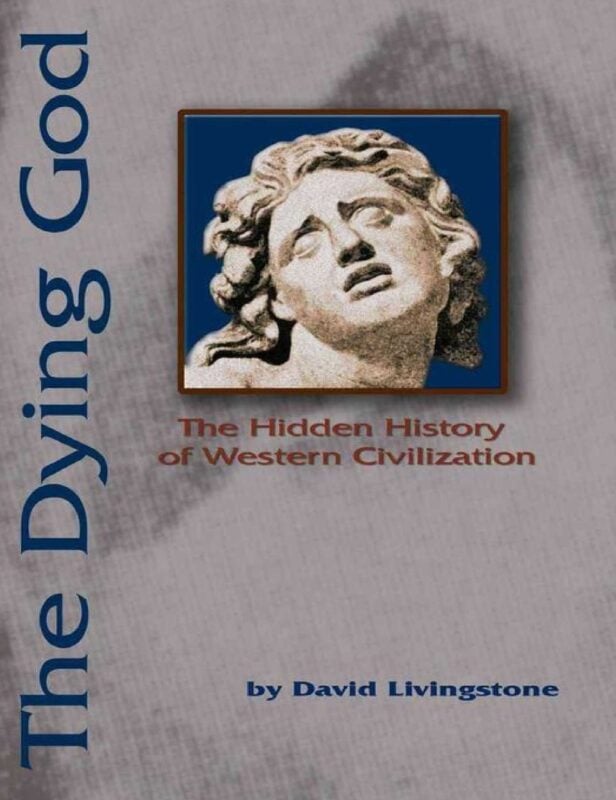
The Dying God: The Hidden History of Western Civilization by David Livingstone reinterprets the development of Western ideology through an unbroken chain of esoteric, religious, and imperial traditions that reach back to Babylon and stretch forward into modern institutions. It maps a cultural inheritance shaped not by Enlightenment rationality or Greco-Roman origin myths but by mystical doctrines passed through secret societies, occult philosophies, and prophetic reinterpretations of power.
The Invention of the Western Myth
The historical narrative known as “Western civilization” emerged to serve a political imperative. In the eighteenth century, European scholars embedded their newly forming national identities in a fabricated lineage that began in ancient Greece, progressed through Rome, and culminated in modern Europe. This linear myth of rational evolution masked the actual agents of cultural transmission. Livingstone asserts that Babylon, not Athens, generated the traditions that later reached Europe via Arab and Islamic civilizations during the Middle Ages.
The Renaissance did not revive an independent Greek legacy; it resuscitated esoteric systems passed from Mesopotamian priesthoods through Hellenistic mystery cults, then preserved by Islamic scholars and reabsorbed in the West through Kabbalistic and Hermetic teachings. The Enlightenment reconfigured these sources into a secular ideology but retained their structural form: a sacred hierarchy of reason, light, and chosen lineage.
Occult Lineage and Secret Societies
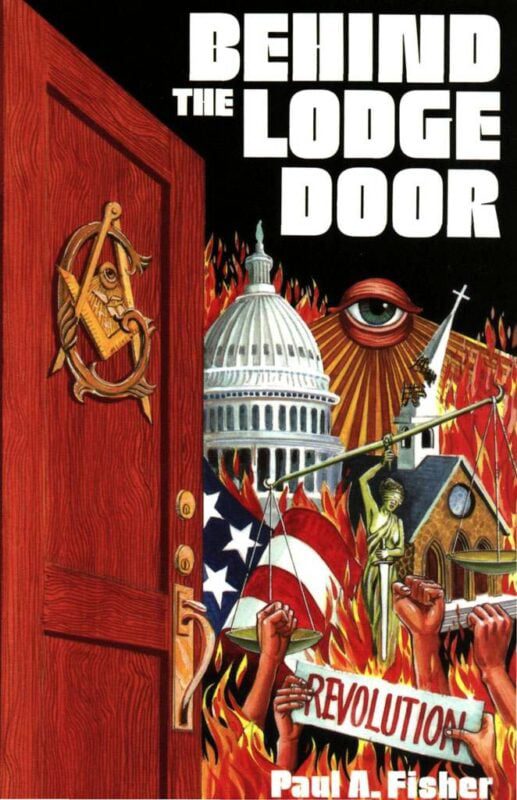
The narrative anchors itself in the transmission of esoteric knowledge from the Chaldean Magi to European secret societies. Livingstone details how organizations like the Rosicrucians and Freemasons synthesized occult doctrines into powerful networks of elite influence. These societies did not merely preserve symbolic rituals; they cultivated a coherent worldview grounded in Kabbalistic cosmology, astrological determinism, and a mystical anthropology rooted in racial myth.
This hidden transmission advanced a hierarchical model of spiritual election. It venerated a mythological elite descended from the “Sons of God” and Cain—figures reinterpreted through Kabbalistic texts as bearers of forbidden wisdom. According to this tradition, these chosen lineages transmitted divine secrets through Atlantis, Babylon, Egypt, and finally into Europe.
The Aryan Construct and Indo-European Theory
The Aryan myth, central to Livingstone’s argument, did not originate in Nazi ideology but in Enlightenment philology and Romantic nationalism. Linguistic discoveries linking Sanskrit to European languages spurred the belief in a proto-Indo-European race. Scholars extrapolated from language to biology, asserting the existence of a superior Aryan people who had spread civilization through conquest and divine inheritance.
This framework shaped not only colonial justification but the very structure of historical analysis. By equating linguistic similarity with racial unity, European scholars forged a mythic origin in the Caucasus and identified themselves as heirs of the ancient Indo-Aryan elect. Anthropology, archaeology, and theology bent to this racial scaffolding. Texts were reinterpreted. The Vedas, once indigenous scriptures, became Aryan imports. Egypt became a colony of Indian sages. Judaism became a derivative of a secret priesthood bound to the stars and numerology.
The Babylonian Core
Livingstone situates Babylon as the genesis point of all later Western religious, scientific, and philosophical systems. The exile of the Jews to Babylon catalyzed the formation of the Kabbalah—a hybrid of Jewish prophecy, Mesopotamian astrology, and Zoroastrian dualism. This esoteric system interpreted the cosmos as a fixed mathematical order governed by celestial beings and time cycles.
From these roots emerged a vision of the world as a living, breathing organism structured by astrological laws and sacred numerology. Babylonian astronomy matured into divination. Each planet carried not only a gravitational influence but a spiritual identity. Venus, Saturn, and Mars governed not orbits but destinies. The stars predicted not just weather but empire. Through the Magi, these beliefs entered Zoroastrian thought, later influencing Christianity, Gnosticism, and Renaissance Hermeticism.
Zoroastrianism and Dual Cosmic Powers
In Persian Zoroastrianism, Livingstone identifies a radical departure from simple monotheism. The religion posited twin forces—Ahura Mazda and Ahriman—locked in cyclical conflict across cosmic time. Through the heretical teachings of the Magi, especially the Zurvanite sect, these figures became agents of a deeper time deity: Zurvan, Boundless Time.
This cosmology introduced a temporal determinism that elevated Fate above divine will. It treated time as both a god and a law. Human history, therefore, unfolded not as a linear progression but as the repetition of fixed archetypes. The doctrine of the Great Year encapsulated this cyclical view, with epochs governed by planetary rulers. Resurrection, divine marriage, and sacrificial kingship became rituals of cosmic maintenance, reenacted in mystery religions and temple rites.
From Babylon to Greece and Rome
Greek philosophy absorbed these theological models through the Hellenistic fusion of cultures after Alexander’s conquests. Pythagoras, Plato, and later Neoplatonists adopted the structure of Babylonian and Persian cosmology, merging it with Egyptian theurgy and Indian metaphysics. The Greeks did not invent these ideas; they systematized them.
The Romans inherited these traditions as state religion. Imperial cults merged political authority with divine mandate, tracing the emperor’s power to celestial archetypes. Jupiter, Saturn, Venus—these were no longer mere myths but metaphysical offices. Through Rome’s integration of Mithraic rites and solar cults, the dying-and-resurrecting god motif became embedded in public life.
Christianity and Kabbalistic Syncretism
Christianity absorbed and reinterpreted the dying god mythology. The narrative of Christ’s death and resurrection mirrors the seasonal rituals of Bel-Marduk and Osiris. Paul’s theology, shaped by Hellenistic Judaism, integrated dualism, apocalypse, and resurrection from the esoteric traditions of Babylonian mysticism and Zoroastrian eschatology.
The early Church Fathers systematized these beliefs through the lens of Neoplatonic and Hermetic philosophy. Gnostic sects made the linkage explicit. Later, medieval Kabbalists developed elaborate cosmologies of divine emanations, root races, and soul transmigration. These doctrines circulated through hidden channels into Christian mysticism, Islamic philosophy, and Renaissance magic.
The Enlightenment Reformation of Occult Thought
The Enlightenment did not eradicate esotericism; it secularized it. Through figures like Newton, Bacon, and Leibniz—many of them Freemasons or Rosicrucians—scientific rationality emerged from a framework of magical inquiry. Natural philosophy, alchemy, and astrology gave birth to physics and chemistry. Livingstone emphasizes that modern science did not overthrow occultism; it evolved from it.
Racial theories gained academic legitimacy during this era. Indo-European identity provided a blueprint for classifying civilizations. The Aryan model merged with emerging anthropological and linguistic frameworks. Skin color, facial symmetry, and bloodlines became indices of spiritual election. Physiognomy and phrenology extended the Kabbalistic Doctrine of the Countenance into pseudoscience.
The Imperial Legacy and Structural Racism
These ideologies hardened during the colonial period. Enlightenment Europe saw itself as the executor of Aryan destiny, tasked with imposing order on inferior races. The caste system in India was reinterpreted through this lens. The Vedic concept of varna—originally meaning “color”—became the basis for justifying colonial rule. Civilizational hierarchy mirrored a supposed biological gradient.
Livingstone exposes how this logic underwrote imperial violence and global stratification. The myth of Western superiority disguised structural dependency. Colonized regions were stripped of cultural sovereignty under the guise of progress. Indigenous cosmologies were rebranded as primitive. Missionaries and scholars re-scripted local histories to fit the Indo-European template.
Modern Implications and Ideological Inheritance
The legacy of these myths persists. Modern political ideologies—liberalism, nationalism, secular humanism—inherit their structural logic from the esoteric systems they claim to transcend. The belief in linear progress, rational destiny, and racial identity remains embedded in institutional frameworks. The history taught in schools, the canon upheld in universities, and the ideologies disseminated through media all reflect a sanitized, mythologized version of the past.
Livingstone calls for a re-evaluation of foundational narratives. The mythology of Western civilization operates not as historical record but as cultural scripture. It authorizes domination, suppresses alternative epistemologies, and recasts conquest as enlightenment. The recovery of suppressed traditions—Babylonian, Islamic, Gnostic, Kabbalistic—is not an antiquarian exercise but a step toward epistemic liberation. The future of global history depends on dismantling these imperial chronologies and restoring the diversity of human memory.