The Occult Renaissance Church of Rome
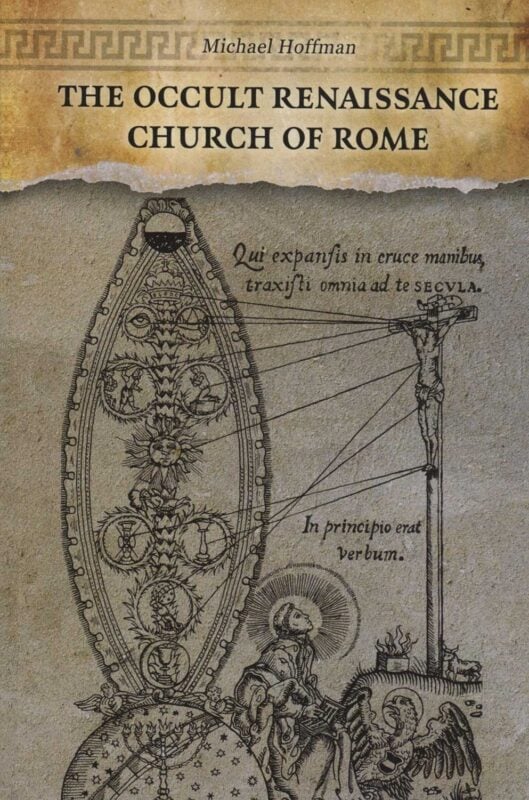
The Occult Renaissance Church of Rome by Michael Hoffman traces the subterranean transformation of the Roman Catholic hierarchy during and after the Renaissance, revealing how the Church’s top echelons fused Neoplatonic, Hermetic, and Kabbalistic traditions into its very structure. Michael Hoffman, a distinguished authority on Western secret societies and ideological history, presents an audacious narrative that follows the rise of usurious money power, institutionalized deceit, and esoteric doctrines within the Church, exposing their ongoing legacy in contemporary ecclesiastical life.
The Renaissance Shift: Hermeticism and the New Vatican
In the fifteenth century, the Roman Catholic Church’s highest authorities, surrounded by the grandeur of Italian art and the intellectual ferment of Florence and Rome, turned to Neoplatonic and Hermetic doctrines to resolve crises of authority and knowledge. Renaissance popes and their court intellectuals sponsored translations of the Corpus Hermeticum, patronized Kabbalistic scholars, and directed artists to weave occult symbols into papal apartments and public religious art. The very architecture and ritual of the Vatican began to encode hidden teachings, signaling allegiance to a spiritual revolution.
What motivates such a radical realignment at the heart of Christendom? Power, prestige, and control drive the transformation. By adopting esoteric philosophies that promised secret knowledge and spiritual mastery, the Church positioned itself as the ultimate gatekeeper of both visible and invisible worlds. The absorption of pagan, Egyptian, and Jewish mystical currents did not proceed as a mere decorative flourish—it shaped policy, dogma, and the exercise of ecclesiastical authority.
Usury and the Rise of Financial Power
The Church that had once anathematized usury began to invent ingenious rationalizations for profiting from moneylending. The doctrine of “lucrum cessans” enabled Vatican bankers and their partners in Italian city-states to evade prohibitions on interest by describing profits as compensation for lost opportunities. Canon lawyers and theologians engineered arguments based on the nominalist school, privileging “equity” over divine command and Scripture. In this crucible of intellectual innovation, papal Rome forged a new alliance with merchant bankers, leveraging finance to cement the Vatican’s dominance in European affairs.
This transformation did not simply alter fiscal policy; it forged a new Catholic moral philosophy. By recasting profit as an instrument of divine providence, Church officials justified and sanctified economic practices that enriched the Vatican while eroding the boundaries of traditional morality. The acceptance of usury generated a dynamic of doublethink, where theological condemnation and financial pragmatism coexisted in an uneasy alliance.
Institutionalized Equivocation and Mental Reservation
How does an institution sustain internal contradictions over centuries? Michael Hoffman chronicles the development of “mental reservation” and “equivocation”—ritualized forms of sanctioned deception employed by clergy and hierarchy. These intellectual tools allowed prelates to conceal crimes, protect the reputation of the Church, and manipulate both internal dissent and external threats. Manuals and treatises codified the practice, instructing confessors and diplomats alike in the arts of ambiguity and secret intent.
The result: a culture where the spoken word diverges systematically from intent, and truth becomes subordinate to institutional self-preservation. This mode of operation enabled the Church to weather scandals and maintain a unified front even as its upper echelons harbored currents of occultism and heresy. The perpetuation of such strategies formed the backbone of a hierarchical structure oriented less toward the Gospel than toward its own continuity and power.
Occult Symbolism and the Papal Court
The visual and ritual culture of Renaissance Rome radiates evidence of this transformation. Hoffman guides readers through the papal apartments, where murals and frescoes depict Isis enthroned, Hermes Trismegistus dispensing secret wisdom, and Moses placed on equal footing with pagan magi. The integration of Kabbalistic tenets, visible in the arrangement of sacred spaces and the iconography of official ceremonies, signals a new syncretism in the heart of Catholicism.
The Vatican’s sponsorship of such projects expressed a strategic vision. By absorbing the most prestigious elements of classical and Jewish esotericism, the papacy claimed continuity with the “primal wisdom” said to undergird all great civilizations. This reorientation of sacred art and architecture shaped the imagination of both clergy and laity, instructing them through symbol and spectacle in a cosmology fundamentally distinct from early Christian orthodoxy.
The Kabbalistic Connection and Rabbinic Judaism
Hoffman traces the genealogies of occult influence with precision, linking the Church’s internal revolution to the importation of Kabbalistic and Talmudic doctrines from Jewish communities in Spain, Italy, and beyond. Catholic Kabbalists such as Giles of Viterbo and Pico della Mirandola occupied privileged positions at the papal court, translating and adapting esoteric texts for Christian use. The mystical doctrines of the Zohar and related works seeped into Catholic theology, providing tools for magical operations, angelology, and divinatory practices.
The interaction between Catholic and Jewish mysticism did not occur as a side note; it drove the emergence of new forms of sacramental theology, ritual, and spiritual authority. The Church’s engagement with Kabbalistic sources reshaped its own understanding of the cosmos, the nature of Christ, and the efficacy of ritual action. This convergence created a hybrid spirituality, blurring the boundaries between Christian revelation and the ancient magical traditions the Church had once condemned.
The Protestant Response and the Cycle of Reform
Protestant theologians and polemicists responded to the perceived occultization of Rome with both outrage and fascination. Michael Hoffman documents how figures like Charles Spurgeon and Alexander Hislop constructed narratives that portrayed the papacy as the successor to Babylonian priestcraft, yet often ignored or misunderstood the deeper realities of occult influence. Protestant reformers critiqued Catholic “idolatry” and ritualism, sometimes reproducing the very situation ethics and financial practices they denounced in Rome.
This cycle of reform, reaction, and selective memory established a pattern within Western Christianity. Polemics and apologetics competed for narrative dominance, but neither side confronted the full extent of the Church’s syncretism or its consequences for spiritual and moral authority. Hoffman’s work exposes these silences and elisions, challenging readers to reconsider the story of Christian civilization.
Equity, Situation Ethics, and the New Morality
As the doctrine of equity—legal and ethical adaptation to circumstance—supplanted older conceptions of law and virtue, the Church engineered a new moral regime. The abandonment of absolute standards in favor of pragmatic solutions to social and economic dilemmas eroded the boundaries that once protected the Church from worldliness and corruption. In its place, a sophisticated system of situation ethics emerged, legitimized by theologians and canonists eager to reconcile the demands of power with the claims of conscience.
This revolution in moral reasoning facilitated the Church’s accommodation to the evolving realities of finance, politics, and international diplomacy. By privileging the judgment of experts and the discernment of circumstances over the plain sense of Scripture and tradition, the hierarchy created a context in which expediency triumphed over integrity. The cumulative effect shaped not only policy but the spiritual sensibility of clergy and faithful.
Lay Resistance and the Persistence of Faith
Amidst the drama of institutional transformation, Hoffman foregrounds the experience of lay Catholics and parish clergy who, often unconsciously, preserved the spirit of the original Church. Local communities in America and elsewhere sustained traditional liturgy, charity, and personal piety despite the innovations of the hierarchy. Figures like Fr. Charles Coughlin, Dorothy Day, and Flannery O’Connor exemplify a stubborn fidelity to the ideals of Christ and the Gospels, even as officialdom promoted new theologies and practices.
The narrative demonstrates how these local expressions of faith constitute living refutations of the occult and usurious tendencies at the Church’s center. By maintaining authentic community, sacrificial service, and trust in the providence of God, the laity and faithful priests provided an alternative model of Catholic life—one marked by humility, courage, and genuine holiness.
The Legacy of the Occult Renaissance Church
What legacies emerge from centuries of syncretism, equivocation, and financial entanglement? Hoffman traces the trajectory from Renaissance intrigue through the modern era, identifying recurring patterns of scandal, ritual abuse, and moral compromise at the Church’s highest levels. The suppression of traditional liturgy, the embrace of mediocrity in worship, and the concealment of systemic wrongdoing flow from the same sources that energized the Church’s occult turn.
This legacy exerts tangible effects in contemporary crises, from global financial scandals to revelations of clerical abuse. The structures and rationalizations forged in the Renaissance persist, shaping the imagination and decision-making of a new generation of ecclesiastical leaders. Yet within the ongoing crisis, the author discerns signs of hope—acts of resistance, fidelity, and renewal among those who anchor their faith in Christ rather than in the transient authority of worldly powers.
The Call to Truth and the Future of the Church
Hoffman’s investigation culminates in an urgent call for truthfulness, discernment, and moral courage. The power of institutional self-preservation yields only to the uncompromising pursuit of the Gospel and the willingness to confront uncomfortable facts. The book challenges readers—Catholic, Protestant, or secular—to engage with the complexities of Christian history, to identify the sources of corruption, and to nurture authentic expressions of faith and virtue.
As the Church stands at the threshold of a new millennium, the imperative to reckon with its past grows more acute. Can the living tradition of the Gospels withstand the pressures of power, secrecy, and compromise? The answer, Hoffman suggests, depends on the capacity of Christians to remember, to judge, and to act in accordance with the radical demands of truth and justice.
The Occult Renaissance Church of Rome by Michael Hoffman offers a compelling, meticulously researched exploration of the hidden history that continues to shape the destiny of one of the world’s most influential institutions.