The Rosicrucian Enlightenment
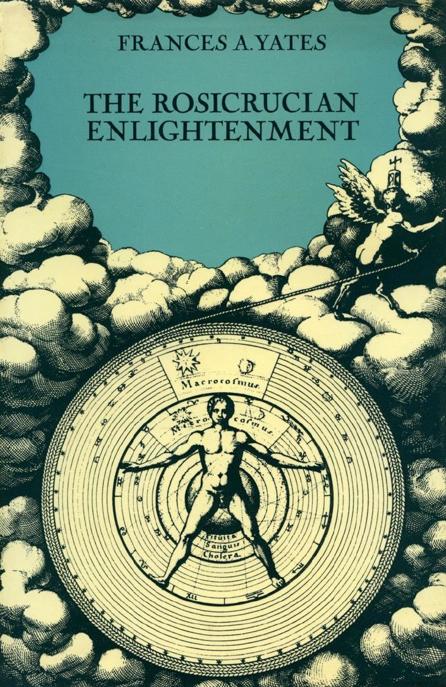
The Rosicrucian Enlightenment by Frances A. Yates traces a decisive turning point in European intellectual history, when mystical speculation and experimental science converged around the early seventeenth century. Yates situates the Rosicrucian movement within the broader fabric of the Renaissance, connecting it to the Hermetic, Cabalist, and alchemical traditions that shaped early modern thought. Her study follows the current of these ideas through courts, printing houses, and secret fraternities, mapping the transfer of visionary philosophy into the emerging scientific world. She reconstructs the historical moment when religious reform, esoteric philosophy, and political ambition intertwined in the Palatinate court of Frederick V and Elizabeth Stuart, a union whose ideals ignited the imagination of Europe.
The Marriage of the Thames and the Rhine
Yates begins with the marriage of Princess Elizabeth, daughter of King James I of England, to Frederick V, Elector Palatine of the Rhine, in 1613. She treats the wedding as both a political and symbolic convergence: a fusion of English humanism, Protestant chivalry, and German intellectual aspiration. The festivities, orchestrated by Inigo Jones and accompanied by the poetry of Thomas Campion and Francis Beaumont, represented the high watermark of Jacobean culture. Francis Bacon’s involvement in the court masques reflected his belief in knowledge as divine labor. Yates links this pageantry to the cultural ideals that would soon take shape in Heidelberg, where Elizabeth and Frederick established their court.
The move from London to the Palatinate transferred the creative force of the English Renaissance into continental Europe. In Heidelberg, the couple built a world steeped in mathematics, music, and mechanical art. Salomon de Caus, engineer and architect, designed the gardens of the Hortus Palatinus, a geometrical landscape filled with fountains, grottoes, and automated figures derived from Vitruvian mechanics. His devices turned water and light into allegories of divine order. The Palatine court became a living emblem of the marriage between art and science, a theatre of natural philosophy that embodied the ideals of the new “enlightenment” Yates identifies.
The Rosicrucian Manifestos and the Vision of Renewal
Yates then enters the core of her argument: the publication of the Rosicrucian manifestos in Germany between 1614 and 1616. These texts—the Fama Fraternitatis, Confessio Fraternitatis, and Chymische Hochzeit Christiani Rosencreutz—announced the existence of a secret brotherhood dedicated to the advancement of learning and the reform of mankind. Yates situates these writings within the intellectual environment of the Palatinate. She reads them as coded expressions of the Hermetic and alchemical revival inspired by John Dee, whose Monas Hieroglyphica and angelic experiments in Bohemia had already linked number, language, and divine intelligence.
The Rosicrucian documents promised a spiritual and scientific transformation. Their language of light, medicine, and harmony mirrored Bacon’s program for the restoration of knowledge. The fraternity’s mysterious founder, Christian Rosencreutz, embodied a synthesis of cabalistic wisdom and empirical curiosity. Yates traces the path of these ideas from Dee’s travels in Central Europe to the circles of Michael Maier, Robert Fludd, and Johann Valentin Andreae, all of whom operated near the Palatinate and its publishing hub at Oppenheim.
Johann Theodore de Bry, the great engraver and printer established in Oppenheim, produced the emblematic frontispieces that visualized the Rosicrucian world: celestial geometries, chemical allegories, and mystical diagrams of nature’s hidden order. His workshop published Maier’s Atalanta Fugiens and Fludd’s Utriusque Cosmi Historia, works that turned alchemy into a universal science of correspondence. Yates treats this nexus of printing, symbolism, and court culture as the visible architecture of the Rosicrucian Enlightenment.
John Dee and the Transmission of Hermetic Science
At the center of Yates’s interpretation stands John Dee, mathematician, magus, and imperial visionary. She presents him as the primary transmitter of the Hermetic-Cabalist synthesis from Renaissance England to continental Europe. Dee’s belief in the unity of number, language, and divine creation gave mathematical form to spiritual aspiration. His Preface to Euclid surveyed the mechanical arts as extensions of sacred geometry, while his Monas Hieroglyphica condensed cosmology into a single symbolic sign.
Yates traces Dee’s continental journey after 1583, when he left England for Bohemia and Poland. His influence on Emperor Rudolph II’s court at Prague, where alchemists and philosophers congregated, shaped the intellectual climate that produced the Rosicrucian manifestos a generation later. Dee’s blending of angelic communication with practical science became the template for a type of scholar who saw no boundary between divine revelation and experiment. Yates’s historical argument follows the continuity of this vision through Dee’s successors—Fludd’s harmonic cosmology, Maier’s allegorical alchemy, and Comenius’s educational reform—all expressions of the same intellectual current.
The Palatine Dream and the Bohemian Catastrophe
The Rosicrucian ideal, Yates argues, found its political theater in the Palatinate’s brief experiment with utopian kingship. Frederick’s acceptance of the Bohemian crown in 1619 turned the cultural vision of Heidelberg into a cause for religious and intellectual reform across Europe. His court in Prague became a symbolic stage for the fusion of Protestant piety, Hermetic philosophy, and millenarian hope.
Yates recounts the tragic reversal that followed. The Battle of the White Mountain in 1620 ended Frederick’s reign, destroyed the Palatine court, and scattered its scholars and artists. The defeat silenced the Rosicrucian promise of universal renewal. Yet the intellectual network survived underground. Yates traces its migration into Holland, England, and eventually into the foundation of the Royal Society. The invisible college imagined by the Rosicrucians reappeared as a community of experimental philosophers in seventeenth-century London.
From the Invisible College to the Royal Society
The later chapters follow this transformation from mystical fraternity to institutional science. Yates identifies Elias Ashmole, collector, antiquarian, and devotee of alchemy, as a crucial link between the Rosicrucian tradition and the early Fellows of the Royal Society. Ashmole’s Theatrum Chemicum Britannicum and his interest in Dee’s manuscripts preserved the Hermetic legacy.
The philosophical ideal of the Rosicrucian Enlightenment—unifying natural philosophy, moral reform, and divine wisdom—translated into the practical ethos of the Royal Society. Yates emphasizes continuity rather than rupture: the same drive for illumination that animated Dee’s angelic science informed the empirical rigor of Newton’s alchemy and optics. She describes Newton as the inheritor of the Dee tradition, a mathematician whose vision of cosmic harmony fused calculation and revelation.
The Hermetic Continuum and the Historical Method
Yates approaches the Rosicrucian movement as a definable historical phenomenon rather than an occult mystery. She insists on reconstructing its channels of transmission—texts, engravings, correspondences, court alliances—through critical scholarship. Her method transforms what had been dismissed as esoteric rumor into legitimate intellectual history. By recovering the material contexts of the Rosicrucian documents, she reveals their role in the evolution of modern thought.
The book integrates political, artistic, and philosophical histories into a single narrative. The Palatinate becomes the hinge between the Renaissance and the scientific revolution, a short-lived experiment where the synthesis of “Magia, Cabala, and Alchymia” reached its highest articulation. Yates treats this synthesis as a historical stage, not a mythic curiosity. It represents the transitional form of European reason—creative, visionary, and mathematically disciplined.
The Rosicrucian Furore and Its Cultural Reverberations
Yates devotes extended analysis to the Rosicrucian furore that swept through Germany and France after the publication of the manifestos. Pamphlets, satires, and philosophical defenses multiplied. Scholars debated whether the fraternity truly existed. Writers such as Marin Mersenne, Gabriel Naudé, and Descartes responded to the phenomenon with skepticism or fascination. The controversy shaped the early modern discourse on secrecy, knowledge, and reform.
In Yates’s account, the Rosicrucian excitement marks a cultural moment when the language of magic yielded to the methods of experiment. The alchemist’s laboratory evolved into the scientist’s workshop. The emblem of the rosy cross, once a symbol of mystical rebirth, became a metaphor for disciplined inquiry. Yates demonstrates that this shift did not abolish the visionary impulse; it redirected it toward observable nature.
Italian Liberals, Comenius, and the Survival of the Ideal
Beyond Germany, Yates traces the echoes of the Rosicrucian idea across Europe. In Italy, thinkers influenced by the Hermetic revival—Giordano Bruno, Tommaso Campanella, and their successors—imagined societies governed by universal wisdom. Yates connects these aspirations to later reformers such as Jan Amos Comenius, whose educational philosophy reflected the Rosicrucian belief in enlightenment through divine order.
Comenius’s Pansophia proposed a comprehensive science of nature and spirit, a system that united pedagogy with cosmology. His exile from Bohemia after the White Mountain defeat turned him into a messenger of the lost Palatine vision. Through him, the Rosicrucian spirit passed into Protestant intellectual culture and ultimately into the early Enlightenment.
The Legacy of the Rosicrucian Enlightenment
Yates concludes by redefining the boundaries of the scientific revolution. She asserts that the roots of modern rationality lie within the imaginative disciplines of the Renaissance—astrology, alchemy, and cabala—as reinterpreted by scholars like Dee, Fludd, and Maier. Their pursuit of harmony between mind and cosmos created the conceptual framework for empirical science. The Rosicrucian movement embodied this synthesis in its brief but radiant existence.
The term “enlightenment” in Yates’s title acquires a dual meaning. It signifies both illumination of the soul and expansion of knowledge. The Rosicrucian fraternity’s call for the reform of learning anticipates the Baconian project and the later philosophes. Yet its language of mystery preserves the sense of awe that accompanies discovery. Yates restores this duality to the history of ideas: reason as revelation, science as sacred work.
The Enduring Relevance of Yates’s Vision
The Rosicrucian Enlightenment remains one of Frances Yates’s most influential works because it constructs a genealogy of modern thought that includes imagination as an intellectual force. Her research reconfigures the map of early modern Europe. The book’s geography—stretching from Elizabethan England to Rudolphine Prague and the exiled courts of Holland—reveals a network of thinkers who saw the pursuit of knowledge as a divine mission.
Yates’s meticulous attention to documents, engravings, and correspondences allows her to treat the invisible college as a historical reality rather than a metaphor. She shows how the interplay between art, science, and mysticism generated the conditions for modern inquiry. Her narrative sustains its energy through the precision of its examples: the pageants of 1613, the presses of Oppenheim, the diagrams of Fludd, the fountains of De Caus, the mystical geometry of Dee.
The book’s conclusion affirms a clear thesis: the early seventeenth century produced a genuine Rosicrucian Enlightenment, a moment when European culture believed that wisdom could be renewed through divine and intellectual illumination. That faith, though broken by war and exile, seeded the institutions that shaped the modern world.