The Subversion of Christianity
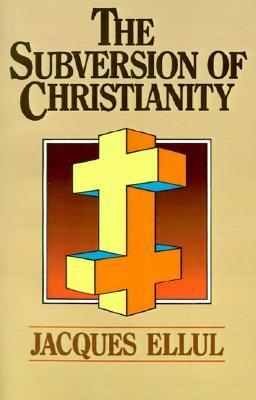
The Subversion of Christianity by Jacques Ellul confronts the central dilemma of the Christian tradition: How does a faith that begins with the liberating, revolutionary words and actions of Jesus become a force aligned with institutional power, wealth, and social conformity? Ellul exposes the vast gulf between the gospel’s radical core and the historical development of Christian societies, proposing that this subversion is neither accidental nor peripheral but a structural consequence of Christianity’s engagement with the world.
The Historical Paradox: From Subversion to Power
Ellul traces the trajectory of Christianity from its origins as a community shaped by the message of Jesus—a message that shatters conventional power, wealth, and religious orders—toward its emergence as a dominant social and political force. He frames his inquiry with a precise question: How does the development of Christianity and the church generate a civilization that contradicts the explicit teachings of the Bible, the law, the prophets, Jesus, and Paul? The contradiction appears in every dimension: money, power, culture, morality, and the core of human relationships.
Practices as the Measure of Faith
Practice, for Ellul, stands as the visible criterion of authenticity. Early Christian texts present the unity of faith and action: hearing and doing, command and obedience, grace and works. Jesus asserts that only those who hear his words and act upon them build on rock. Paul insists that practice expresses the reality of grace received and faith lived. Christian revelation demands embodiment; truth does not subsist apart from those who live it. When Christian communities diverge from this demand, they generate practices that not only obscure but actively subvert the original revelation.
Confronting Historical Accusations
Ellul acknowledges the long tradition of critique directed at Christian practice, from Voltaire to Marx and beyond. He refuses the comfort of apologetics that dismiss these critiques or attempt to separate a “pure” message from flawed historical actors. Critics rightly see in Christian history a practice that falsifies revelation. The life of the Christian community, Ellul asserts, constitutes the testimony to God and the meaning of revelation; when the church’s practice diverges from the demands of the gospel, it renders the message void of credibility.
The Ideological Turn: Christianity Becomes an “Ism”
A defining moment arrives when the living, historical faith of Jesus and the apostles undergoes transformation into an ideology. The emergence of “Christianity” as an “ism” marks a transition from movement to system, from concrete story to abstract doctrine, from existential engagement to ideological conformity. The suffix “ism” signals an ideological trend divorced from its foundational source. The living thought of Jesus becomes Christianism—a doctrine that can be manipulated, institutionalized, and reoriented to serve purposes alien to its original intent.
Absorption and Syncretism: Christianity and Culture
Ellul investigates the mechanisms by which Christianity absorbs, adopts, and justifies the dominant powers and cultures of each era. The early church, facing persecution and marginalization, stakes out a radically subversive posture toward the political, economic, and religious powers of Rome. Christians refuse allegiance to the emperor, decline public office, and challenge the primacy of money and status. As the faith spreads and wins adherents among social elites, however, it undergoes a fateful reversal. The church seeks alliance with power, reasoning that the victory of Christ legitimates the co-optation of secular authority. Rather than transforming society, Christianity becomes an instrument of social stabilization, adapting to monarchies, republics, capitalist economies, and socialist regimes with equal facility.
Transformation of Morality and the Rise of Moralism
The transformation extends to morality itself. The biblical tradition frames commandments as the boundaries between life and death, not as fixed legal codes. Jesus and Paul insist on liberty, responsibility, and creative obedience rather than rote submission to abstract moral law. As Christianity institutionalizes, it elevates obedience, chastity, and conformity above the call to responsible, inventive faithfulness. The result is a moralism that infantilizes believers and supports systems of domination. The church becomes a vehicle for maintaining order, subordinating the radical possibilities of the gospel to the interests of those in power.
From Subversive Narrative to Doctrinal System
A critical stage in this subversion occurs when Christianity transitions from history to philosophy, from story to system. The Hebrew Bible grounds its revelation in historical narrative: the story of God with his people, the drama of faith, disobedience, covenant, and liberation. Greek philosophical and Roman legal categories recast this living narrative into metaphysical, ethical, and doctrinal abstractions. The biblical law, inseparable from God’s presence and the historical journey of the people, becomes a universal code. The personal God of the Exodus and the prophets is redefined as the supreme being of philosophy and law. The resurrection is eclipsed by doctrines of the immortal soul. Revelation becomes a system of thought rather than a history of encounters and transformation.
Syncretism and the Paganization of Christianity
Ellul explores how the church, seeking to survive and thrive within the Roman Empire, absorbs and adapts the rituals, myths, and structures of the surrounding world. Pagan temples become churches, local deities transform into saints, and philosophical systems merge with theology. The church justifies and normalizes these changes, seeking synthesis with intellectual and religious currents from the wider world. Syncretism emerges not as accidental accretion but as a core strategy of survival and expansion. As the church aligns with dominant cultures, it validates practices and beliefs fundamentally at odds with the original revelation.
Christianity as Agent of Social Order
The institutional church, shaped by centuries of alliance with rulers and economic elites, becomes a force for social order, legitimizing political authority and economic hierarchy. Christianity rationalizes the distribution of wealth and power, sanctifying the poor in their suffering and the rich in their dominance. The church participates in systems of oppression, acting as a conservative, antisubversive force across societies and epochs. Ellul documents the pattern: Christianity absorbs the cultural, political, and economic logic of the time, serving monarchy, supporting capitalism, endorsing colonial conquest, and even aligning with socialism or nationalism as historical conditions change.
The Spirit and Human Freedom
Ellul interrogates the theological dimension of subversion by addressing the doctrine of the Holy Spirit. Jesus promises his enduring presence through the Spirit, a power of liberation, conscience, and responsibility. The Spirit does not impose conformity or automatic obedience but frees and empowers believers to discern and enact God’s will. The subversion of Christianity, then, is not the product of divine absence or institutional failure alone but a consequence of free, human choices—choices to abandon revelation in favor of social power, conformity, and comfort.
Persistent Patterns of Cultural Accommodation
The adaptability of Christianity to diverse cultures and regimes becomes a structural pattern. The church evolves from feudal to bourgeois, from Western to global, from rationalist to mystical as circumstances dictate. Christianity morphs to fit the reigning cultural forms, filling the bottle of faith with the wine of prevailing ideology. Each generation discovers its own authentic Christianity, modeling it on dominant trends and mistaking adaptation for progress. This plasticity allows Christianity to survive but undermines its capacity for prophetic witness and radical change.
Consequences for Modern Faith and Society
The consequences of subversion extend into the present. Christianity’s absorption of dominant cultural patterns leads to recurring crises of credibility and relevance. The faith loses its capacity to serve as a critical, liberating force, lapsing into moralism, ritualism, and social conservatism. Ellul insists on the necessity of confronting these consequences directly: To recover authenticity, Christians must face the full scope of the subversion, refusing to evade, rationalize, or excuse the historical record. The way forward lies in returning to the historical, existential encounter at the heart of the biblical witness—a faith lived in practice, a truth enacted in community, a freedom claimed in the presence of God.
Structural Roots and Theological Clarity
Ellul’s analysis compels a reconsideration of Christianity’s structural relationship to society, power, and history. The subversion of Christianity arises not from isolated errors or individual failures but from a systemic accommodation to power and culture. The move from narrative to system, from history to philosophy, from revelation to ideology, constitutes the essential mechanism of transformation. The church’s role as an agent of social order, its embrace of prevailing values, and its substitution of moralism for creative freedom emerge as key elements in the ongoing process of subversion.
Vision for Renewal
Ellul concludes with a challenge and a vision: Christianity must reclaim its subversive, liberating, and prophetic character. The faith that emerged from the radical acts of Jesus and the living narrative of Israel possesses the resources to resist assimilation and to witness anew to freedom, justice, and transformation. Renewal demands a return to the existential encounter, to practices that embody the truth of revelation in community, and to a theological clarity that resists absorption by power and ideology. In recovering its origin as a movement grounded in the living God, Christianity can resist subversion and offer a genuine alternative in a world marked by the repetition of failed systems and the hunger for meaning.
The Subversion of Christianity articulates a vision of faith that exposes the gap between revelation and practice, calls for honest confrontation with historical realities, and inspires renewed engagement with the liberating core of the Christian message.