The Trivium: The Liberal Arts of Logic, Grammar, and Rhetoric

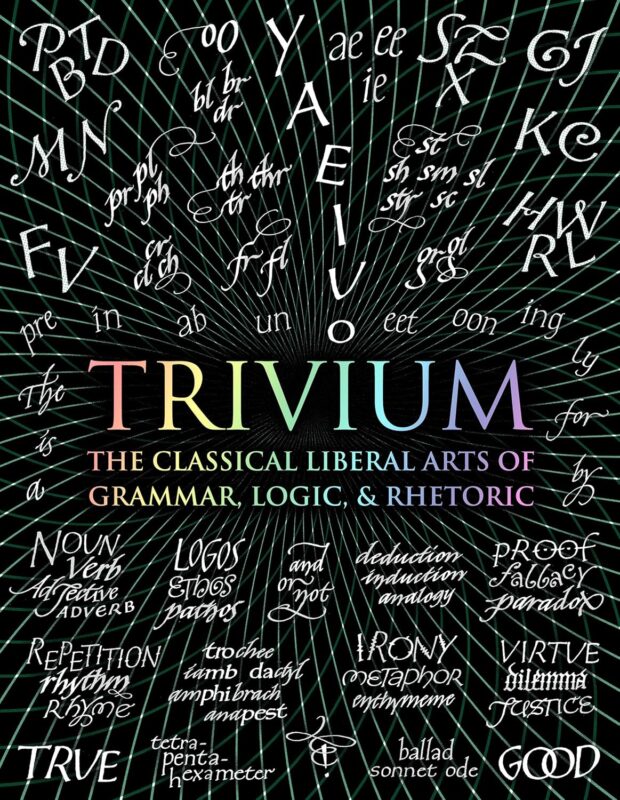
The Trivium: The Liberal Arts of Logic, Grammar, and Rhetoric by Sister Miriam Joseph establishes a structural framework for understanding language as both a mechanism and a medium of thought, communication, and self-perfection. Within its pages, Sister Miriam Joseph forges a connection between the intellectual traditions of the trivium—logic, grammar, and rhetoric—and the lived realities of contemporary readers seeking mastery of language. The book catalyzes an encounter with the roots of learning, where the liberal arts train the faculties, refine reasoning, and liberate the mind.
Origins of the Liberal Arts: The Trivium and the Quadrivium
Sister Miriam Joseph grounds the discussion in the classical division of the seven liberal arts. The trivium—logic, grammar, and rhetoric—constitutes the arts of language and mind. The quadrivium—arithmetic, music, geometry, and astronomy—encompasses the arts of quantity and matter. She traces the etymology and function of these arts, affirming that the trivium disciplines thought and communication, while the quadrivium forms the analytical and scientific sensibility. The liberal arts do not produce external artifacts or commercial products; instead, they act upon the learner, refining the mind, deepening understanding, and enabling intellectual freedom. The faculties developed through these disciplines prepare the individual for scholarship, professional achievement, and participation in the broader dialogue of culture.
Structure and Hierarchy in the Liberal Arts
The text defines logic as the art of correct thinking, grammar as the art of inventing and combining symbols, and rhetoric as the art of adapting language to persuade and communicate. Logic governs the formation of judgments and the discovery of truth. Grammar supplies the structural rules and symbols necessary for expression. Rhetoric orchestrates the arrangement of ideas, crafting discourse that is unified, coherent, and impactful. These arts form an organic whole, operating simultaneously in reading, writing, listening, and speaking. The trivium precedes and makes possible the study of the quadrivium, situating itself as the foundation for advanced learning.
Language as the Instrument of Thought
Language arises from the rational, social, and corporeal dimensions of humanity. Sister Miriam Joseph shows that humans invent symbols to express and record the range of experience, from the practical to the poetic. Language persists as the vehicle of civilization, enabling the transmission of knowledge and values across generations. She emphasizes that language involves symbols—arbitrary, sensible signs whose meanings society establishes by convention. Words, as symbols, differ from imitations and natural signs; their function derives from agreement and usage rather than resemblance. This symbolic capacity expands the scope of communication, making it possible to convey abstract concepts, scientific discoveries, and imaginative worlds.
The Threefold Function of Language
Language communicates thought, volition, and emotion. Human beings articulate sentences that express ideas, desires, and feelings, whereas animals produce only instinctive cries. The capacity for abstraction and syntax enables humans to move beyond immediate experience, constructing knowledge and meaning through language. Sister Miriam Joseph explains that symbols can be temporary (signals, passwords) or permanent (traffic lights, numbers). Specialized symbol systems—mathematics, chemical notation, musical scores—facilitate precision and universality in their respective fields, but spoken language remains the most comprehensive and flexible mode of communication.
The Nature and Hierarchy of Symbols
Words represent both individuals and essences. The author distinguishes between proper names, empirical descriptions, common names, and universal definitions. Proper names and empirical descriptions refer to specific individuals or aggregates, grounding language in experience. Common names and universal definitions express essences, enabling the formation and communication of general concepts. The capacity to symbolize essences distinguishes human language, allowing for science, philosophy, and history. Without this ability, discourse would fragment into incommunicable private languages, rendering collective knowledge and culture impossible.
Concept Formation and the Power of Abstraction
The process of abstraction begins with perception. External senses produce percepts, which the imagination transforms into phantasms—mental images that persist beyond immediate experience. The intellect, through abstraction, isolates the essential features of these images, generating universal concepts. Only humans possess this intellectual power. The concept exists as an immaterial, universal idea, grounded in the essence shared by all members of a class. This process enables the mind to transcend the limits of particularity, organizing experience and constructing knowledge that applies across time and place.
Aristotle’s Ten Categories: Language and Reality
To systematize the relationship between language and reality, Sister Miriam Joseph invokes Aristotle’s ten categories of being: substance, quantity, quality, relation, action, passion, when, where, posture, and habiliment. These categories offer a logical grid for classifying words and concepts. Substance denotes that which exists in itself. Accidents—quantity, quality, relation, and the rest—exist in or with respect to substance. This classification informs both logic and grammar, providing a philosophical foundation for the analysis and construction of language.
Material and Formal Elements of Language
The author defines words as composed of matter (the sensible sign: sound or mark) and form (the meaning imposed by convention). Phonetics studies the sound, orthography the written mark, and semantics the meaning. This distinction reflects broader metaphysical categories. In animals, the body is matter, the soul is form; in language, the sign is matter, the meaning is form. This duality anchors the study of language in both sensory experience and intellectual abstraction.
Norms and Functions of the Language Arts
Phonetics prescribes correct combinations of sounds, spelling governs the arrangement of letters, grammar controls word order in sentences, rhetoric arranges sentences in discourse, and logic structures concepts into judgments and arguments. Each discipline applies specific norms: correctness for phonetics, spelling, and grammar; effectiveness for rhetoric; truth for logic. The arts guide the user toward clear, precise, and persuasive communication.
The Psychological and Logical Dimensions of Words
Words operate on both logical and psychological levels. The logical dimension—denotation—captures the thought content and forms the basis of definition and reasoning. The psychological dimension—connotation—embraces emotional resonance, imagery, and associative value. Literature and poetry exploit this duality, selecting words for their evocative power as well as their clarity. Good style depends on sensitivity to both dimensions, balancing precision with beauty, and cognitive force with emotional weight. Translation can render logical meaning but often struggles to transmit psychological resonance, as the historical and cultural associations of words shape their impact.
Rhetoric: The Master Art of Persuasion
Rhetoric presupposes logic and grammar, employing their tools to achieve persuasion, unity, and emphasis in discourse. Sister Miriam Joseph delineates the structure and techniques of rhetoric, drawing on Aristotle’s principles and literary examples. She examines figures of speech, narrative construction, and the six elements of poetics. The book analyzes the function of rhetoric in literature, oratory, and composition, urging the reader to adapt language to circumstance and audience. Rhetoric governs the selection of style, diction, and tone, empowering the speaker or writer to move minds and shape action.
Grammar: The Structure of Thought
Grammar provides the rules for combining symbols, organizing thought into coherent, meaningful units. The text explores the evolution of grammar from the ancient Greek tradition, noting that it once encompassed versification, rhetoric, and criticism. Sister Miriam Joseph shows how grammar structures language, defining parts of speech, syntactic relationships, and the mechanics of expression. Mastery of grammar equips the learner to generate precise, flexible, and intelligible discourse.
Logic: The Discipline of Reasoning
Logic directs the mind to discover and organize truths. Sister Miriam Joseph presents logic as the instrument of deduction, guiding the thinker from known premises to new conclusions. The text investigates the forms of reasoning—propositions, syllogisms, fallacies—and explains their function in argument and analysis. Logic undergirds both grammar and rhetoric, ensuring that language conveys truth and sustains inquiry. The section on induction extends the discussion to the generation of general principles from individual instances, illuminating the scientific method and the structure of knowledge.
Liberal Arts as a Pathway to Intellectual Freedom
The study of the liberal arts transforms the learner. Through disciplined practice of the trivium, the mind achieves self-mastery, clarity, and the capacity for independent thought. Sister Miriam Joseph affirms that the liberal arts free the practitioner from servile occupations and intellectual dependence. They foster the ability to engage with reality, discern truth, and participate in the intellectual life of the community. Liberal education cultivates habits of attention, judgment, and creativity, opening the way to deeper insight and fuller participation in human culture.
Education as Organic Assimilation
Sister Miriam Joseph frames education as an organic process, akin to the rose assimilating nourishment from the soil. The student integrates facts into a unified whole, transforming information into understanding. Liberal arts education invites the learner to relate new knowledge to the living tradition of inquiry, forming connections, developing memory, and synthesizing ideas. This process strengthens the mind, enriches life, and generates the capacity for both professional achievement and personal fulfillment.
Legacy and Influence
The Trivium situates itself within a tradition extending from Aristotle and the medieval university to the modern liberal arts college. Sister Miriam Joseph acknowledges intellectual debts to Mortimer J. Adler, John Milton, Jacques Maritain, Thomas Aquinas, Thomas More, and Shakespeare. She illustrates theoretical principles with literary examples, drawing from the canon to illuminate and exemplify the arts of language. The text aims both to recover a tradition and to empower new generations of learners to think, speak, and write with clarity and power.
The Structure of Learning
The book closes with a comprehensive guide to composition and reading, practical exercises, and detailed analyses of literary forms. Sister Miriam Joseph integrates theory with practice, urging readers to exercise the trivium in reading, writing, and dialogue. The structure of learning, as presented in The Trivium, unfolds as a progressive development from sense experience to abstraction, from symbol to concept, and from isolated facts to integrated knowledge.
Enduring Value of the Liberal Arts
Sister Miriam Joseph concludes with a vision of liberal education as a lifelong pursuit, an intransitive activity whose effects remain within the learner, perfecting the faculties of mind and spirit. She asserts that the liberal arts enable individuals to live rational, free, and truthful lives, rising above material concerns to engage the world with understanding and purpose. The Trivium stands as a call to action for those who seek to master language, refine thought, and claim the freedom that comes through learning.