Tractatus Logico-Philosophicus
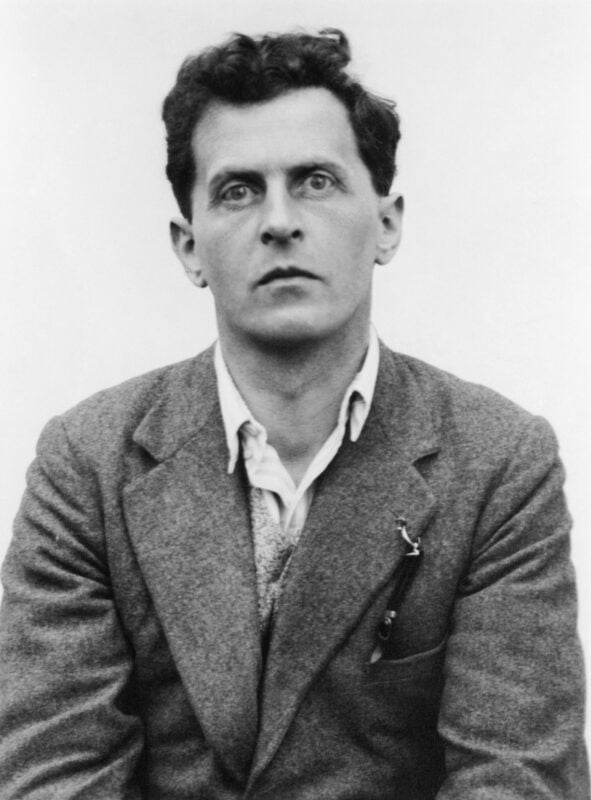
Tractatus Logico-Philosophicus by Ludwig Wittgenstein establishes a systematic vision of the relationship between language, reality, and thought through a precise logical architecture. The work advances from foundational assertions about the nature of the world to the limits of linguistic expression, shaping a framework that defines the scope of meaningful discourse.
The World as the Totality of Facts
The opening propositions define the world as the complete set of facts rather than a collection of isolated things. Facts consist of states of affairs, which emerge from combinations of objects. Objects are simple and indivisible, and their capacity to combine determines the range of possible states of affairs. The configuration of these combinations forms the structure of reality.
Logical Space and Possibility
Wittgenstein locates facts within logical space, a conceptual field that holds all possibilities. A fact exists when a specific combination of objects occurs within this space. The absence of a combination is equally part of reality, establishing that what is the case and what is not the case both contribute to the world’s structure. Possibility is embedded in the very nature of objects, ensuring their potential for combination precedes any actual arrangement.
The Picture Theory of Language
Language represents reality through propositions that function as pictures. A proposition’s elements correspond to objects, and the arrangement of those elements mirrors the arrangement of objects in a state of affairs. This structural correspondence creates the pictorial form that links language to the world. A proposition reaches toward reality as a measuring device reaches toward an object, aligning its internal structure with external facts.
Logical Form as the Basis of Representation
For a proposition to depict a fact, it must share its logical form. Logical form is the condition that enables representation and cannot itself be stated within language. It manifests through the arrangement of signs and the relations between them. This form provides the shared framework within which reality and propositions align, ensuring that representation is possible.
Elementary Propositions and Truth-Functions
Elementary propositions describe the simplest possible states of affairs. These propositions combine through logical operations to form more complex statements. The truth of a complex proposition depends on the truth-values of the elementary propositions that compose it. This relationship creates a system of truth-functions, allowing the entire structure of language to be derived from the interplay of basic elements.
Truth, Tautology, and Contradiction
A proposition’s truth depends on its agreement with reality. A tautology is true under all possible conditions, offering no specific information about reality. A contradiction is false under all conditions, excluding every possibility. These limit cases frame the boundaries of logical space, defining the outer conditions for meaningful propositions without contributing content.
The Role of Philosophy
Wittgenstein presents philosophy as an activity that clarifies thoughts by analyzing the logic of language. The goal is to reveal the underlying structure of meaningful propositions and dissolve confusions that arise from misuse of language. Philosophy does not create theories but exposes the limits of expression, allowing thought to operate with precision within those boundaries.
Internal and External Relations
Internal properties and relations are those that an object or proposition cannot lack without ceasing to be what it is. These relations are shown by the structure of language itself rather than asserted. External relations, by contrast, depend on contingent facts. Recognizing this distinction sharpens the analysis of logical form and preserves the clarity of representation.
Probability and Logical Structure
Probability arises when propositions share some, but not all, truth-conditions. The degree of probability reflects the proportion of truth-grounds they share. This mathematical relationship between propositions belongs to the same logical architecture as truth and falsity, extending the framework to cases where certainty is absent yet structure remains.
Limits of Language and the Unsayable
The work culminates in the recognition that language can depict reality only within the scope of logical form. Ethical, aesthetic, and metaphysical matters do not fit within this structure of factual representation. These domains are shown indirectly through the limits of what can be said. The boundary of language is the boundary of the world, and beyond that boundary lies silence.
Convergence of Logic, Language, and Reality
By tracing the path from objects through states of affairs to propositions and their logical interrelations, Wittgenstein integrates ontology, semantics, and logic into a single system. The structure of the world and the structure of language converge in logical form, enabling meaningful representation. This convergence defines the reach of thought and the horizon where meaning ends.
The Final Step into Silence
The propositions of the book function as tools for understanding. Once they have served their purpose, they can be set aside, leaving the reader with a clarified view of the limits of expression. The final assertion affirms that when a matter lies beyond the capacity of language to depict, the only appropriate response is to pass over it in silence.