When Jesus Became God: The Epic Fight Over Christ’s Divinity in the Last Days of Rome
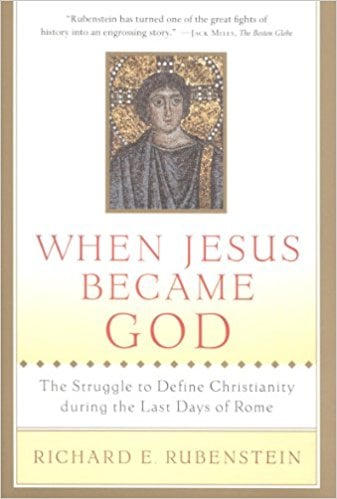
When Jesus Became God: The Epic Fight Over Christ’s Divinity in the Last Days of Rome by Richard E. Rubenstein reconstructs the extraordinary struggle that determined the core of Christian belief in the waning days of the Roman Empire. The book situates its narrative amid the turbulence and fervor of the fourth century, as doctrine, politics, and popular passion converged to define the very identity of Jesus Christ for centuries to come. Rubenstein asserts that this struggle, known as the Arian controversy, did not unfold in abstract, theological isolation but erupted into street violence, political intrigue, and dramatic reversals, with lasting impact on the Western world.
The Making of a Divine Controversy
The Arian controversy began with a question that shaped the destiny of Christianity: Was Jesus Christ fully God, equal and eternal with the Father, or did he occupy a subordinate place as the highest of God’s creations? Arius, a charismatic Alexandrian priest, asserted the latter, proclaiming that Christ, though exalted, had a beginning and did not share the eternal essence of the Father. Arius’s teaching resonated deeply in cosmopolitan centers such as Alexandria, where theological disputation was a public sport and the boundaries between philosophy, faith, and political allegiance remained porous.
From the outset, this doctrinal struggle involved the laity as much as the bishops. Artisans, bakers, shopkeepers, and women debated these questions in public spaces, infusing theological disagreement with popular energy and urgency. In the streets of Alexandria and Antioch, mobs aligned with rival bishops, sometimes resorting to violence to secure ecclesiastical control. Bishops found themselves defending not just theological arguments, but their very lives.
The Political Stakes: Emperors and Bishops
As the conflict escalated, the stakes expanded beyond theology to encompass the stability and future of the empire. Emperors recognized that religious unity underpinned civic order. Constantine the Great convened the Council of Nicaea in 325 CE, summoning bishops from across the empire to settle the issue of Christ’s divinity. The council produced the Nicene Creed, which proclaimed the Son “of one substance with the Father.” This declaration sought to close the debate and anchor imperial unity in religious orthodoxy.
However, Nicaea did not end the conflict. Arians continued to flourish, winning converts among the clergy and laity, often with imperial backing. Successors to Constantine vacillated, alternately supporting Arian or Nicene factions. Exiles and restorations followed in a relentless cycle. Athanasius of Alexandria, the champion of Nicene Christianity, experienced multiple exiles and triumphant returns, his career mirroring the instability and volatility of the church itself.
The Urban Battleground
Alexandria, Antioch, and Constantinople became battlegrounds. Factional violence erupted in the streets as bishops and their supporters seized churches, expelled rivals, and sometimes incited mob action. These cities, with their mixed populations of Christians, Jews, and pagans, fostered a climate where doctrinal dispute escalated rapidly into public unrest. The death of Bishop George of Cappadocia in Alexandria illustrates the intensity: dragged from prison by a crowd, he was beaten and his body paraded through the streets before being burned.
These conflicts drew ordinary believers into the heart of doctrinal decision-making. Christian leaders cultivated lay engagement, teaching complex theological concepts and urging people to choose sides. The result: doctrine did not emerge as the isolated work of scholars but as a living contest shaped by urban passions and street-level loyalties.
Defining Orthodoxy: Creed and Heresy
Rubenstein asserts that the establishment of orthodoxy occurred as a function of political necessity as much as theological reasoning. The elevation of the Nicene Creed to dogmatic status marked a watershed. It crystallized the doctrine of the Trinity—Father, Son, and Holy Spirit as coequal, coeternal persons. The ruling authorities, now committed to orthodoxy, enforced conformity and punished dissent. Heresy became not just an error but a crime, with legal and social penalties.
The Arians did not vanish. For decades, they retained support from powerful bishops, large sections of the laity, and even the imperial court. Arian Christianity appealed to those who found its vision of Christ—supremely virtuous, divinely favored, yet imitable—more accessible. The ultimate defeat of Arianism resulted from relentless campaigns by Nicene leaders, shifting imperial alliances, and the gradual establishment of a consensus that aligned church and state interests.
Women and the Shaping of Early Christianity
Women played a decisive role in the expansion and resilience of the early church. Their participation in worship, charity, and martyrdom provided critical strength during persecutions and internal crises. Bishops recognized the importance of women’s piety and commitment. Rubenstein highlights the prominence of upper-class women in Christian communities, noting that their influence extended into the highest circles of Roman society. Pagan critics and authorities took notice, sometimes expressing alarm at the church’s appeal to women and the new forms of social organization and loyalty it fostered.
From Persecution to Power
The Christian church’s journey from persecuted minority to dominant institution forms a central thread. Roman authorities initially sought to suppress the movement through legal coercion and violence. Christians, refusing to perform sacrifices to pagan gods, faced threats of death, imprisonment, and social exclusion. The community responded by emphasizing solidarity, charity, and the hope of eternal life—a message that appealed across class and gender lines. The church’s willingness to care for the sick, feed the hungry, and honor its martyrs won respect and conversions.
The conversion of Constantine and the eventual legalization and patronage of Christianity did not diminish internal tensions. Instead, the struggle for doctrinal purity sharpened, producing new forms of persecution—now directed at heretical Christians. Church councils became arenas for political as well as theological contest, with emperors wielding influence over ecclesiastical decisions. The cycle of exile, condemnation, and rehabilitation continued, underscoring the inseparability of doctrine, power, and identity.
The Legacy of the Arian Controversy
The triumph of Nicene Christianity established lasting patterns for Western religious and political life. Doctrinal orthodoxy, once achieved, became a marker of legitimacy and loyalty. Heresy, defined as deviation from accepted belief, justified suppression and exclusion. The close relationship between church and state, cemented by shared interests in unity and stability, structured the medieval and modern West.
The marginalization of alternative Christianities, especially Arianism, shaped the religious map of Europe and the Mediterranean. Rubenstein notes that this process involved more than intellectual debate—it drew on the full range of social, political, and emotional resources of the late Roman world. The fate of Judaism also changed as Christianity hardened its doctrinal boundaries; mutual engagement gave way to increasing separation and suspicion.
Conflict, Resolution, and the Limits of Tolerance
Religious violence during the Arian controversy emerged from deeply held convictions and the perception that ultimate truth hung in the balance. Bishops, emperors, and lay believers shared the sense that doctrinal correctness determined not just personal salvation but the fate of communities and the empire itself. The willingness to use force reflected both hope and fear—hope that the right faith would ensure divine favor, fear that error would bring disaster.
The book explores how the rhetoric and practices of exclusion shaped the psychology of Western religion. As heresy became associated with treachery and demonic influence, opportunities for dialogue and compromise diminished. The memory of persecution under pagan emperors lingered, informing Christian responses to dissent and difference. Patterns of intolerance and suppression persisted, shaping future controversies and schisms.
Transformations of Faith and Power
The era Rubenstein describes witnessed a convergence of spiritual aspiration and worldly ambition. Christianity’s promise of transformation—personal and collective—offered hope amid the uncertainties of imperial crisis. The rapid growth of the church reflected new possibilities for self-definition, moral agency, and social belonging. The doctrine of the Trinity, forged in the heat of conflict, anchored a theology that claimed universal reach and timeless authority.
Urban life, with its diversity, ferment, and volatility, provided the stage for this drama. Intellectual currents from Greek philosophy, Jewish monotheism, and Roman civic religion intersected, producing new forms of faith and debate. The capacity of ordinary people to engage in theological reasoning empowered a wide spectrum of believers, ensuring that doctrine would bear the marks of lived experience and collective memory.
The enduring lesson of the Arian controversy lies in its demonstration that religious identity forms through contest, risk, and the mobilization of social forces. The affirmation of Christ’s divinity set the terms for Christian orthodoxy, but the struggle that produced it left deep marks on the church and society. Rubenstein argues that understanding this history provides insight into the persistence of religious conflict, the role of doctrine in shaping communities, and the continuing relevance of the questions that animated the debate.
The Ongoing Relevance of Rubenstein’s Analysis
Rubenstein frames his narrative as a window into the dynamics of faith, conflict, and reconciliation that continue to animate religious life. The book poses questions that remain urgent: How do communities resolve disputes over ultimate meaning? What happens when doctrine becomes the ground for social exclusion or violence? Can the memory of foundational struggles inform efforts at healing and dialogue today?
As contemporary societies grapple with renewed religious conflict and the search for identity, the story of when Jesus became God offers a guide to the stakes, possibilities, and challenges inherent in debates over belief and belonging. The drama of the fourth century set patterns that endure—patterns of hope, division, courage, and transformation. The intersection of faith and power, reason and passion, continues to shape the destiny of communities, echoing across centuries from the streets of Alexandria and the halls of Nicaea to the ongoing conversations of our own time.