The Occult Philosophy in the Elizabethan Age
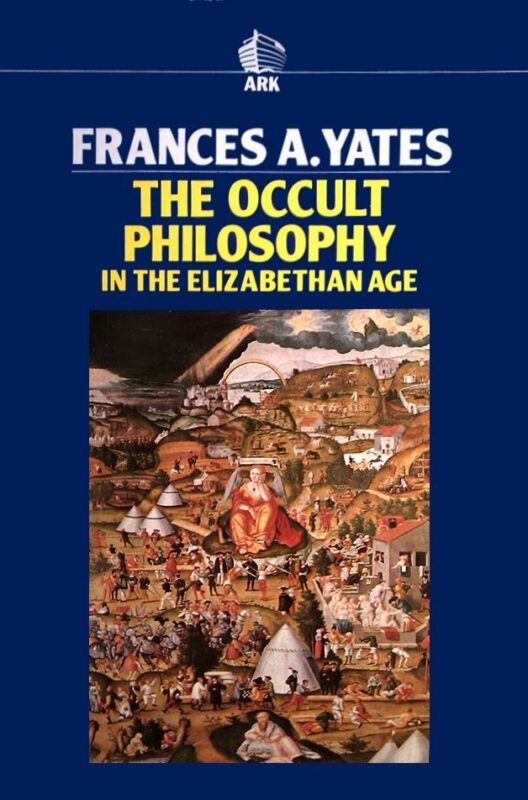
The Occult Philosophy in the Elizabethan Age by Frances Yates investigates how Hermeticism and Christian Cabala shaped Elizabethan thought, literature, and religion, tracing their roots from Renaissance Italy to the intellectual world of England. Yates presents the evolution of occult philosophy through precise historical figures, cultural currents, and literary manifestations, mapping the influence of mystical systems on major Elizabethan figures and texts.
Origins of Christian Cabala
Ramon Lull’s combinatorial Art in medieval Spain provided a structural precedent for Christian Cabala. Lull worked with divine names, elemental theory, and symbolic permutations of letters to articulate a universal philosophy that sought to unite Christians, Jews, and Muslims through shared principles of divine attributes. His system expressed divine order through wheels, diagrams, and symbolic alphabets, creating a method for exploring theology, cosmology, and science. From this foundation, later thinkers drew techniques for linking names of God, numerical harmonies, and cosmological hierarchies to the Christian Trinity.
Giovanni Pico della Mirandola integrated Jewish Cabala into Renaissance Neoplatonism. He asserted that Cabala demonstrated Christian truth, particularly through manipulations of the Hebrew Tetragrammaton that he read as affirmations of Christ as Messiah. Pico’s 900 Theses included Cabalist conclusions that presented Hebrew mysticism as a confirmation of Christianity. His synthesis placed Christian Cabala at the heart of Renaissance thought, embedding Hebrew traditions into a Christian and Hermetic framework.
Reuchlin and the German Transmission
Johannes Reuchlin advanced Christian Cabala in Germany, defending Jewish texts and systematizing Cabalist study for a non-Jewish audience. His De verbo mirifico and De arte cabalistica introduced Cabala as a philosophical and theological science capable of proving the divinity of Christ. Reuchlin emphasized angelology, Hebrew names, and the mystical power of language, portraying Cabalist practice as safe and holy in contrast to accusations of diabolism. His scholarship coincided with humanist defenses of Hebrew studies during antisemitic attacks in Germany, linking Cabala to reformist impulses and aligning it with the New Learning of the early Reformation.
Giorgi and the Venetian Current
Francesco Giorgi, a Venetian Franciscan, expanded Cabalist philosophy with De harmonia mundi (1525). He fused Neoplatonic cosmology, Franciscan mysticism, angelology, and architectural theory. Giorgi envisioned the cosmos as a divinely proportioned temple governed by mathematical harmonies, and he read Cabala as confirmation of Christianity through Hebrew sources. He applied his philosophical principles directly to architectural design, advising on the church of San Francesco della Vigna in Venice. His work circulated widely and influenced both Italian Catholic reformers and Protestant thinkers abroad, bridging Cabala with broader projects of religious reform and universal harmony.
Agrippa and the Magical Tradition
Cornelius Agrippa condensed Hermetic and Cabalist traditions into De occulta philosophia. His emphasis on angelic hierarchies, correspondences, and operative magic gave structure to Renaissance occult philosophy. Agrippa provided a comprehensive manual that trained readers to see the cosmos as a network of divine forces accessible through ritual, invocation, and symbolic alignment. Later reactions demonized Agrippa as a magician, but his work framed the intellectual atmosphere that Elizabethan thinkers inherited.
Dürer, Melancholy, and Inspired Knowledge
Albrecht Dürer’s engraving Melencolia I became a central image for understanding Elizabethan melancholy and its link to intellectual inspiration. The tools, symbols, and geometric structures within the print expressed Renaissance anxieties about knowledge, magic, and creativity. For Yates, Dürer’s imagery created a visual key that Elizabethan poets and thinkers used to articulate the burden and potential of inspired knowledge. Melancholy became both a source of danger and a condition for profound insight, tied to the traditions of Cabala and Hermetic philosophy.
John Dee and Elizabethan Occult Philosophy
John Dee stood at the center of Elizabethan intellectual life. Mathematician, astrologer, and philosopher, Dee merged Agrippa’s angelic frameworks with Giorgi’s harmonies and Pico’s Cabalist techniques. His Monas Hieroglyphica articulated a symbolic unity of creation, linking mathematics, alchemy, and mysticism. Dee’s angelic conversations with Edward Kelley demonstrated his belief in Cabalist angelology as a path to Christian reform and universal truth. He saw his work as part of a divine mission for England, aligning Elizabethan power with cosmic order.
Spenser’s Cabalist Neoplatonism
Edmund Spenser’s Faerie Queene reflects Christian Cabalist Neoplatonism. Yates interprets the poem as an allegorical system that encodes Giorgi’s harmonies and angelic correspondences. The poem operates as both a literary achievement and a philosophical text that uses symbolic figures to express cosmic truths. Spenser draws from Dee’s philosophy and Giorgi’s patterns to frame the Elizabethan Protestant project as aligned with divine structures of harmony and reform.
Marlowe and the Tragedy of Faustus
Christopher Marlowe’s Doctor Faustus dramatizes the collapse of Renaissance occult ideals under suspicion of witchcraft and heresy. The play mirrors contemporary anxieties about Agrippa’s reputation and the dangers of magical knowledge. Faustus’ conjuring of devils and descent into damnation echoes the demonization of occult philosophy in an age of witch-hunts. For Yates, Marlowe captures the tension between reformist hopes of Christian Cabala and the cultural fear of diabolic corruption.
Chapman and the Vision of Night
George Chapman’s Shadow of Night reveals the influence of Dürer’s Melencolia I and Agrippa’s angelic philosophy. Chapman transforms melancholy into a poetic vision of inspired ascent, framing nocturnal imagery as a medium for mystical insight. His work responds to Marlowe’s tragic portrayal of magic with an alternative vision of intellectual exaltation. Yates sees Chapman as an example of how Elizabethan poetry sustained Hermetic-Cabalist traditions even in a climate of repression.
Decline and Transformation of Occult Philosophy
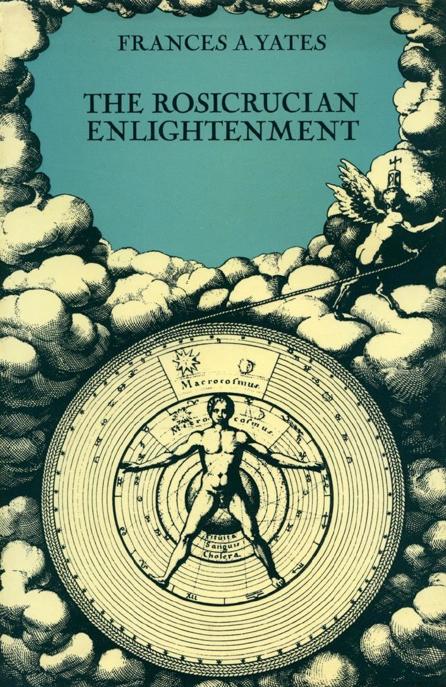
By the late sixteenth century, occult philosophy faced increasing hostility. Witch-hunts, theological suspicion, and the rigid enforcement of orthodoxy turned reformist mysticism into an object of fear. Yet the traditions did not disappear. They transformed into Rosicrucian manifestos, Puritan mystical thought, and intellectual currents that prepared the ground for the eventual readmission of Jews to England. The vision of cosmic harmony persisted in hidden forms, shaping early modern religion, science, and literature.
Enduring Legacy
The trajectory traced by Yates shows how Renaissance Hermeticism and Christian Cabala provided Elizabethan thinkers with frameworks for reform, art, and philosophy. From Lull’s combinatorial systems to Dee’s angelic communications, the occult philosophy offered methods of interpreting creation, linking language, mathematics, and theology into a unified vision. Elizabethan literature reveals this influence in allegory, tragedy, and mystical poetry. The repression of the movement did not erase its ideas, which reemerged in new guises, continuing to shape European intellectual history.