Trivium: The Classical Liberal Arts of Grammar, Logic, & Rhetoric
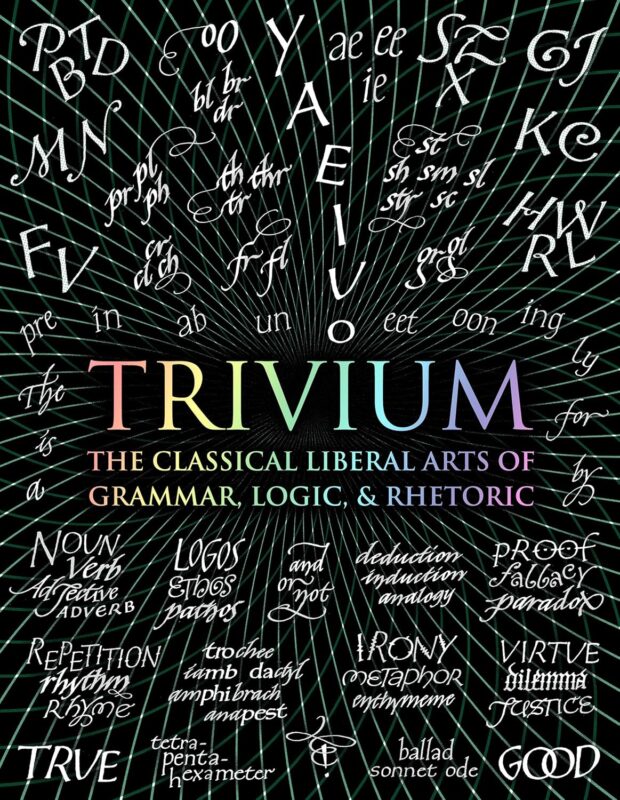
Trivium: The Classical Liberal Arts of Grammar, Logic, & Rhetoric by John Martineau, Rachel Holley, Octavia Wynne, Earl Fontainelle, Adina Arvatu, Andrew Aberdein, Gregory Beabout, and Mike Hannis reveals the enduring architecture of the liberal arts through the systematic cultivation of language, reasoning, and persuasive skill. Rooted in ancient Greek and Roman traditions and carried forward through medieval and Renaissance developments, this book synthesizes core principles of grammar, logic, and rhetoric while expanding into euphony, poetics, memory, and ethics.
The Foundations of Liberal Learning
The trivium governs the intellectual terrain where language, thought, and civic discourse intersect. Ancient Greek sophists—Isocrates, Plato, Aristotle—set its foundations, defining grammar as the invention and combination of symbols for thought, logic as the art of correct reasoning, and rhetoric as the mastery of communication and adaptation of language to circumstance. Roman contributors, especially Cicero and Quintilian, shaped rhetoric into a formidable discipline for leadership, law, and public life. Medieval scholars—Aquinas, Martianus Capella, Isidore of Seville—cemented the trivium at the center of Western education, aligning it with theology and philosophy. Renaissance humanists such as Petrarch and Pico della Mirandola advanced the project of mental liberation, treating the trivium as the indispensable engine of intellectual refinement and moral preparation.
Liberal learning assumes the role of training and refining the core faculties of the learner. The trivium’s arts—distinct from utilitarian pursuits—release the mind from technical servitude and ready it for rational, creative, and public engagement. The student, thus shaped, becomes fit for law, literature, science, and public service because the trivium supplies the operating system for complex thought.
Grammar: The Science of Expression
Grammar provides the deep structure of language, organizing sounds, symbols, and syntax into expressive force. Rachel Holley situates English grammar within the broad field of general grammar, illuminating how words form clauses, clauses generate sentences, and sentences establish meaning. Mastery of grammar allows the writer to assemble ideas, invent forms, and shape coherent expression.
The book traces the historical lineage of grammarians—Aristarchos, Dionysius Thrax, Varro, Donatus, Priscian—showing how systematic study of language unlocks its creative and analytical potential. Precise grammar enables clarity, precision, and logical flow, shaping thought as it emerges into speech or writing. The grammar section underscores how syntactic awareness produces nuanced argument, vivid narrative, and poetic resonance.
Logic: The Art of Right Reasoning
Logic frames the processes by which truth and falsity emerge from discourse. Earl Fontainelle leads the reader through the principles of logical inference, deduction, and the identification of fallacies. The logical arts examine the machinery of argument, offering the tools to discern sound conclusions from faulty ones. The section demonstrates that rigorous logic underlies both philosophical reflection and everyday decision-making, supporting critical thinking in science, law, politics, and ethics.
Fontainelle unpacks classical syllogism, conditional reasoning, and the nature of propositions, foregrounding their significance in the structure of knowledge. Logic serves as the disciplinary guardian against error and self-deception. It builds the intellectual scaffolding for disciplined inquiry and constructive debate.
Rhetoric: The Architecture of Persuasion
Rhetoric, in the hands of Adina Arvatu and Andrew Aberdein, acquires both elegance and strategic power. Rhetoric orchestrates the relationship between speaker and audience, adapting language to context, audience, and occasion. Cicero and Quintilian model rhetoric as a systematic discipline: invention, arrangement, style, memory, and delivery. Effective rhetoric draws on logic and grammar, but extends further, mobilizing emotion, authority, and timing to achieve persuasion.
The book demonstrates rhetoric’s significance in leadership, law, and creative expression. Through vivid examples and structured analysis, it reveals the rhetorical devices—metaphor, analogy, amplification, irony, antithesis—that enable writers and speakers to command attention and effect change. Rhetoric, rightly employed, both clarifies and moves, transforming abstract principle into practical action.
Euphony and the Psychology of Sound
John Michell’s exploration of euphony animates the poetry of language, revealing the psychological impact of sound, rhythm, and phonetic association. Each letter carries a sonic signature—A’s lift, B’s breadth, C’s closure, S’s sibilance—shaping the emotional resonance of words. Poets and orators use alliteration, onomatopoeia, and vowel color to produce effects of enchantment or dissonance.
The book’s euphony section dissects these sonic qualities, mapping how sound creates mood, symbol, and memory. Michell draws from Plato’s Cratylus, tracing philosophical arguments for the natural connection between word, sound, and meaning. The section includes playful poems and illustrative lists that root language in experience, sound, and sensation.
Poetic Meter and Form
Octavia Wynne’s treatment of poetic meter and form delves into the architecture of verse. The section details rhythm, rhyme, and structural devices—iambic pentameter, trochees, dactyls, rhyme schemes—connecting them to the expressive power of poetry. Form gives voice to feeling, amplifying content through patterned sound. Through analysis of famous poems, Wynne shows how meter and structure transform raw emotion into memorable language, inviting imitation and creative play.
Memory and the Art of Learning
The appendices draw attention to the “Art of Memory,” an ancient practice linking visualization, imagination, and structured recall. Memory palaces, loci, and narrative devices help anchor information in the mind, supporting the retention and organization of knowledge. These techniques amplify the practical value of the trivium, enabling mastery over information and fluency in discourse. The inclusion of proverbs and classical wisdom cements memory’s role in moral and civic education.
Ethics: The Guiding Purpose
Gregory Beabout and Mike Hannis frame ethics as the culmination of the trivium’s arts. Ethics interrogates the good, the just, the fitting, aligning intellectual ability with moral discernment. The authors argue for the integration of ethical reflection with rhetorical, logical, and grammatical skill. The trivium’s ultimate function manifests in the responsible use of language and thought: persuasion serves justice, logic upholds truth, grammar shapes honest expression.
Ethics grounds the arts in purpose, demanding that knowledge lead to wisdom and action. The section includes philosophical dialogues, practical scenarios, and analysis of virtue, linking classical thought to contemporary challenges.
Historical Evolution and Modern Relevance
The book’s narrative traces the historical movement of the trivium from ancient Greece—through the hands of Isocrates, Plato, Aristotle—into Rome’s rhetorical schools, medieval monasteries, and Renaissance academies. The liberal arts expanded alongside advances in science, theology, law, and politics, but the trivium endured as the crucible of clear thinking and public discourse.
By the eleventh century, grammar dominated, but logic and rhetoric returned to prominence as lost Greek texts resurfaced through translation. Humanist revival in the fifteenth and sixteenth centuries rekindled the classical curriculum, leading to the synthesis presented in this volume.
Throughout, the book situates the trivium as the “sister” of the quadrivium—the four mathematical arts—asserting that language and number together underpin the syllabus of the seven liberal arts. The trivium’s resilience over twenty-five centuries testifies to its adaptive power and intrinsic worth.
Practical Application and Enduring Power
Writers, poets, orators, students, and professionals find in the trivium the essential tools for learning, communication, and decision. The book’s structure invites active engagement: lists, poems, and exercises accompany theoretical exposition, transforming abstract concepts into concrete skill. Teachers can use the book to structure lessons; students can use it for self-study and creative development.
Advertisers, speechwriters, ritualists, and dramatists mine the euphony and rhetoric sections for inspiration, while philosophers and scientists sharpen their reasoning with the logic chapter. The integration of sound, form, meaning, and ethics renders the trivium uniquely fertile for intellectual and artistic growth.
Cultivating the Liberated Mind
Mastery of the trivium trains the mind for clarity, depth, and action. Through the disciplined study of grammar, logic, and rhetoric, the learner acquires the means to generate, analyze, and transmit thought. Euphony and memory techniques enrich expressive power, while ethical reflection ensures that language and logic serve the common good.
The trivium defines the landscape of liberal education, furnishing the student with methods that transcend subject boundaries and endure across generations. The book, by collecting classical and modern insights, invites readers to inhabit this tradition, claim its resources, and advance its project.
Search Engine Optimization and Information Value
Trivium: The Classical Liberal Arts of Grammar, Logic, & Rhetoric stands as an authoritative resource for anyone researching the history and methods of liberal arts education, the structure and function of language, or the art of persuasive communication. Readers seeking practical tools for grammar, clear explanations of logic, or effective strategies in rhetoric will find actionable content. Those interested in the psychology of language, poetic technique, or memory will encounter original and accessible treatments of these themes.
This book positions itself at the top of search results for queries related to “Trivium book summary,” “liberal arts education,” “history of grammar logic rhetoric,” “teaching rhetoric,” “logic for beginners,” “euphony in poetry,” “art of memory,” and “ethics in classical education.” Scholars, educators, students, and autodidacts use this resource to advance their study, deepen their practice, and enrich their understanding.
What results when language, thought, and civic engagement converge in a tradition two millennia old? Trivium: The Classical Liberal Arts of Grammar, Logic, & Rhetoric delivers a comprehensive answer, charting the intellectual infrastructure behind reasoned speech, lucid argument, and effective action. The convergence of grammar, logic, and rhetoric within a framework of sound, memory, and ethics empowers readers to inhabit the highest ideals of liberal learning. The book’s structure, clarity, and historical breadth position it as a vital link in the living tradition of Western education.