The Imagineers of War: The Untold Story of DARPA, the Pentagon Agency That Changed the World
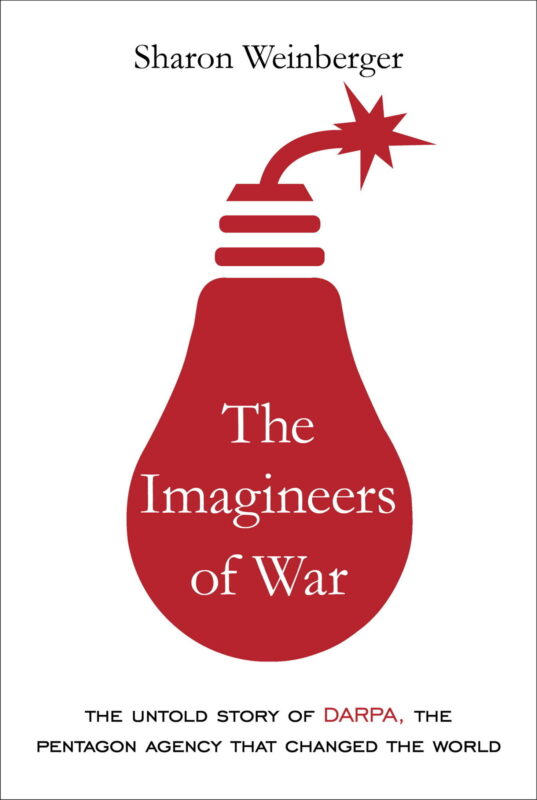
The Imagineers of War by Sharon Weinberger investigates the untold history of DARPA, the Pentagon’s engine of technological innovation and military transformation. Weinberger locates the agency’s genesis in the shockwaves of Sputnik, tracing a lineage of invention, improvisation, and ambition that redefined the interface between science, state power, and the evolution of warfare. The book constructs a detailed portrait of the Defense Advanced Research Projects Agency as both catalyst and crucible—where audacious visions and hazardous experiments forged new ways of fighting, thinking, and controlling.
Origins: From Sputnik to the Jungle
In 1957, the Soviet Union launched Sputnik, puncturing American perceptions of technological supremacy. The Eisenhower administration responded with the creation of ARPA—later DARPA—giving it a mandate to conceive, sponsor, and guide research projects that could prevent technological surprise. By concentrating both authority and resources, DARPA operated beyond conventional bureaucratic constraints. Leadership fostered an environment in which scientists and engineers pursued radical concepts with a singular focus: ensure the United States never again confronted strategic vulnerability.
The agency’s earliest projects revolved around space. ARPA orchestrated programs to develop satellites, reconnaissance systems, and command architectures that advanced American technical capability. As NASA assumed responsibility for civilian space exploration, DARPA redirected its focus. The Vietnam War presented new challenges. Leaders such as William Godel shaped the agency’s identity through direct intervention in the conflict, channeling DARPA’s culture of rapid experimentation and technological boldness into counterinsurgency operations across Southeast Asia.
Counterinsurgency and Technological Ambition
In Saigon, DARPA initiated the Combat Development and Test Center, infusing the U.S. military’s struggle against guerrilla warfare with new methods and tools. Godel arrived in Vietnam carrying $18,000 in cash for a classified project. His mission: convert scientific imagination into operational advantage. DARPA fielded experimental weaponry, deployed advanced communications, and introduced social science frameworks for understanding insurgency. Projects encompassed everything from chemical defoliants to anthropological studies, seeking to engineer both the landscape and the hearts and minds of South Vietnam.
These efforts produced enduring consequences. The Armalite AR-15 rifle, championed by DARPA, evolved into the M16, changing the standard of infantry firepower. The agency introduced chemical defoliants, including Agent Orange, aiming to strip away jungle cover used by enemy forces. Social scientists, funded and coordinated through ARPA, mapped political allegiances, village networks, and insurgent psychology. The program’s reach extended across Thailand and into the Middle East, building a model of technologically mediated counterinsurgency. The results shaped military doctrine, influenced later campaigns in Iraq and Afghanistan, and seeded new debates about the ethics and efficacy of scientific intervention in war.
The Architecture of Innovation
DARPA’s structure catalyzed high-velocity invention. The agency attracted risk-takers—engineers, physicists, computer scientists, psychologists—willing to bet careers on concepts untested elsewhere. Leaders minimized administrative obstacles and encouraged a project-based culture. Within this environment, success depended on the ability to imagine solutions before adversaries identified problems.
Projects often failed spectacularly. Mechanical elephants to carry supplies through jungles, strategic hamlets to relocate populations, and massive data-driven studies of Vietnamese society—many attempts collapsed under the weight of flawed assumptions or unanticipated resistance. Yet failure functioned as an engine for adaptation. The willingness to accept defeat, analyze shortcomings, and repurpose lessons distinguished DARPA from more risk-averse institutions.
Technologies That Changed War and the World
DARPA’s legacy encompasses transformative technologies. The agency directed the creation of the world’s first communications satellites and supported the reconnaissance programs that undergirded American nuclear strategy. From early missile defense architectures to advances in seismology for nuclear test monitoring, DARPA addressed core national security threats with scientific ingenuity.
The most far-reaching innovation emerged from its work in command and control. Charged with improving survivability and flexibility in nuclear conflict, DARPA supported research that led to the ARPANET. This network became the technological foundation for the modern internet. The convergence of military necessity, computer science, and agency culture produced breakthroughs in networking, protocols, and distributed systems.
The development of stealth aircraft, precision-guided munitions, and unmanned aerial vehicles transformed the conduct of warfare. DARPA’s Tactical Technology Office, inheriting the counterinsurgency work of Vietnam, generated capabilities that shaped subsequent conflicts. Drones, once experimental, entered operational service as instruments of reconnaissance and targeted strikes.
Crisis, Experimentation, and the Shaping of Doctrine
DARPA’s approach stemmed from a philosophy of preemption. Leaders believed that military advantage derived from the capacity to conceptualize and realize unimagined weapons. Projects integrated basic science, applied engineering, and operational need. Administrators circumvented lengthy review processes and empowered project managers to take risks.
The Vietnam era crystallized the agency’s role as both innovator and agent of controversy. Godel’s programs, at once visionary and problematic, embodied the agency’s dual capacity for remarkable achievement and tragic miscalculation. The spread of chemical defoliants led to ecological devastation and long-term health effects. The strategic hamlet initiative, despite extensive resources, failed to win local allegiance or suppress insurgency. Yet the same period witnessed advances in weaponry, intelligence, and surveillance that continued to shape American military doctrine for decades.
Narrative, Memory, and the Tension of Success
Weinberger draws attention to the selective memory embedded in DARPA’s institutional history. Official narratives foreground technological triumphs—satellites, ARPANET, stealth—while obscuring episodes marked by failure or ethical ambiguity. The agency’s willingness to accept high-stakes failure emerged from its founding mandate to address existential national security problems.
Successes mattered because the stakes were immense: nuclear deterrence, warfighting, the future of information exchange. As DARPA’s mandate narrowed over time, Weinberger contends, the agency risked devolving into a generator of technical novelties with diminishing relevance for national security. The history of the 1960s and 1970s, when the agency wielded the latitude to shape world events, reveals the conditions that made risk productive.
The Human Dimension
People animated DARPA’s story. Visionaries, operators, and mavericks—from William Godel to later directors—shaped priorities, steered projects, and cultivated the agency’s mystique. The environment attracted those who relished ambiguity, thrived in chaos, and saw themselves as engineers of the future. Administrative leadership recognized that unconventional personalities often produced unconventional results.
The culture of urgency and autonomy persisted through generations of scientists and administrators. Personalities collided, rivalries festered, and alliances shifted as projects rose and fell. Leaders such as Stephen Lukasik, who commissioned a classified history of the agency, saw the value in understanding origins as a way to sustain innovation. The decision to limit the circulation of the internal history underscores the tension between secrecy and reflection at the heart of the agency.
Science and State: Ethical Frontiers
DARPA exemplifies the integration of scientific ambition with the imperatives of state power. The agency harnessed both government resources and academic expertise, funding projects at universities and laboratories across the country. The porous boundary between classified and open research shaped entire fields, from artificial intelligence to robotics.
Agency leaders asserted the prerogative to marshal scientific expertise for national security, even when it meant departing from the conventions of academic peer review. William H. Godel articulated the agency’s ethic: scientists serve, not simply science. The convergence of technical, military, and political interests produced an ecosystem where innovation flourished, accountability strained, and new ethical frontiers emerged.
Future Tense: Legacy and Trajectory
As Weinberger argues, DARPA’s legacy rests in its capacity to define and pursue the critical problems of an era. The agency’s most consequential advances addressed challenges whose resolution changed the trajectory of military affairs and civilian life. The creation of the internet, precision weapons, and stealth platforms emerged from a commitment to attack fundamental obstacles.
In recent decades, observers—both inside and outside DARPA—have questioned whether the agency’s scope has narrowed, reducing its ability to address challenges on the scale of those it once confronted. Former directors express concern that projects no longer define the shape of war or society. The agency’s future depends on its ability to reclaim a role as solver of high-stakes, existential problems.
The Imagineers of War situates DARPA within the architecture of American power, innovation, and imagination. Weinberger’s investigation reveals how a single government agency, forged in the crucible of crisis, produced the technologies and doctrines that shaped the modern world. By tracing causality from Sputnik to the jungles of Vietnam and onward to the digital networks of today, the book demonstrates how the relentless pursuit of technological advantage remade both war and the peace that followed. Who will imagine the next frontier, and what forms will invention take as the logic of war and technology converges anew? The answer resides within the evolving tension between imagination, ambition, and consequence that defines DARPA’s ongoing story.