Jesus and Christian Origins Outside the New Testament
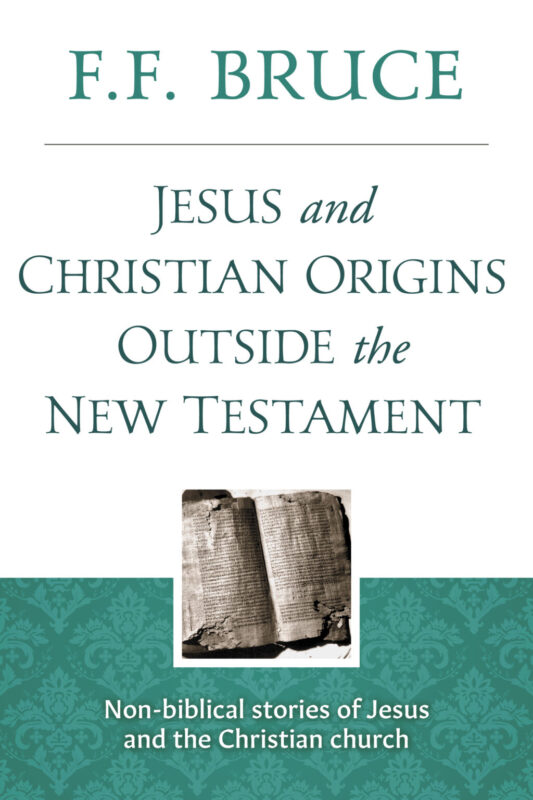
Jesus and Christian Origins Outside the New Testament by F.F. Bruce examines the historical testimony for Jesus and the beginnings of Christianity as found in ancient sources beyond the canonical scriptures. The quest for collateral evidence about Jesus of Nazareth drives historians, skeptics, and the curious alike to ask: What do ancient Roman, Jewish, and other writers reveal about the man whose influence radiated through centuries and continents? Bruce explores these external witnesses, assessing their reliability, content, and implications for understanding the roots of the Christian movement.
External Testimonies: Tracing the Echoes
Ancient Roman writers observed the rise of a new sect in their midst. Tacitus, in his Annals, describes how Nero blamed the Christians for the fire of Rome and recounts the execution of “Christus” under Pontius Pilate during the reign of Tiberius. Tacitus, a senator and historian with access to official records, connects Christianity’s origin directly to a historical figure and a legal sentence. Suetonius, in his Life of Claudius, remarks on disturbances instigated by “Chrestus” among Jews in Rome, implying the disruptive impact of Christian proclamation within the imperial capital. Pliny the Younger, serving as governor of Bithynia-Pontus, writes to Emperor Trajan for guidance on prosecuting Christians. His correspondence documents established Christian communities, details on their worship, and Roman authorities’ perplexity over their steadfast loyalty to Christ over Caesar.
Roman sources record the tangible spread of Christianity, the state’s response, and the fact of Jesus’s death by Roman authority. As officialdom encounters this movement, the records trace the evolution of Christian identity—from a Jewish renewal group to a distinct religious community, attracting legal scrutiny and social tension. Each text, composed by eyewitnesses to the Christian rise or by those who observed its effects, converges on the claim that Jesus, crucified in Judea, generated a following significant enough to warrant imperial attention within decades.
Jewish Historiography: Josephus and His Witness
Flavius Josephus, born within a generation of Jesus, supplies unique Jewish perspectives on the era. In his Antiquities of the Jews, Josephus records the execution of James, “the brother of Jesus the so-called Christ,” under the high priest Ananus. This passing reference establishes that Jesus was known as “the Christ” by contemporaries, and that his family held positions of prominence within early Christianity. Josephus also describes John the Baptist as a righteous teacher and recounts Herod Antipas’s role in his execution, highlighting John’s influence among the people and the perceived threat to political stability.
Within Antiquities, a controversial passage—often called the Testimonium Flavianum—offers a more extended comment on Jesus, depicting him as a wise man, a doer of marvelous deeds, and the crucified founder of a movement called Christians. Scholarly debates persist about Christian interpolations, yet Bruce demonstrates that even the most minimal reading, consistent with Josephus’s style and beliefs, affirms the historical existence of Jesus, his execution under Pilate, and the persistence of his followers. The Josephus references, rooted in the memory of a near-contemporary, anchor Jesus and his immediate circle in the matrix of first-century Judea.
Rabbinical Allusions: Shadows and Refractions
Jewish rabbinical literature, though later in origin, preserves indirect, often polemical, echoes of Jesus. Talmudic traditions mention a “Yeshu” executed for sorcery and leading Israel astray, recalling controversies that swirled around miracle-working figures. These references rarely offer detail but reveal ongoing disputes, accusations of magic, and debates about authority. The persistence of memory—distorted, hostile, yet never erasing the core figure—testifies to the deep impression Jesus left within Jewish discourse, marking boundaries and provoking response.
Apocryphal Gospels and Uncanonical Sayings
Beyond official texts, the second and third centuries witnessed the proliferation of alternative writings about Jesus. The Gospel of Thomas, a collection of sayings, includes both parallels to and divergences from the canonical Gospels. Apocryphal works such as the Gospel of Peter, the Gospel of Nicodemus (Acts of Pilate), and infancy gospels reflect evolving theological interests and local traditions. Bruce evaluates these sources, distinguishing early oral tradition from legendary accretions. Where these texts align with earlier accounts, they sometimes reinforce independent strands of tradition; where they diverge, they illustrate the malleability of Jesus’s image and the creativity of Christian communities across the Mediterranean.
Roman Records and the Silence of Archives
Requests for documentary proof—such as the supposed report of Pontius Pilate to Rome about Jesus—confront the realities of ancient record-keeping. Roman administrative reports, ephemeral by design, rarely survive. The lack of official records does not imply absence of historical events but exposes the nature of documentary preservation in antiquity. When Christianity emerges in the “police news” of the empire, as Tacitus describes, it reflects both the movement’s disruptive success and the limitations of contemporary documentation. The very scarcity of explicit records outside polemical or judicial contexts highlights the exceptional nature of those references that do survive.
Christianity and Imperial Attention
As Christian communities expand into urban centers, pagan authorities confront a phenomenon that defies previous categorization. Pliny the Younger’s correspondence with Trajan illustrates a government wrestling with an unanticipated religious challenge. Pliny describes Christians assembling at dawn to sing hymns to Christ as to a god, binding themselves to ethical conduct, and sharing common meals. The authorities test loyalty by compelling sacrifices to the imperial cult, finding that true Christians refuse these acts under threat of death. Pliny’s reports provide an outsider’s perspective on Christian worship, ethics, and the resilience that characterized the movement’s early decades.
Suetonius, Tacitus, and Pliny provide convergent accounts. Their testimony, written without sympathy, verifies core elements of the Christian proclamation: the execution of Jesus under Pilate, the extraordinary growth of his followers, and the suspicion or hostility this growth aroused within imperial society.
Gnostic and Alternative Christian Traditions
The diversity of early Christian literature, visible in Nag Hammadi texts and other discoveries, expands the spectrum of voices attached to Jesus’s name. Sayings gospels, gnostic treatises, and apocryphal acts depict a Jesus who utters paradoxes, reveals secret knowledge, or inspires personal liberation. Bruce sifts through these traditions, identifying how some preserve early memory while others embody speculative theology. This literature demonstrates the reach of Jesus’s influence across linguistic, philosophical, and geographical boundaries, even as it exposes the contested meanings attached to his person.
Islamic Perspectives on Jesus
The Qur’an, composed centuries after Jesus, devotes significant attention to his life and mission. Jesus appears as “Isa,” a prophet and miracle-worker born of the Virgin Mary, heralding God’s message to the children of Israel. While Islamic tradition diverges from Christian theology—denying the crucifixion and divinity of Jesus—it attests to the widespread recognition of his significance. Islamic stories and apologetic debates reflect an ongoing dialogue with Christian claims, projecting Jesus as a figure of spiritual authority and eschatological import.
Archaeological and Material Evidence
Material remains, though limited, sometimes intersect with literary testimony. Inscriptions referencing early Christian symbols, burial practices in Roman catacombs, and papyri mentioning Christian communities supply physical corroboration of Christianity’s rapid spread. Archaeological discoveries, while rarely offering direct evidence about Jesus, reveal the lived realities of his followers, their rituals, and their resilience under persecution.
The Afterlife of Testimony: Impact and Interpretation
Non-canonical sources shape the way generations interpret the meaning and memory of Jesus. Medieval legends, artistic depictions, and folk narratives reflect the enduring fascination with his figure. The Gospel of Thomas or Islamic traditions, centuries after the fact, reveal how Jesus’s story remains generative, inviting reinterpretation, critique, and devotion. These afterlives of testimony confirm the historical and cultural reach of the movement that claimed him as its founder.
Critical Evaluation and Historical Method
Bruce equips readers with the tools to assess ancient testimony. He explains how historians weigh internal and external evidence, scrutinize sources for interpolations or polemic, and situate each text within its political and cultural context. The reliability of Josephus, the biases of Roman officials, and the motives of later writers all factor into the reconstruction of Christian origins. By foregrounding these critical methods, Bruce offers more than a catalogue of references—he demonstrates the interpretive process that turns scattered mentions into coherent historical knowledge.
The Convergence of Testimony
As pagan, Jewish, and Christian sources accumulate, their convergence signals the historicity of Jesus and the movement he inspired. The testimonies vary in detail, sympathy, and precision, yet together they outline a trajectory: a Galilean teacher executed under Pilate, whose followers rapidly form communities in the cities of the empire, enduring suspicion and persecution, and generating controversy and commentary across diverse cultures.
Christian Origins and the Shape of History
The emergence of Christianity, visible through both canonical and external testimony, reshapes the religious landscape of the ancient world. The figure of Jesus, situated at the crossroads of Jewish, Roman, and Hellenistic traditions, catalyzes new forms of worship, community, and ethical commitment. External evidence affirms not only Jesus’s historical existence but also the world-transforming impact of his life and message.
Jesus and Christian Origins Outside the New Testament provides a gateway for researchers, students, and seekers probing the evidence for Christianity’s rise. F.F. Bruce constructs a bridge between scholarly rigor and accessible argument, guiding readers through ancient testimony toward a clearer grasp of historical realities.
Who was Jesus as seen by those beyond his earliest followers? What did ancient authorities, critics, and rivals make of the movement that changed empires? How did his name, acts, and death register in the records of Rome, the chronicles of Jewish historians, and the traditions of rival faiths? F.F. Bruce assembles the answers, providing a decisive account of the evidence that survives, its interpretive challenges, and its enduring significance.
The sources converge. Jesus of Nazareth appears not as legend, but as a figure imprinted on the records, memories, and controversies of his time and beyond. The world responded to his presence, interpreted his actions, and contended with his message. In the pages of ancient writers, in the reflections of adversaries and admirers, in the transmission of stories and laws, the origins of Christianity stand illuminated—complex, variegated, and historically grounded. F.F. Bruce’s synthesis affirms: the figure of Jesus moves across the borders of scripture into the annals of history, his significance attested by those who met, opposed, recorded, and remembered him.