The Meaning of the City
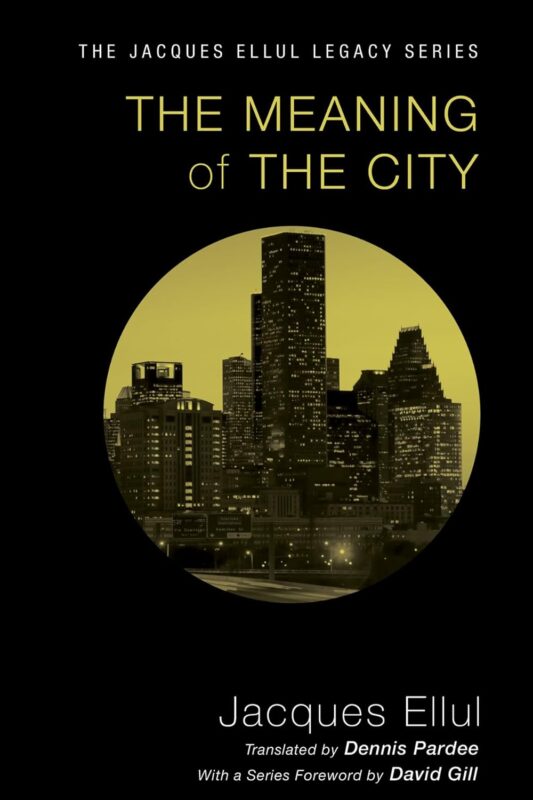
The Meaning of the City by Jacques Ellul interrogates the biblical and existential significance of urban civilization, tracing the city’s symbolic trajectory from Genesis to Revelation. Ellul integrates scriptural analysis, theological synthesis, and cultural critique, constructing a unified vision of the city’s place in human and divine history.
Origins: Cain and the Birth of Urban Experience
Cain becomes the inaugural city-builder after his exile for murder, responding to the rupture between himself and the created order. Ellul identifies this moment as the archetype for urbanization: when Cain settles in the land of Nod, he embodies the shift from nomadic dependence on divine providence to an active construction of security. The city emerges as a response to alienation, an attempt to stabilize the instability caused by violence and estrangement. Cain’s act of founding Enoch represents humanity’s decisive gesture to inaugurate a domain distinct from Eden, where memory of lost paradise and the search for permanence converge.
Security and the Drive for Permanence
Urban construction channels existential fear into projects of endurance. The desire to transcend vulnerability leads city-dwellers to build walls, institutions, and cultural practices that signal autonomy and collective ambition. Ellul analyzes the act of naming—Cain’s city named after his son Enoch—as a sign of dedication and initiation, a new order where humanity seeks meaning and perpetuity. The city signifies initiation into a world of technique, self-reliance, and cultural memory, absorbing human energy into built environments designed to secure life against chaos.
Power, Violence, and the Legacy of Nimrod
Nimrod, descended from the cursed line of Ham, continues the archetypal trajectory as the first “mighty one on the earth.” His empire, centered in Babylon, consolidates the city’s role as a nexus of power and conquest. Ellul traces the rise of cities such as Accad, Nineveh, and Calneh as monuments to domination, projecting human will outward in the form of warfare and expansion. Urban centers become instruments through which communities exert force, organize society, and assert mastery over space and time. The narrative structure of Genesis places Nimrod “before the Lord,” dramatizing the separation between divine intent and human ambition.
Symbolism and Spiritual Force in the City
The Hebrew language encodes the city with complex associations. The word for city, ‘iyr, also signifies terror, vigilance, and angelic presence, suggesting the city’s latent spiritual power. Ellul explicates this lexicon to reveal how ancient Israel perceived the city as more than a physical assemblage of buildings. Cities concentrate influences that shape not only behavior but spiritual disposition. The city acts as a force, capable of directing and transforming life, implicating its inhabitants in networks of collective action, responsibility, and temptation.
Urban Civilization as the Matrix of Technology and Idolatry
Ellul demonstrates how the city becomes the cradle of technology and craftsmanship. Cain’s descendants—artisans, musicians, metalworkers—initiate the development of tools, arts, and social systems. The city organizes these technical activities, creating a framework for the evolution of civilization. Yet, as the biblical narrative unfolds, urban concentration also produces new temptations. The pursuit of efficiency, control, and technical mastery enables idolatry: the elevation of human work above divine order. Ellul locates the root of technical civilization within the act of urban foundation, projecting a line from the city of Enoch to the metropolises of the modern world.
The Curse and Judgment: Thunder over the City
Throughout Scripture, cities such as Sodom, Nineveh, and Babylon embody the consequences of collective pride, violence, and rejection of the divine covenant. The city becomes the setting for judgment, where the accumulation of human power reaches crisis. Ellul analyzes biblical accounts that present urban destruction as the necessary outcome of unchecked autonomy. The drama of Sodom’s fall, Nineveh’s prophetic warning, and Babylon’s eventual ruin illustrate the city’s exposure to divine scrutiny. These narratives position the city as a field where the contest between grace and judgment unfolds, accentuating the stakes of human agency.
Jerusalem: The Chosen City and Its Paradox
Ellul devotes sustained attention to Jerusalem as the city chosen for divine presence. Jerusalem gathers within itself the tensions inherent in urban destiny. It is simultaneously the locus of worship and the object of prophetic critique, the place of divine indwelling and the target of sieges, exiles, and rebuke. The biblical text invests Jerusalem with promise, endowing it with a future as the site of reconciliation. Yet, its history reveals cycles of infidelity, destruction, and renewal. The city’s paradox intensifies the theological stakes: can human construction host the divine, or does the city inevitably betray its founding promise?
Jesus and the City: The Fulfillment and Crisis
The ministry of Jesus brings the meaning of the city to a climactic confrontation. Jesus journeys toward Jerusalem, recognizing both its spiritual significance and its role as a center of resistance and violence. Ellul observes how Jesus embodies the tension between itinerancy and rootedness—having “no place to lay his head”—while directing his mission toward the urban center. Jerusalem becomes the scene of fulfillment and tragedy, the crucible in which salvation and rejection collide. The events of Holy Week—entry, conflict, crucifixion, and resurrection—recast the city as the pivotal arena for divine-human encounter.
The City as Stage for Covenant and Transformation
Ellul frames the city as the locus of covenant, where divine judgment and mercy converge. God’s dealings with Cain, Nimrod, the kings of Israel, and the inhabitants of Babylon illustrate a pattern of engagement: judgment tempers ambition, while mercy preserves hope. The city, for Ellul, is never reducible to mere infrastructure; it functions as the spiritual stage on which history plays out. Through cycles of violence, repentance, exile, and return, the city becomes the setting for transformation, embodying both the consequences of rebellion and the possibility of redemption.
Urbanism, Planning, and Modern Meaninglessness
The text moves from biblical narrative to cultural analysis. Ellul asserts that modern city planning often lacks meaning, as technical rationality displaces symbolic purpose. Urban planners and sociologists frequently lament the absence of deeper significance in contemporary urban development. Ellul credits this crisis to a desacralization of the city—a loss of theological focus that leaves urban life exposed to bureaucratic manipulation and existential emptiness. He identifies the city as the site where technological civilization asserts its logic, generating both unprecedented possibilities and profound dangers.
Redemption: The New Jerusalem and the Fulfillment of Urban Destiny
Scripture does not leave the city in judgment. Ellul traces the trajectory from the earthly Jerusalem to the vision of the New Jerusalem in Revelation. This ultimate city represents the transfiguration of urban life—the culmination of creation’s purpose, reconciled with divine intent. The New Jerusalem stands as the answer to Cain’s exile, the redemption of Babel’s confusion, and the fulfillment of Jerusalem’s hope. Ellul emphasizes that the New Jerusalem gathers the scattered energies of history, redeeming the city’s legacy through covenantal restoration. In this eschatological vision, the city no longer serves as a monument to rebellion or anxiety; it becomes the site of communion, peace, and radiant meaning.
Theological Synthesis: City as Human Vocation and Divine Gift
Ellul synthesizes his inquiry by declaring the city a central theme of revelation. Human vocation involves creativity, organization, and communal life, expressed in the founding and building of cities. Divine gift responds to human effort by granting judgment and grace, preserving the city as the field of redemption. Ellul contends that the city’s deepest meaning emerges from this dialectic: human striving encounters divine presence, and from this encounter new forms of life become possible.
Urban Civilization as the Crucible of Human Destiny
Ellul positions the city at the heart of human destiny. Urbanization encapsulates the drive to transcend nature, control environment, and create collective identity. The tensions and crises that arise within the city reveal the stakes of human freedom, responsibility, and hope. As humanity moves deeper into technological society, Ellul urges a renewed theological vision of the city, attentive to its spiritual significance and its potential as the scene of reconciliation.
Structural Patterns: Convergence and Resolution
The Meaning of the City demonstrates how narrative patterns converge across time. Cain’s city, Nimrod’s empire, Jerusalem’s rise and fall, and the New Jerusalem’s promise interlace into a single arc. The city operates as both origin and fulfillment, site of both exile and homecoming. Ellul’s analysis moves confidently through these patterns, drawing out implications for theology, culture, and urban life.
Urban Spirituality: The Call for Discernment
Ellul calls readers to discernment in engaging urban life. He urges a recognition of the city’s formative power and a willingness to interpret its challenges theologically. The city shapes desires, ambitions, and values, inviting both complicity in its dangers and participation in its renewal. Ellul’s synthesis of biblical reflection and cultural critique offers a framework for understanding urban civilization as both a human achievement and a divine arena.
Legacy and Contemporary Relevance
The Meaning of the City by Jacques Ellul offers a compelling framework for theology, urban studies, biblical symbolism, city planning, and spiritual critique of modernity. Readers searching for the biblical meaning of the city, the history of urbanization in Scripture, or the spiritual dangers and promises of the metropolis will find Ellul’s work an indispensable reference. Ellul’s analysis resonates with debates about the purpose of city life, the impact of technology on urban identity, and the future of civilization in an age of accelerating urbanization. Those seeking insight into the theological roots of city-building, the spiritual crises of modern society, and the prospects for urban redemption will discover a resource of enduring significance.