Black 9/11 Money, Motive and Technology
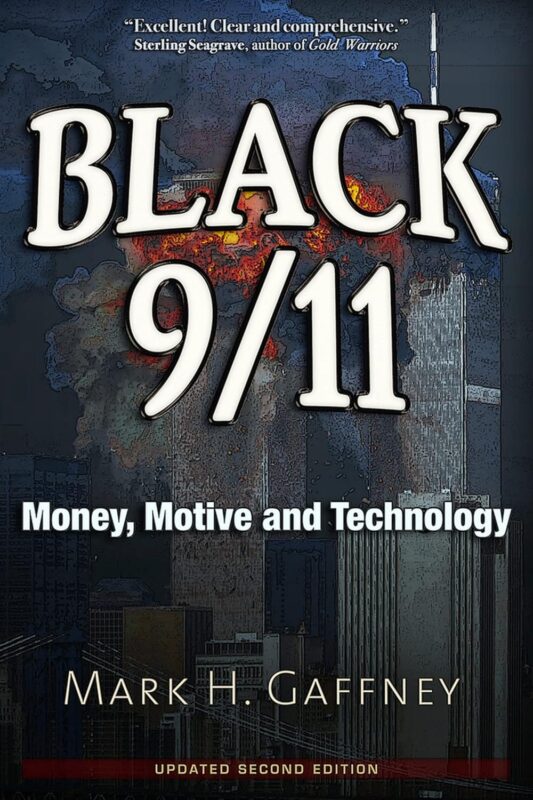
Black 9/11: Money, Motive and Technology by Mark H. Gaffney advances a forensic, evidence-driven case for a deeper infrastructure behind the September 11 attacks. He positions 9/11 not as a failure of intelligence but as a convergence of military-grade technologies, untraceable financial transactions, and institutional complicity. From the disappearance of Pentagon funds to GPS-guided aircraft navigation systems, Gaffney maps a system of influence that expands beyond the familiar surface of the mainstream narrative.
The Day Before: Missing Trillions and Budgetary Secrecy
On September 10, 2001, Secretary of Defense Donald Rumsfeld announced that the Department of Defense could not account for $2.3 trillion in spending. This financial black hole, combined with the Pentagon’s long-established budgetary opacity, frames the attack on its west wing—home to the auditors investigating these funds—as a strategic strike. Gaffney underscores the odds of a hijacked plane hitting the exact location where budgetary anomalies were under review. He introduces the concept of "black budgets"—unauditable financial operations embedded within the defense apparatus, shielded from oversight yet empowered to operate globally.
Remote Control: The Technology Behind the Flights
Gaffney details how Boeing 757 and 767 aircraft, the types used on 9/11, were compatible with advanced GPS-based autopilot systems. By 2000, Wide Area Augmentation System (WAAS) technology enabled precision control within meters, far exceeding the capabilities of amateur pilots. He investigates the timeline of this technological deployment, connecting FAA memos, Raytheon’s satellite contracts, and navigational performance protocols. Flight data from United 93 and American 77 show changes consistent with advanced avionics use, not manual error. The author questions how untrained hijackers could have executed complex maneuvers that tested the skills of senior flight instructors.
Insider Trades and Foreknowledge
In the days before the attacks, put options on United and American Airlines stock surged dramatically. Investigations by German, UK, and US regulators identified a global footprint of suspicious financial activity centered around airline, insurance, and defense stocks. Deutsche Bank's involvement—and its acquisition of BT Alex Brown, where CIA-linked executive Buzzy Krongard once held leadership—connects intelligence infrastructure to financial instruments. SEC-led inquiries into 38 stocks and short sales were followed by a blanket silence and the deputizing of private sector actors under national security clauses. Gaffney interprets this rapid containment as indicative of institutional knowledge and coordination.
Marsh & McLennan, AIG, and Digital Infrastructure
Marsh & McLennan occupied the precise floors in the North Tower that were struck on 9/11. At the time, they were deploying a high-security, high-throughput transactional system built by Silverstream Software. Richard Grove, a key witness and whistleblower, testified to overbilling and suspicious procurement activities connected to this software—capable of facilitating off-ledger financial transactions. The system created direct digital links between Marsh and AIG, two companies tied to national security interests and intelligence-connected security contractor Kroll Associates. Grove's contacts within Marsh—employees critical of the fraud—were all killed on 9/11.
Kroll Associates and Strategic Building Access
Kroll Associates managed World Trade Center security at the time of the attacks. The firm, bankrolled by AIG, had intimate access to tower infrastructure through its Port Authority contracts. Jerome Hauer, Kroll executive and emergency management chief under Giuliani, managed both city-wide crisis coordination and WTC-7's OEM bunker. Gaffney ties the firm's access to potential pre-attack preparations, including the opportunity to introduce controlled demolition mechanisms during scheduled renovations.
WTC-7 and Demolition Patterns
World Trade Center Building 7 collapsed symmetrically despite no aircraft impact. Its tenants included the Secret Service, SEC, IRS, and DoD. Surveillance footage, structural analyses, and seismic data contradict the claim of fire-induced failure. Gaffney contextualizes WTC-7's destruction within a broader forensic anomaly: uniform collapse profiles, thermitic residues in debris, and synchronized building failures. He frames these observations within known demolition engineering parameters, arguing that fire alone cannot produce these outcomes.
The Role of Paul Bremer
Paul Bremer, Marsh executive and former counter-terrorism commission head, failed to report to his WTC office on 9/11. Instead, he appeared on national television calling for military reprisal and naming Osama bin Laden within hours of the attack. He later assumed the role of Iraq’s governor, overseeing $8.8 billion in missing reconstruction funds. Bremer's dual involvement—first in crisis response at Marsh, then as policy executor in post-war Iraq—illustrates the continuity of administrative control and financial opportunity embedded in the post-9/11 world.
Hidden Gold and the Asian Treasure Vault
Gaffney introduces intelligence records indicating a post-WWII gold hoard looted from Asia, warehoused under covert US control. With a market value exceeding $5 trillion, the treasure allegedly funds off-the-books programs tied to global financial manipulation. He references claims of secret ledgers, transnational accounts, and private storage facilities aligned with intelligence front companies. This trove serves as the financial backbone for sustained black operations, including regime destabilizations and high-level bribery.
The Shock Doctrine and Social Engineering
The psychological trauma of 9/11 created a fertile ground for mass policy shifts. Gaffney draws from Naomi Klein's theory of "disaster capitalism," aligning it with post-attack legislative outcomes such as the Patriot Act and the establishment of the Department of Homeland Security. The attacks expedited long-standing plans for expanded surveillance, militarization, and geopolitical realignment. By framing 9/11 as a trigger event for these transformations, he asserts that public fear was weaponized to suppress dissent and normalize perpetual war.
Media Complicity and Narrative Management
Mainstream outlets failed to follow up on leads, marginalized whistleblowers, and dismissed emerging evidence as conspiracy. Gaffney cites the systematic discrediting of journalist Gary Webb, who exposed CIA-contra-drug ties, as a precursor to 9/11 media failures. Information gatekeeping by the New York Times, Washington Post, and CNN ensured that critical leads—such as the insider trading trail or the Pentagon's missing funds—never matured into public investigations. The coordinated silence, he argues, forms part of a larger information control strategy.
Operational Convergence and Systems Integration
The author synthesizes the various elements into a model of systemic operation rather than isolated failures. Financial anomalies, technological capacity, security access, and psychological control interlace to form a coherent structure. He avoids suggesting a monolithic conspiracy and instead points to an adaptive network of actors, technologies, and institutional logics that coalesce around opportunity, profit, and secrecy. The architecture of 9/11, in his view, was designed to enable geopolitical transformation while concealing its true authorship beneath the fog of terror and patriotism.
Strategic Objectives and Continuing Relevance
Gaffney concludes by identifying the strategic outcomes of 9/11: the militarization of foreign policy, deregulation of financial systems, and entrenchment of secret power. He asserts that these outcomes were not accidental but structured. By investigating motive through the alignment of gains, he invites the reader to reconsider foundational assumptions about state behavior, intelligence capability, and the nature of modern conflict.
Who benefits when facts are obscured, records are destroyed, and enemies are named before evidence is gathered? What kind of state conceals its operations behind private partnerships, classified budgets, and financial shell games? What structures must be exposed to dismantle such systems? Gaffney’s work stands as an investigation into these questions—demanding answers from a system that offers none.