Another Nineteen: Investigating Legitimate 9/11 Suspects
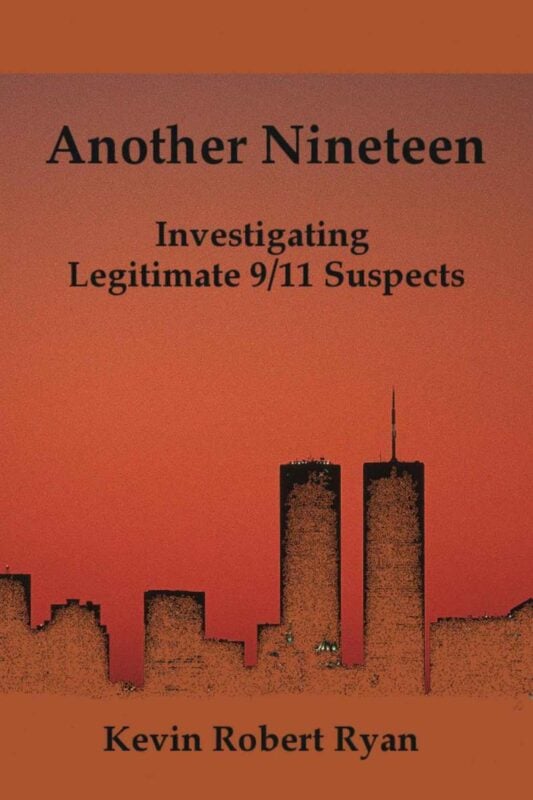
Another Nineteen: Investigating Legitimate 9/11 Suspects by Kevin Ryan opens by naming nineteen individuals whose control over key national defense, aviation, and intelligence institutions gave them direct ability to allow, facilitate, and obscure the attacks of September 11, 2001. Ryan assembles a case that reorients responsibility toward insiders with proven command, logistical oversight, and the power to interfere with investigations, identifying systemic intersections between military drills, financial operations, and suppression of intelligence.
Command and Opportunity
Dick Cheney managed multiple overlapping continuity-of-government and military simulation operations from the Presidential Emergency Operations Center. His presence in the command center before the Pentagon strike contradicts earlier official timelines. Norman Mineta's testimony places Cheney in control during critical moments when a plane approached Washington. Cheney altered rules of engagement for air defense and consolidated authorization for shoot-down decisions. His staff coordinated with key military personnel conducting drills simulating hijackings and plane crashes.
Donald Rumsfeld controlled the Pentagon's defensive capacities and remained unaccounted for during the critical minutes of the attacks. He failed to act on incoming threats and maintained command over budgetary expansions that left domestic defense undermined. Paul Wolfowitz and Richard Clarke occupied planning and national security roles, each managing aspects of the simulation architecture that intersected with the real-world attacks. Their continuity planning consolidated power and suspended conventional civilian oversight.
Intelligence and Obstruction
George Tenet headed the CIA while actionable intelligence on the hijackers remained buried. He participated in meetings that included pre-attack warnings and oversaw the suppression of key informant testimonies. Tenet maintained close ties with foreign intelligence services connected to the hijackers. Cofer Black, under Tenet, ran the CIA’s Counterterrorist Center and oversaw operations that missed direct identification of hijackers even as their movements triggered surveillance.
Robert Mueller assumed leadership of the FBI a week before the attacks and coordinated post-attack suppression of evidence. He supervised the removal and destruction of physical evidence from Ground Zero and impeded field investigations into Saudi and Israeli links. Dale Watson, also at the FBI, oversaw counterterrorism intelligence that failed to intercept known threats and later stalled internal whistleblower revelations.
Security and Demolition
L. Paul Bremer, former CEO of Marsh & McLennan, worked in WTC 1 and left the building prior to the attacks. His firm lost numerous employees and hosted clients connected to pre-attack financial anomalies. Bremer promoted war narratives immediately after the attacks. Peter Janson, CEO of AMEC, led the company that handled reconstruction at the Pentagon and cleanup at the WTC site, managing debris that included the remains of WTC 7.
Brian Michael Jenkins, RAND Corporation analyst and military advisor, co-authored counterterrorism strategies that restructured emergency response logistics and integrated war game scenarios into live command protocols. Ralph Eberhart commanded NORAD during the attacks and redirected responses into simulated environments. He issued orders that decentralized interception authority and transferred operational decisions into war game command structures.
Simulation and Sabotage
Montague Winfield requested a replacement on the morning of 9/11 from his Pentagon command post and later oversaw communications with NORAD. William Scott at the FAA participated in scenario planning and altered key response guidelines. Barry McDaniel, COO at Stratesec, provided security services to multiple facilities affected on 9/11, including the WTC and United Airlines. His operations interfaced with Marvin Bush, who had executive ties to the same security firm.
Wirt Walker managed Stratesec’s financial and security operations and held positions that linked him to aviation security contractors. His firm had access to systems later blamed for communication breakdowns. These individuals operated at the nexus of public-private integration, managing access, information, and infrastructure.
Financial Channels and Insider Gains
Buzzy Krongard, former CIA executive and banker, served at Alex Brown, which placed significant put options on United Airlines prior to 9/11. The SEC traced the trades but closed the investigation without naming individuals. The trades fit patterns consistent with foreknowledge. Krongard's proximity to Tenet and operational authority over covert finance operations at the CIA positioned him uniquely to exploit market vulnerabilities.
Philip Zelikow authored the 9/11 Commission Report’s narrative structure and determined the scope of the investigation. He maintained direct ties to White House officials under scrutiny. His role in defining the investigative boundaries ensured that domestic actors with institutional control escaped review. His prior research interests in national mythmaking shaped the final report’s conclusions.
Structural Synchronization
Each of the nineteen individuals named by Kevin Ryan controlled a segment of national infrastructure critical to 9/11 response: military defense, intelligence collection, emergency protocols, financial networks, and security systems. Their command positions provided opportunity, authority, and cover. The convergence of multiple war games with real-world hijackings enabled operational confusion. Suppression of evidence and testimony by investigative leaders protected these individuals from scrutiny.
Ryan documents how these suspects shared overlapping affiliations in think tanks, policy groups, and corporate boards. Their interconnection through longstanding professional networks enabled coherent action without explicit coordination. This alignment of interests directed the post-attack policy environment toward militarization, surveillance expansion, and financial consolidation.
Consequences and Continuities
None of the nineteen faced investigation by the 9/11 Commission. Many received promotions, honors, and expanded budgets. They directed the national response, designed the investigative framework, and redefined legal authority. Their post-9/11 actions entrenched structural reforms that reoriented military and intelligence operations toward perpetual conflict management.
The book traces specific institutional failures to specific individuals with documented capacities to act. It rejects speculation in favor of verifiable timelines, biographical trajectories, and decision-making records. The collapse of WTC 7, the failure of NORAD to intercept hijacked planes, and the anomalous financial trades receive direct treatment within the context of known institutional procedures and access control.
Deliberate Design and Operational Silence
War games on 9/11 simulated airplane hijackings and terrorist attacks. They included scenarios of buildings struck by planes. These exercises re-routed live command decisions through layers of simulated response. Real-world intercepts waited for simulated confirmation. FAA personnel hesitated, unsure which events were drills. Military commanders delayed orders awaiting clarification from war game controllers. This structure prevented immediate reaction.
WTC 7 collapsed in free fall, a feature inconsistent with fire-induced failure. Its collapse mirrored characteristics of controlled demolition. The building housed intelligence offices, SEC records, and emergency command centers. Security access, maintenance records, and pre-attack warnings received no official follow-up. The building’s destruction removed key physical evidence.
FAA radar operators tracked flights deviating from courses. Transponders were turned off. Communication channels failed simultaneously across multiple systems. Key personnel disappeared during critical minutes. Recorded data was overwritten. The Pentagon’s strike side was under renovation. Its hardened section absorbed the impact. Debris was minimal. Surveillance footage was confiscated and remains unreleased.
Evidence and Exclusion
Investigative agencies destroyed debris, blocked testimony, and denied access to records. Whistleblowers within FBI, FAA, and military intelligence were silenced, reassigned, or threatened. Insider knowledge was suppressed. Financial anomalies were ruled irrelevant. Surveillance data vanished. Black boxes were either missing or malfunctioning. The investigative commission operated under White House restrictions and omitted contradictory accounts from its final report.
Kevin Ryan constructs a coherent case against insider complicity. He names specific actors, outlines their capacities, and tracks their actions before, during, and after the attacks. He embeds this evidence in institutional context, identifying the processes that enabled these individuals to shape events and escape consequence.

About the Book