Beware the World to Come: Third Edition
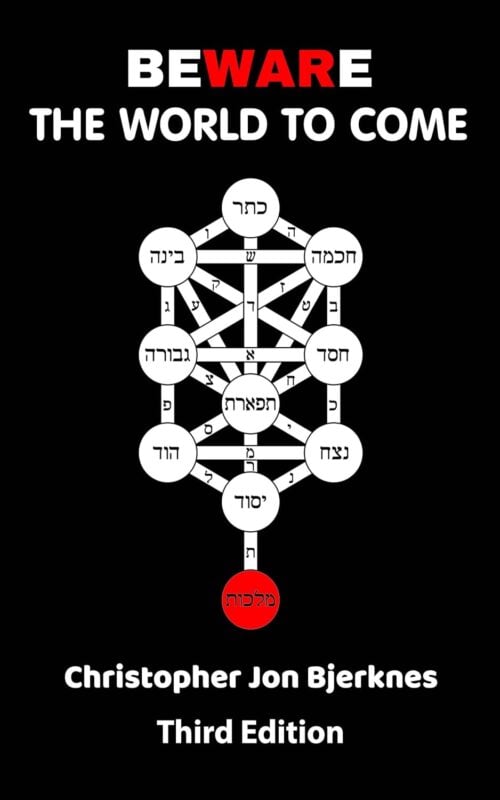
Beware the World to Come by Christopher Jon Bjerknes tracks a provocative thesis: that a secretive spiritual ideology rooted in Jewish mysticism has shaped the modern world through a centuries-long transformation agenda. The book grounds its arguments in Kabbalistic esoterica, linking ancient religious goals with the rise of androgyny, globalist political shifts, and technological transhumanism. Bjerknes assembles a comprehensive theory of cultural engineering with a singular driver—preparation for a messianic world order orchestrated through divine imitation.
The Androgynous Godhead and the Blueprint of Creation
At the center of Bjerknes' argument lies the assertion that the foundational Kabbalistic narrative of creation—Yahweh and Shekinah as male and female aspects of a primordial androgynous deity—sets a pattern for the restoration of that original state. According to this theology, humanity began as a unified androgynous being and must return to that state for the “World to Come” to arrive. The separation of Adam and Eve represents the fracturing of divine unity. Repairing the world (Tikkun Olam) requires remerging humanity into a single, genderless ideal mirroring divine harmony.
How does this relate to modern social shifts? Bjerknes claims the drive to normalize and promote gender ambiguity is part of a millennia-old script to bring heaven and earth into metaphysical alignment. The emergence of postgender ideologies, gender theory, and transhumanist experimentation forms not an isolated cultural trend but an orchestrated movement rooted in Kabbalistic prophecy. Bjerknes identifies ancient texts—Zohar, Sefer Yetzirah, and Lurianic writings—as operational blueprints for these changes.
Tikkun Olam and the Spiritual Engineering of Society
The author posits that “Tikkun Olam” transcends philanthropic or ethical restoration. Within Kabbalah, it becomes a mechanism for metaphysical reconstruction—an esoteric doctrine that commands not moral reform but structural reconfiguration of the cosmos. This process requires the elimination of impurity, which Bjerknes claims is coded in mystic tradition as the non-Jewish world. Gentiles, framed in some mystical literature as klipot (husks or shells), obstruct divine light. Their erasure is framed not as vengeance but as necessity.
The Sabbath Millennium—an age of divine rest and fulfillment—demands a purified world, reshaped through cosmic labor. Bjerknes reads historical and political developments through this lens. The reestablishment of Israel, the devastation of two world wars, and the spread of liberal moral codes emerge as fulfillments of an eschatological timeline rooted in Jewish mystical calendars. The Zohar predicted key revelations in the 6,000th year (roughly 1840 CE), coinciding with technological revolutions and secular emancipations that reshaped Jewish integration into Western power structures.
Messianic Mechanisms: The Role of the Jewish Soul
Within this esoteric worldview, Jewish souls hold a unique status. Bjerknes outlines a recurring belief in the 600,000 root souls of Israel, each split into male and female halves through Adam's division. Reincarnation (gilgul) serves as the process of repairing these fragments across generations, culminating in their reunification during the World to Come. Marriage becomes a spiritual event of cosmological consequence—an attempt to reassemble the original divine configuration.
This soul-structured mysticism explains why childbearing, marriage, and lineage acquire theological urgency. Kabbalists aim to hasten the messianic age not through prayer alone but through reproduction, legal obedience (mitzvot), and the transformation of societal structures to align with divine geometry. Every act has metaphysical weight. Every law executed fulfills a layer of the divine pattern. And when enough souls reunite—through marriage or artificial means—the divine union above reestablishes.
The Temple, the Gods, and the Mirror of Earth
Bjerknes connects the rebuilding of the Third Temple in Jerusalem to the restoration of cosmic order. He asserts that the Temple served as the erotic center of divine unity—a place where Yahweh and Shekinah, representing divine masculine and feminine forces, fused. Its destruction symbolized the fracturing of creation. Its restoration marks the return of divine copulation and, thus, the start of the Sabbath Millennium.
The phrase “as above, so below,” central to both Kabbalah and Hermeticism, signifies this mirroring. Human gender, societal structures, and even geography must mirror the divine form to align the cosmos. The rebuilding of the Temple isn’t merely political. It is a conjugal act between deities, triggered by human mimicry. According to the book, the rise in androgynous identity among humans directly influences divine reformation. The gods will recombine only if humans show the pattern first.
Gender Erasure as Divine Repair
Bjerknes argues that feminism, LGBTQ+ activism, and posthumanist ideology are elements of this divine mirroring. He links early feminists like Shulamith Firestone and suffragists to Satanic reinterpretations of Genesis, citing their admiration of Eve as a liberator through knowledge (gnosis). He also references scientific efforts in Israel and globally to create artificial wombs and synthetic embryos, suggesting these represent the technological wing of spiritual engineering.
Postgenderism, in his formulation, arises as the endpoint of this ideology. By rendering sex obsolete through bioengineering, society participates in the final rectification. The gods once split to create diversity. That diversity must now collapse into unity. Artificial wombs will birth androgynous, immortal beings. Death, menstruation, and childbirth—viewed in Genesis as curses—are reversed through science. Thus, science becomes a spiritual weapon.
Revolutions and the Messianic Trigger
The book claims that revolutions in modern history correlate with mystical timelines. The Zohar identifies the 6th millennium as the preparatory stage for messianic arrival, with 1840 CE marking the “opening of the gates of wisdom.” Bjerknes ties this date to the publication of the Communist Manifesto (1848), the rise of Jewish emancipation in Europe, and the acceleration of industrial and sexual revolutions.
Figures like Karl Marx, Moses Hess, and Disraeli appear as messianic proxies. Their political and economic theories serve the deeper function of breaking down the Gentile world. Bjerknes asserts that Kabbalists anticipated and engineered these shifts to synchronize human reality with divine expectation. The Messiah Son of Joseph, described in mystic texts as a warrior figure who conquers nations, takes form in these modern ideological leaders.
From Kabbalistic Doctrine to Global Control
Bjerknes tracks Kabbalistic influence beyond the Jewish world, pointing to its adoption by secret societies, early Christian heresies, and Enlightenment mystics. He identifies intersections with Freemasonry, alchemical traditions, and early modern scientific movements. These alliances extended the influence of mystical ideology into secular frameworks, camouflaging esoteric objectives under scientific and political banners.
The book claims that world governance—through finance, education, and international organizations—reflects strategic captures designed to dissolve national, gendered, and religious identities. Every layer of modern identity becomes a variable in the formula of repair. The final outcome of this formula is not multicultural harmony but metaphysical conformity—a species remade to harmonize with an ancient divine image.
The Sabbath Millennium and the Final Separation
The messianic age, described in mystical texts as the Sabbath Millennium, begins when six thousand years of divine labor conclude. This epoch demands a final sorting: light from darkness, Jew from Gentile, order from chaos. Bjerknes claims that many mystical traditions interpret this separation as genocidal necessity. The “shells” (Gentiles) must be cracked to release divine light. Their role expires with the completion of the repair.
The book outlines benedictions from traditional Jewish liturgy that distinguish the holy from the profane and frames the Sabbath itself as a weekly rehearsal for the coming cosmic rest. In this worldview, global governance by purified souls forms the culmination of divine will. Gentiles become obsolete. Those who remain serve as transitional labor until technological advances render them unnecessary. At that point, annihilation completes the cycle.
Messiah, Apocalypse, and the Return of the Divine Couple
The Messiah emerges not as a redeemer but as a catalyst of purification. Whether through military conquest, ideological upheaval, or bioengineered transformation, his role is to hasten the end of the fragmented world. Bjerknes asserts that historical messianic claimants—Shabbatai Zevi, Isaac Luria, and the Gaon of Vilna—engineered their teachings to trigger this final phase.
The World to Come arrives when humanity mirrors the original divine form, when Yahweh and Shekinah reunite, and when the Temple reopens as their bedchamber. This union, mirrored by human androgyny, signals the end of exile and the resurrection of the gods. From that point forward, the cosmos enters stasis. The light reigns. The pattern is fulfilled. The world, finally repaired, becomes a vessel for eternal divine order.

About the Book
https://www.youtube.com/live/FjiU_56ROpU?si=Br0ah7QeYue63aDj