Against Our Better Judgment: The Hidden History of How the U.S. Was Used to Create Israel
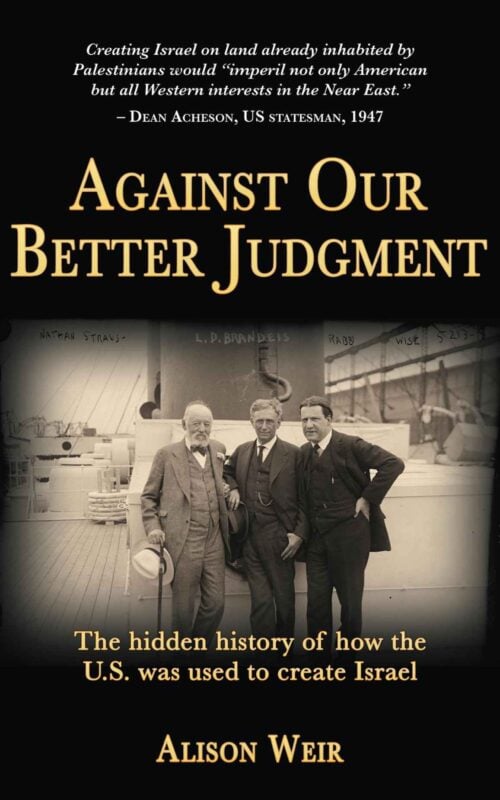
Against Our Better Judgment: The hidden history of how the U.S. was used to create Israel by Alison Weir dissects the machinery and strategies that produced a uniquely robust U.S.-Israel relationship, tracing the emergence of Zionist political influence and its impact on American policy and the Middle East.
The Origins of Political Zionism and American Involvement
Political Zionism coalesced in the late nineteenth century as Theodor Herzl and his allies gathered momentum for the creation of a Jewish state. Their focus shifted toward Palestine, a territory populated overwhelmingly by Muslims and Christians who controlled almost all land. Zionist leaders understood that only the support of major world powers could secure their goal. The United States became pivotal in this calculus. Early American Zionist groups began forming in major cities by the 1880s, soon fusing into national organizations dedicated to influencing government, media, and public opinion. Emma Lazarus, the poet whose lines adorn the Statue of Liberty, championed the Zionist cause in her era. Presidents appointed Jewish ambassadors to the Ottoman Empire, responding to growing Zionist activity in the U.S.
Building Influence Through Networks, Media, and Organization
Zionist organizers moved rapidly, leveraging community societies, fundraising drives, and media outreach. By the 1910s, Zionists gained the ear of Congress. They coordinated public relations through a vast network, including the Yiddish press, which by the 1920s reached over half a million families in New York. They targeted political leaders and seeded their messages within American institutions, recognizing that sustained presence in influential circles would yield policy results.
Supreme Court Justice Louis Brandeis and Harvard professor Felix Frankfurter emerged as critical architects. Brandeis, celebrated for his legal intellect, used covert channels to direct a network of loyalists. He operated through secretive groups such as the Parushim, a society dedicated to Zionist aims and governed by strict oaths and ritual. Frankfurter, installed at Harvard with Brandeis’s help, shaped future legal minds and advanced the Zionist agenda. Their methods involved confidential communication, strategic placement of allies, and hidden collaboration on major initiatives.
Securing British and American Support Through the Balfour Declaration
The First World War offered Zionists a geopolitical opening. As the war raged, Zionist leaders proposed that American entry on the Allied side would follow a British commitment to a Jewish homeland in Palestine. Through transatlantic lobbying and backchannel negotiation, they convinced British leaders to endorse the Balfour Declaration. This document, issued in 1917, promised British “favour” for the establishment of a Jewish national home in Palestine, a promise engineered through both American and British Zionist advocacy.
Zionist leaders leveraged this commitment to mobilize support in the United States. Documentary evidence cited in the book details the role of key intermediaries, including Brandeis and Frankfurter, who advised and persuaded officials at the highest levels. Once the British cabinet agreed to the declaration, Zionist organizers broadcast the news to the American press, accelerating pro-Allied and pro-Zionist sentiment across the country.
Shaping Outcomes at the Paris Peace Conference
In the aftermath of World War I, victors assembled at the Paris Peace Conference to determine the future of Ottoman territories. Zionists arrived in force, pressing for the adoption of the Balfour Declaration’s language in the peace accords. U.S. delegates included several prominent Zionists who lobbied aggressively for these aims. Other American officials, missionaries, and scholars—who supported local self-determination—presented their own reports and warnings. The King-Crane Commission, dispatched by President Wilson, conducted thorough investigations and concluded that the Zionist project in Palestine would require dispossessing the non-Jewish population and recommended against it. Zionist leadership suppressed this report, securing the conference’s support for the British mandate in Palestine and its explicit backing for Zionist objectives.
Forging the “Ingathering” and Shaping Jewish Migration
Zionist visionaries saw Israel as a gathering place for Jews from across the globe. When voluntary migration lagged, organizers employed a mix of advocacy, pressure, and, in some documented cases, manipulation. The book presents evidence that certain Zionist groups exaggerated or orchestrated anti-Semitic incidents in Europe and the Middle East to drive Jewish migration toward Palestine. The account details covert Zionist bombings of synagogues and institutions in Iraq, designed to incite panic and force Jewish emigration. Testimonies from Iraqi Jews and former operatives describe clandestine campaigns, with the explicit goal of swelling Israel’s Jewish population and justifying political claims.
Engagement with the Nazi Regime and the Refugee Crisis
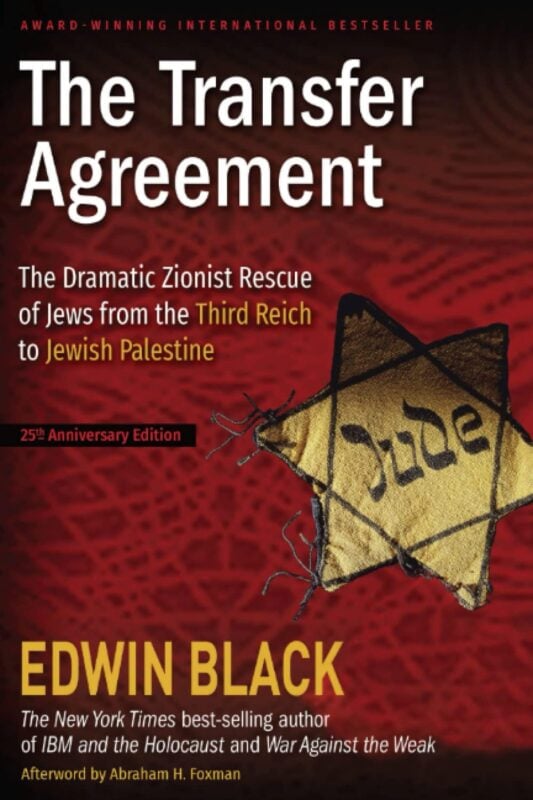
The rise of Nazi Germany generated a crisis that reshaped the Zionist strategy. Zionist leaders anticipated opportunity as Jews faced growing persecution. Documents and memoirs referenced in the book reveal that key Zionist figures resisted international efforts to resettle Jewish refugees outside Palestine. They focused on channeling all possible migration to the land claimed for Israel, even if it meant limiting broader humanitarian initiatives. The controversial “Transfer Agreement” between some Zionist leaders and Nazi officials allowed Jews to emigrate from Germany to Palestine, transferring assets under controlled conditions. These transactions sparked outrage within Jewish communities and beyond, with some critics condemning the collaboration as a betrayal of anti-Nazi boycotts.
Building the Modern Israel Lobby
As the twentieth century progressed, Zionist leaders in America shifted tactics. Rather than pressing for immediate statehood, they prioritized building Jewish institutions in Palestine, cultivating support quietly within American synagogues and schools. When global attitudes shifted again in the late 1930s, and as the horrors of World War II unfolded, Zionist organizations renewed their political campaign in earnest.
Rabbi Abba Hillel Silver formed the American Zionist Emergency Council (AZEC), a nationwide lobbying powerhouse. With immense fundraising capacity and a disciplined grassroots network, AZEC organized political demonstrations, letter-writing campaigns, and public relations offensives targeting all sectors of American society. Their efforts reached deep into Congress, the White House, churches, universities, and unions. Leaders orchestrated mass rallies and deployed petitions with signatures from college presidents, war veterans, and clergy. The Zionist Organization of America openly boasted about the breadth of their influence, claiming reach into all departments of American life.
Cultivating Christian Support and Constructing Public Perception
Recognizing the strategic value of Christian allies, Zionist organizers invested in mobilizing church leaders and congregations. Secret funds financed the revival and expansion of Christian support groups, such as the American Palestine Committee. These groups issued public endorsements, coordinated with Zionist headquarters, and linked the fate of Jewish refugees to American humanitarian values. Public campaigns emphasized the plight of Jewish victims and the urgency of providing a homeland. By forging these coalitions, the movement amplified its appeal and secured vital endorsements from influential public figures.
Within media and academia, Zionist groups invested heavily in subsidizing sympathetic books, pamphlets, and articles. They promoted pro-Zionist messages through major publishers and educational networks, helping turn obscure or controversial opinions into mainstream beliefs.
The Internal Battle Within American Jewry
The campaign for a Jewish state met resistance from within the Jewish community. Many American Jews prioritized their national identity as Americans and questioned the wisdom or ethics of building a theocratic state on land inhabited by a non-Jewish majority. Anti-Zionist organizations, such as the American Council for Judaism, fought to challenge the narrative and promote alternative solutions. However, their resources paled in comparison to the well-funded and coordinated Zionist apparatus. The book recounts the “savagery of personal attacks” faced by dissenters and the difficulty of mounting effective opposition.
U.S. Government Response and the Marginalization of Dissent
Within the U.S. government, State Department officials, foreign service agents, and intelligence officers repeatedly issued warnings that the Zionist project conflicted with American interests and democratic values. They advocated for policies that prioritized stability, regional goodwill, and adherence to principles of self-determination. Loy Henderson, director of Near Eastern and African Affairs, warned of the damage to American prestige and the abandonment of foundational ideals. Zionist activists responded with pressure, accusations of anti-Semitism, and demands for removal. Officials who voiced concerns often faced reassignment or professional isolation.
Reports from the CIA and other agencies highlighted the risks posed by aggressive Zionist lobbying, including threats to Western strategic interests. Yet, as the Zionist network solidified its grip on policymaking, dissenting voices found little traction.
The Road to the Creation of Israel
By the late 1940s, Jewish population in Palestine had risen to nearly 30 percent, with Zionist land ownership climbing to 6–7 percent. Britain, unable to resolve the conflict, handed the problem to the United Nations. The Zionist movement advanced a partition plan granting 55 percent of Palestine to the proposed Jewish state. Their internal correspondence revealed plans to expand further. U.S. diplomats and international observers pointed to the inconsistency between the partition plan and principles of self-determination, but the lobbying campaign succeeded. Congress and the White House, swayed by political pressure and public mobilization, delivered decisive support.
As Israel declared independence, violence and displacement followed. Hundreds of thousands of Palestinians lost homes and land, creating a refugee crisis that persists. Zionist paramilitaries carried out operations that targeted both Palestinian and Christian institutions, as documented by American diplomats and journalists. Christian leaders and relief organizations protested, but their complaints failed to alter the trajectory.
Enduring Consequences and Ongoing Influence
The book posits that U.S. support for Israel did not arise organically from shared values or interests but resulted from a sustained campaign of influence, pressure, and organizational discipline. The movement mobilized immense financial resources, exploited political opportunities, and leveraged humanitarian crises to advance its aims. American foreign policy shifted, embedding long-term strategic and political consequences for both nations. The legacy of this history reverberates through continuing conflict, repeated cycles of violence, and enduring challenges for U.S. policy in the Middle East.
Against Our Better Judgment compels readers to confront the architecture of modern U.S.-Israel relations, the actors who built it, and the methods they deployed. How do interest groups shape the trajectory of great powers? What happens when a determined network overcomes bureaucratic and public resistance to reshape national priorities? The book lays out a narrative of convergence, organization, and persistence—raising questions about the future direction of American foreign policy and the structures that define it.


About the Book