1948: A History of the First Arab-Israeli War

1948: A History of the First Arab-Israeli War by Benny Morris documents the violent birth of the State of Israel and the regional conflict that reshaped the modern Middle East. It maps the evolution from civil unrest to full-scale war, capturing how political decisions, military actions, and demographic shifts intersected to produce a lasting geopolitical rupture.
The Seeds of War: Zionism and Arab Nationalism
Zionist immigration to Palestine began in the 1880s. Driven by European anti-Semitism and nationalist aspirations, Jews sought to reclaim their ancestral homeland. The land, then under Ottoman rule, was home to a largely agrarian Arab population, mostly Muslim, organized around local clans and families. Early Jewish settlement relied on land purchases, often from absentee landlords. The immigrants encountered a society with limited nationalist sentiment but deep local attachments and rising awareness of foreign encroachment.
Arab resistance evolved from sporadic local skirmishes into structured political opposition. By the 1920s, clashes had intensified. British colonial rule, established after World War I under the Mandate system, compounded tensions. The Balfour Declaration of 1917, promising a “national home for the Jewish people,” became a lightning rod for Arab fears. Palestinian Arabs increasingly perceived Zionist immigration as a demographic threat with territorial ambitions.
British policy oscillated between contradictory goals. It pledged support to both communities while attempting to manage rising violence. During the Arab Revolt of 1936–1939, Palestinians staged a sustained uprising against British rule and Jewish immigration. The suppression of this revolt crippled Arab political leadership and military capacity just years before the decisive confrontations of 1948.
The Partition Plan and Civil War
In 1947, the United Nations approved a partition plan dividing Palestine into separate Jewish and Arab states, with Jerusalem under international control. Jewish leaders accepted the plan. Arab leaders rejected it, viewing it as a violation of the rights of the indigenous majority population.
Civil war erupted immediately. Between November 1947 and May 1948, paramilitary campaigns engulfed the country. The Haganah, Irgun, and Lehi launched offensives to secure Jewish positions and transportation routes. Palestinian militias responded with ambushes and attacks on convoys. The collapse of Arab social and political cohesion accelerated. Hundreds of thousands of Palestinians fled or were expelled during this phase, laying the foundation for the refugee crisis.
The Withdrawal of the British and the Declaration of Israel
On May 14, 1948, as the British withdrew, David Ben-Gurion declared the independence of the State of Israel. Within hours, armies from Egypt, Transjordan, Syria, Lebanon, and Iraq invaded. Their aim was to destroy the nascent Jewish state and reclaim Arab land.
The Arab states coordinated their attack poorly. Their strategic goals diverged. Jordan focused on annexing the West Bank. Egypt aimed to establish dominance in the south. Internal rivalry undermined their military effectiveness. Despite numerical superiority, Arab forces lacked logistical support, intelligence networks, and cohesive planning. Their failure to present a unified front shaped the course of the conflict.
Israeli Mobilization and Strategic Gains
The Jewish leadership executed a comprehensive mobilization. The Israel Defense Forces (IDF), formed from pre-state militias, consolidated command structures and absorbed thousands of new recruits, including Holocaust survivors. Foreign volunteers and arms smuggled in through Eastern Europe boosted firepower.
Key operations reversed early Arab advances. Operation Dani secured Lydda and Ramla, severing Arab logistical lines. Operation Yoav broke the Egyptian siege in the Negev. Operation Hiram eliminated Arab resistance in the Galilee. Each campaign expanded Israeli-controlled territory beyond the UN partition borders.
Military victories were not isolated episodes. They followed coordinated plans to encircle and disarm Arab forces, secure road networks, and prevent the consolidation of enemy positions. Air superiority, improved communications, and aggressive command decisions enhanced battlefield outcomes.
The Palestinian Exodus
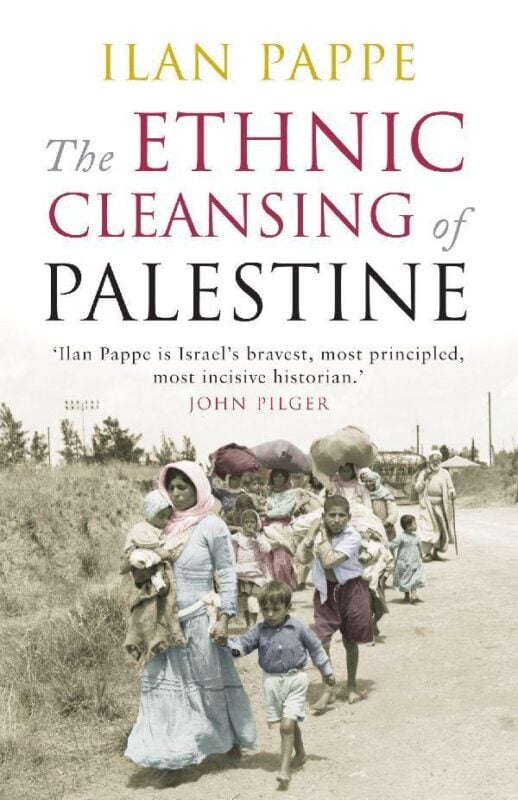
Between 700,000 and 750,000 Palestinian Arabs fled or were expelled. The causes varied by location. Some departures resulted from direct military assault. Others followed psychological warfare campaigns or fear of massacres. In certain cases, Jewish commanders issued explicit expulsion orders. Elsewhere, Arab leaders encouraged evacuations, believing their return would follow a swift victory.
Villages were emptied. Properties were confiscated. New Israeli laws prevented refugee return. The demographic transformation was irreversible. The refugee issue became a cornerstone of Arab political mobilization and a permanent humanitarian crisis.
Truces, Diplomacy, and the International Arena
The United Nations brokered multiple truces. Swedish diplomat Folke Bernadotte negotiated ceasefires but was assassinated in Jerusalem by Zionist extremists. His replacement, Ralph Bunche, continued mediation. The international community pressed for peace, but no political agreement emerged.
The 1949 armistice agreements formalized Israel’s de facto borders. Egypt retained the Gaza Strip. Jordan annexed the West Bank and East Jerusalem. Syria and Lebanon accepted demarcation lines. None of the agreements recognized Israel diplomatically. No Arab state accepted permanent peace.
Diplomatic gains paralleled battlefield success. The Soviet Union and the United States recognized Israel swiftly. The U.S. provided crucial political support. The Soviet bloc facilitated arms shipments through Czechoslovakia. These alignments signaled the beginning of Cold War entanglements in the Middle East.
Fragmentation of Arab Forces and Political Structures
Arab armies suffered from poor coordination, fragmented command chains, and inadequate logistics. Iraq refused to operate under Jordanian command. Syrian forces withdrew after early defeats. Egypt suffered encirclement and logistical breakdowns in the Negev.
Internal divisions within Palestinian society further undermined resistance. Rivalries between the Husseinis and Nashashibis paralyzed political action. Clan loyalties and regional mistrust weakened collective mobilization. Palestinian leadership lacked institutional continuity and effective representation.
Postwar Israeli Consolidation
The war enabled the establishment of coherent Israeli institutions. The IDF emerged as a centralized military force. The Jewish Agency transitioned into a provisional government. Absorbing new immigrants, organizing land distribution, and securing international recognition defined the early state-building phase.
The victory solidified political dominance for the Mapai party and David Ben-Gurion. Military leadership, especially Yigal Allon, Moshe Dayan, and Yitzhak Rabin, gained national prestige. Wartime discipline translated into administrative effectiveness.
Palestinian Statelessness and the Long Shadow of 1948
Palestinians lost territory, homes, and political agency. The defeat fragmented their communities across the West Bank, Gaza, Lebanon, Syria, and Jordan. No Palestinian state emerged. Host governments viewed refugees as political leverage or security liabilities. Refugee camps became permanent spaces of dispossession.
The memory of 1948—al-Nakba, the catastrophe—anchored Palestinian identity and political struggle. It fueled demands for return, resistance, and justice. The war’s unresolved legacy permeated regional conflicts, from the 1967 Six-Day War to the First Intifada and beyond.
The Structure of Historical Causality
Benny Morris demonstrates how cumulative pressures—demographic shifts, ideological commitments, colonial policies, military innovations, and external interventions—converged to make the 1948 war a generative event. Decisions made by political and military actors carried structural consequences. Miscalculations by Arab leaders magnified their defeats. Strategic clarity and institutional preparedness gave Israeli forces decisive advantages.
The war shaped the boundaries, narratives, and institutions of the modern Middle East. It produced a sovereign state, a refugee population, and a cycle of conflict. It did not resolve any of the underlying disputes. Instead, it entrenched them. Understanding 1948 is essential to understanding the region’s enduring crisis.


About the Book