Two Rothschilds and the Land of Israel
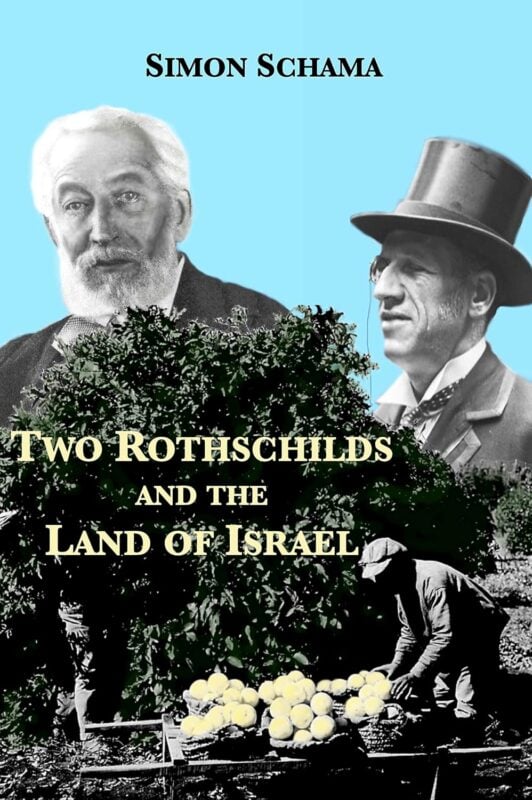
Two Rothschilds and the Land of Israel by Simon Schama traces the overlapping destinies of Baron Edmond de Rothschild and his son James with the rise of Jewish agricultural settlement in Palestine between 1882 and 1957. Schama follows their intervention in land purchases, economic development, and political strategy that anchored the infrastructure of a future Jewish state. This account brings the Rothschild legacy into sharp relief not as external benefaction but as a core engine of institutional continuity across regimes and ideological shifts.
Foundations in Crisis
In 1882, Jewish communities in Eastern Europe faced escalating violence and systemic restrictions. Pogroms in Russia and discriminatory laws in Romania dismantled illusions of gradual assimilation or legal protection. Zionist activism, though still embryonic, began to surface among Russian intellectuals, students, and farmers seeking to reclaim dignity through land and labor. At the same time, the Rothschild banking dynasty in France, particularly under Baron Edmond, held unmatched financial leverage and a long tradition of philanthropic engagement.
When Baron Edmond began underwriting settlements in Palestine, his motivation extended beyond relief. He saw in these settlements the formation of a renewed Jewish identity rooted in land, labor, and permanence. His early actions concentrated on salvaging the struggling colonies of Rishon Le Zion and Zikhron Ya’akov. He invested heavily in vineyards, wine presses, citrus groves, and agricultural experimentation. He dispatched experts from Europe and staffed entire local administrations.
Administrative Power and Settlement Tensions
The influx of Rothschild capital did not only erect physical infrastructure. It imposed a governance structure that reflected the Baron’s ideals. His administration, operated by managers and inspectors, exerted tight control over every decision. This centralization fostered dependency. Settlers resented the supervision and petitioned for autonomy. The Baron resisted. He believed that discipline, long-term planning, and centralized coordination were essential to success.
Schama recounts this friction as a recurring theme. Settlers pursued personal liberty and collective ownership. Many aligned with socialist ideologies, especially after the second wave of immigration in the early 1900s. These immigrants embraced collective farms, labor cooperatives, and a Hebrew-speaking cultural rebirth. They clashed with the hierarchical and sometimes opaque policies of the Rothschild managers, who measured progress in fiscal and administrative terms.
Edmond’s Strategic Vision
Edmond's refusal to act as a mere philanthropist reshaped the terms of Jewish landholding. He purchased land anonymously to avoid political backlash, knowing that overt ownership by a Jewish magnate could provoke Ottoman resistance and Arab opposition. He structured land tenure so settlers could eventually own their plots, but only after proving competence and productivity. He funded education, supported the revival of Hebrew, and enforced Sabbath observance. These measures reflected his vision of a Jewish society that honored tradition while embracing modern productivity.
He opposed indiscriminate mass immigration. He insisted on testing the land’s carrying capacity and the settlers’ discipline. This selective approach often placed him at odds with Zionist leaders like Theodor Herzl, who envisioned a rapid, politically orchestrated migration. Edmond doubted Herzl’s schemes for securing a charter from the Ottoman Sultan through diplomatic overtures backed by Rothschild money. He refused to finance such ventures, believing that political Zionism without an agricultural foundation was delusion.
The Transition to PICA
In 1900, Edmond transferred administrative control of his colonies to the Jewish Colonization Association (JCA), an international body with broader representation. This transition reduced personal oversight but preserved financial backing. In 1924, he reorganized the effort as the Palestine Jewish Colonization Association (PICA), reasserting his family’s leadership. The newly branded PICA pursued diversified economic development: forestry, industry, housing, and cooperative marketing.
PICA operated under James de Rothschild after Edmond’s death. James, fluent in Hebrew and deeply invested in the Yishuv, worked more openly with the Zionist movement. He expanded PICA’s landholdings and funded labor settlements, educational institutions, and urban development. Under James’s tenure, PICA became one of the largest private landowners in Palestine.
Between Colonial Model and National Infrastructure
Schama explores how the Rothschild enterprise straddled two models: colonial administration and proto-national development. Critics accused Edmond’s early settlements of replicating European plantation hierarchies. Arab workers toiled under Jewish managers; settlers received stipends rather than profits. Yet Schama insists that Rothschild's vision did not mimic imperialism. The investments hemorrhaged money. The Baron expected no returns, only permanence.
Settlements under PICA provided infrastructure that the Zionist movement could not have supplied in its early phases. Roads, water systems, warehouses, and schools formed the backbone of a future state. The vineyards and citrus groves exported produce to Europe, building economic ties. This economic base made Jewish settlement durable under Ottoman rule, British Mandate, and through wars.
Cultural Reorientation and Hebrew Revival
Edmond supported the revival of Hebrew as a spoken language. He funded Eliezer Ben-Yehuda’s dictionary and insisted that schools teach in Hebrew. He embedded Hebrew signage and Hebrew correspondence in PICA administration. These policies laid the cultural groundwork for the national renaissance.
Where Zionist ideology preached radical rupture with the Diaspora, Edmond pursued restoration. He saw Palestine as a site of Jewish continuity, anchored in Torah, agriculture, and family. His religious conservatism informed decisions on Sabbath work, synagogue support, and dietary regulation in institutions he funded.
Settler Radicalization and Administrative Adaptation
The 1920s and 1930s brought waves of politically active immigrants. Many joined labor movements and demanded rights incompatible with PICA’s legalistic contracts and performance-based tenure. Strikes, disputes, and public protests erupted in settlements like Pardes Hanna and Ramat HaSharon.
James de Rothschild responded by increasing flexibility. He ceded more control to local cooperatives, funded labor settlements, and collaborated with Zionist institutions. He negotiated land transfers to the Jewish Agency and financed the Knesset’s construction after Israeli independence. He remained an active presence in the politics of land distribution, housing development, and memorial architecture.
Economic Fragility and Capital Dependency
The Jewish settlement economy remained fragile throughout the Mandate. Export crops fluctuated with global markets. Immigration waves outpaced housing and employment capacity. Arab resistance, especially after 1936, disrupted expansion. PICA’s investments, running into tens of millions of francs, often compensated for structural deficiencies. Without Rothschild capital, many projects would have collapsed.
This financial continuity, administered through PICA, allowed Jewish institutions to plan long-term. Even as the Histadrut and Keren Kayemet built alternative funding networks, Rothschild resources underwrote crucial stopgaps during global crises, regional conflicts, and political transitions.
The Rothschild Legacy and National Memory
In 1954, the remains of Baron Edmond and his wife were reinterred at Ramat Hanadiv in a state ceremony. Israeli leaders, including David Ben-Gurion, paid tribute to Edmond as “Father of the Settlement.” His memory entered national iconography, his profile appeared on stamps, his contributions inscribed in textbooks.
Yet this commemoration often abstracted Edmond into myth. Schama presses toward historical clarity. He recovers Edmond’s contradictions, James’s pragmatism, and PICA’s tensions with labor Zionism. He examines their correspondence, legal contracts, and archival records to replace legend with institutional memory.
What does it mean to build a nation from the ledger books of a private estate? How does capital entwine with nationalism when both seek permanence? Schama’s inquiry reveals that the Rothschilds did not act from the margins. They stood inside the architecture of Jewish nationhood, embedding financial power into civic infrastructure, religious practice, and agrarian identity.
This integration did not unfold in harmony. It generated resistance, adaptation, and eventual transformation. By the time of James’s death in 1957, the Rothschild role had evolved from steward to partner. The settlements matured, the state declared, and the memory of benefaction institutionalized. Schama affirms that within this transformation lies the core of modern Jewish political construction—built not from abstraction, but from land, contracts, and the long horizon of capital.

About the Book