Somewhere South of Suez: A Further Survey of the Grand Design of the Twentieth Century
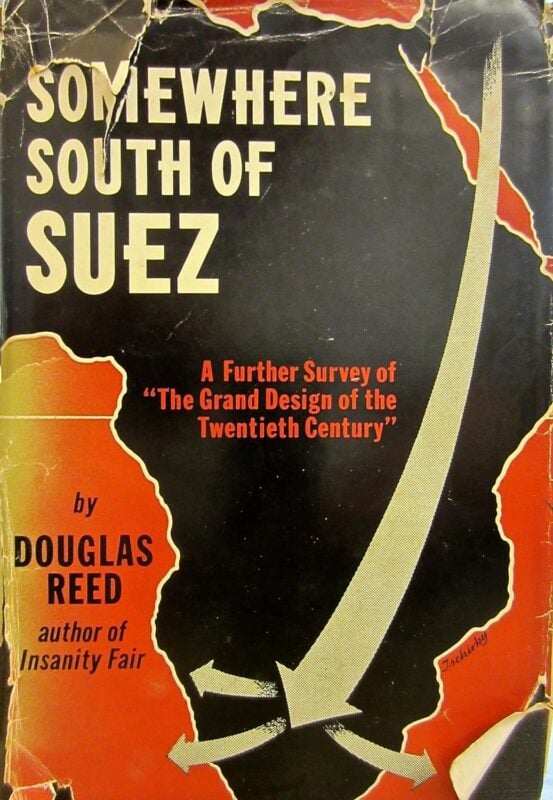
Somewhere South of Suez by Douglas Reed interrogates the seismic realignments of the twentieth century through the vantage of Africa, casting the continent as an epicenter in the drama of global power and ideology. Reed, a British journalist whose reporting shaped perceptions of the era’s upheavals, delivers a chronicle that fuses personal odyssey with geopolitical diagnosis. The book situates postwar Africa within a grand narrative of world reordering, as actors from competing ideologies converge in a contest for dominance. Reed asserts that the fate of Africa encodes the wider ambitions of powers vying to mold the century’s outcome. What defines this epoch? Reed claims that forces outside Africa configure its destiny, using the continent as both testing ground and prize.
Introduction to a World in Flux
Reed frames his account for both British and American readers, underscoring their different relationships to Africa’s reality. He acknowledges the unfamiliarity of Americans with Africa’s vastness and complexity but insists on the necessity of this understanding as the United States becomes ever more entangled in global affairs. He asks: How can a people shape events abroad if they remain strangers to the world’s essential struggles? He asserts that the patterns unfolding in Africa mirror those that will determine the fates of Europe and America.
The Grand Design
Reed asserts the existence of a “Grand Design” orchestrated by a cadre of influential men across nations, who plot to dissolve established nations and supplant them with a world government. He maintains that this ambition manifests not as abstract doctrine but as a living, evolving strategy, traceable through the political convulsions of the age. Africa, in his analysis, serves as a microcosm for these world-shaping designs. Its borders, its racial tensions, its sudden strategic centrality—these conditions create a stage on which global power plays unfold. Reed’s travels allow him to connect concrete events and shifting policies to the deeper plans of those he calls the “dominant men” of the century.
Africa’s Political and Cultural Mosaic
Africa presents Reed with a panorama of kingdoms, republics, colonies, protectorates, and new hybrid entities. He catalogs ancient civilizations like Egypt and Abyssinia, still bearing the marks of millennia, and juxtaposes them with more recent experiments such as Liberia—a territory intended as a solution for freed American slaves but, according to Reed, never embraced by those it was designed to help. He parses the shifting legal and political statuses within the British Empire, distinguishing between Crown Colonies, self-governing dominions, and the unique position of the Union of South Africa. This taxonomy grounds his assertion that Africa’s internal differentiation renders it susceptible to external manipulation. Where structures lack stability, he claims, outside actors exploit uncertainty to advance their agendas.
Racial Motifs and the Engineering of Conflict
Reed charges that twentieth-century political actors deliberately intensify racial divisions, setting “white man against white man in white countries,” and inflaming antagonism between races for their own ends. He identifies a parallel between the manipulation of Black-White relations in the American South after the Civil War and the stirring of discord in Africa. Reed views the use of race as an instrument of policy—a device to fragment societies and enable outsiders to impose new orders. He forecasts that Africa will become a crucible for these tensions, with outcomes reverberating far beyond the continent’s borders.
Colonialism, Autonomy, and American Perceptions
Reed engages directly with American aversion to colonialism, questioning whether Americans understand the complexities of the system they denounce. He traces the history of the British Empire’s transformation, stressing that self-governing dominions have long since charted their own courses, and in some cases stand as free as the United States itself. Yet, Reed observes, the economic relationships binding former colonies to imperial centers produce persistent ambiguities—ties of the heart and mind that endure even as formal structures fall away.
He contrasts the demographic realities of Africa’s white populations with the dynamics of colonial settlement elsewhere, especially North America. In his account, the failure to achieve a critical mass of white settlers leaves Africa’s future uncertain. He warns that policies restricting white immigration, particularly in South Africa, create vulnerabilities—openings that invite intervention by Communist strategists or others seeking advantage.
Communism, Zionism, and the Reshaping of the Postwar Order
Reed contends that two movements—Soviet Communism and Zionist Nationalism—emerge from the world wars as the chief beneficiaries, seizing territory and power that Allied declarations never anticipated. He alleges a pattern by which public justifications for war, such as the defense of liberty or national self-determination, give way in practice to the strengthening of these two global forces. He claims that the configuration of the postwar world owes less to battlefield outcomes than to decisions made in secret, at conferences inaccessible to public scrutiny.
He links these developments to the emerging structure of world government, which he identifies with international institutions like the United Nations. Reed suggests that the distribution of voting power in the UN, especially in the aftermath of President Roosevelt’s decisions, signals a design to shape Africa’s future through the machinery of global governance. He forecasts the proliferation of puppet states aligned with external ideologies, warning that Africa will become a staging ground for larger ambitions.
The Press and the Construction of Reality
Reed details the obstacles that constrain journalists attempting to report the realities of Communism and Zionism. He describes the British and American presses as subject to “severe restraints,” enforced not through formal censorship but via subtle mechanisms of influence. Reed argues that public understanding of key issues is shaped, limited, and distorted by these constraints. He suggests that the suppression of unfavorable information about powerful political movements constitutes a form of manipulation that warps the democratic process.
From Reed’s vantage, the press no longer functions as a check on power but as a channel for the dissemination of “specious Communist sophistries” and the uncritical promotion of Zionist aims. He observes that criticism of Zionist Nationalism has become “almost a law of lèse-majesté,” and claims that efforts to prevent discussion of its political objectives threaten the interests of both Jews and non-Jews alike.
World Government and the Future of Freedom
Reed characterizes world government initiatives as the “supreme ambition” of the twentieth century, culminating in a “servile World State” with its headquarters in the Middle East. He frames this project as the logical outcome of decades of covert maneuvering, with the causes proclaimed at the outset of world wars repeatedly dishonored in their aftermaths. Reed asserts that Western politicians—presidents, prime ministers, and their cabinets—feel compelled to accommodate these forces, fearing their influence.
He expresses skepticism toward the notion that the West can liberate itself through new conflicts, given the demonstrated tendency for wars to produce results at odds with their stated purposes. Reed invites readers to consider whether “a much livelier public awakening” could alter the trajectory he traces, while warning that the concentration of power in international organizations threatens to render such awakenings futile.
Personal Odyssey as Historical Microcosm
The narrative structure of Somewhere South of Suez interweaves Reed’s travels with his larger argument. He opens with a poignant departure from postwar London, casting the journey as a metaphor for the passage from an era of stability to one of uncertainty and foreboding. He dwells on the emotional and material privations of postwar Britain, which set the stage for his exploration of Africa as both place and symbol.
Reed’s passage through France, Portugal, and across the Mediterranean into Africa dramatizes the contrasts in material conditions, morale, and political atmosphere. He captures the vibrant life of Lisbon, untouched by war, as a counterpoint to the austerity and gloom of Britain. In his transit through Dakar, Accra, and Leopoldville, he attends to the visible imprints of European powers on Africa’s cities and societies. The pageantry of daily life, the rhythms of labor, and the dignity he observes among Africans lend texture to his account, grounding abstract argument in lived experience.
The Convergence of External Ambitions
Reed argues that the convergence of Communist, Zionist, and Western ambitions in Africa heralds a new phase of global contestation. He identifies a pattern by which international conferences, often hidden from public view, produce settlements that serve interests remote from those of the continent’s inhabitants. He analyzes the imposition of new political forms, the manipulation of racial and tribal divisions, and the deployment of economic levers as coordinated instruments in the struggle for control.
He connects the transformation of Europe—especially its absorption into what he terms Asiatic political formations—with the concurrent exploitation of Africa. He claims that the “shape of the future” depends on whether these forces succeed in subordinating the continent to their designs. Reed projects that the ultimate goal involves the eradication of European civilization’s independent foundations and the institution of a new global order rooted in the political centers emerging from these conflicts.
Narrative Tension and Historical Stakes
Reed does not resolve the tensions he raises. He recognizes the historical pattern of empires rising and falling, of civilizations forced to reassert themselves in the aftermath of defeat. He presents the possibility that Western peoples may need to rediscover their vitality, ingenuity, and courage if the current trajectory persists. Yet he cautions that the machinery of “mass-misinformation” and the mechanisms of world governance pose unprecedented challenges to renewal.
He asks whether the suppression of dissenting voices and the consolidation of power within international agencies can be reversed, or whether the century’s trajectory will lead inexorably to the outcomes he fears. Reed’s call is for vigilance, understanding, and a willingness to confront uncomfortable truths about power and manipulation in the modern world.
Legacy and Contemporary Resonance
Somewhere South of Suez stands as a record of its moment—an artifact of Cold War anxieties, anti-Communist fervor, and the disorienting aftershocks of global war. Reed’s narrative, marked by a blend of nostalgia, urgency, and polemical intensity, invites scrutiny of the patterns and intentions that shape international affairs. His insistence on tracing causes and effects across continents, ideologies, and institutional transformations gives the book a structural coherence that continues to provoke reflection.
In summoning readers to recognize Africa’s centrality, Reed compels a reconsideration of where and how the future will be decided. He situates Africa not at the margins, but at the very center of the world’s unfolding story, insisting that the consequences of choices made there will reverberate outward, shaping destinies on a planetary scale.

About the Book