The Secret War Against the Jews: How Western Espionage Betrayed The Jewish People
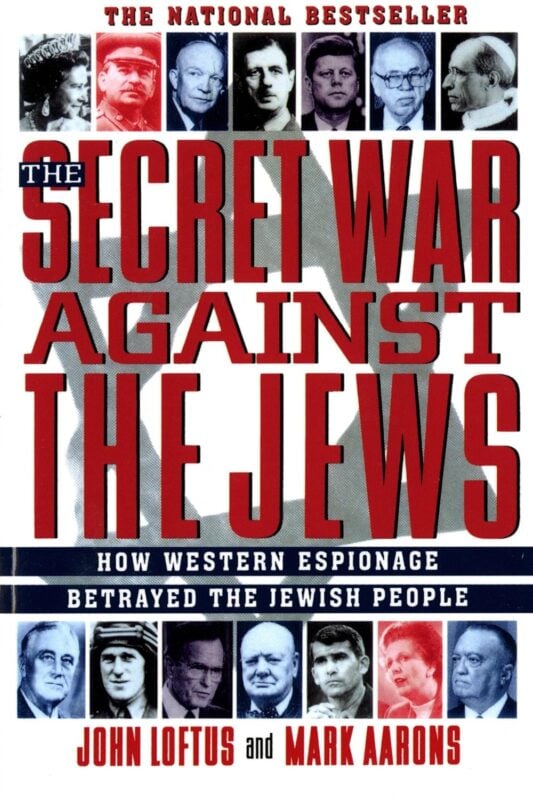
- The Secret War Against the Jews by John Loftus and Mark Aarons uncovers the systemic espionage and covert sabotage orchestrated by Western intelligence agencies to undermine Jewish statehood and suppress Zionist movements throughout the 20th century.
Strategic Betrayal in the Archives
Beneath the surface of declassified records and buried files, Loftus and Aarons expose a decades-long campaign driven by oil politics, racial prejudice, and geopolitical manipulation. The authors argue that long before Israel existed as a sovereign nation, major Western powers crafted intelligence operations designed to destabilize Jewish political aspirations in Palestine. Through interviews with over 500 former intelligence officers and a trove of corroborated archival evidence, the authors reveal how institutional alliances placed Arab oil over Jewish survival.
Espionage served as the principal tool. In Maryland's underground vaults, records misfiled under nuclear warfare or defense logistics reveal the shadow policies that counteracted public diplomacy. Intelligence agencies, under the guise of neutrality, shaped outcomes by controlling access to information, distorting diplomatic channels, and strategically delaying support to Jewish refugees escaping Nazi persecution.
Agents of Political Design
Key figures such as British intelligence officer Jack Philby, American spymaster Allen Dulles, and Saudi ruler Ibn Saud emerge not as passive observers but as architects of regional strategy. Philby’s transformation from British civil servant to pro-Arab propagandist illuminates how British intelligence intentionally subverted Jewish immigration and favored Arab nationalist causes. Dulles’s Wall Street ties and clandestine support for Saudi interests ensured that American foreign policy consistently marginalized Zionist objectives.
The authors illustrate how personal ideology shaped public action. Philby’s disdain for Zionism and his loyalty to Wahhabi fundamentalism influenced British covert policy for decades. Dulles, operating from both intelligence and financial platforms, ensured that oil agreements aligned with regimes hostile to Israel. The convergence of corporate, political, and espionage interests formed a transnational consensus that treated Jewish statehood as expendable.
Complicity Through Silence
Western intelligence communities, according to Loftus and Aarons, operated under a culture of complicity. Classified as top secret, actions taken to obstruct Jewish defense, resettlement, and sovereignty remained beyond public scrutiny. Intelligence officers aware of atrocities often withheld intervention due to operational compartmentalization or political constraint. Veterans later expressed regret, but institutional loyalty and legal secrecy clauses inhibited full disclosure.
The authors describe how, during the Holocaust, British blockades prevented thousands of Jewish refugees from reaching Palestine. Intelligence memos confirmed the anticipated death tolls, yet no shifts occurred in policy. These were not bureaucratic failures. They were strategic decisions, calculated to protect geopolitical assets and maintain alliances with oil-rich Arab states.
Surveillance and Subterfuge
Israel became a primary surveillance target of Western intelligence agencies throughout the Cold War. Espionage was directed not at hostile powers, but at Israel and its supporters. Wiretapping of Jewish organizations in the United States, infiltration of pro-Israel groups in Europe, and manipulation of public discourse were part of a broader campaign to weaken Jewish political influence.
The book recounts how the Reagan administration, amid the Iran-Contra affair, sought to scapegoat Israel to shield domestic complicity. Intelligence channels funneled arms through proxies while preparing diplomatic narratives that shifted blame toward Israeli operatives. Such maneuvers were not isolated but indicative of a pattern wherein Israel’s strategic value fluctuated based on Western domestic politics.
The Architecture of Deception
Loftus and Aarons position the intelligence community as the engine of historical manipulation. Official histories of Western support for Israel, they contend, conceal layers of covert sabotage. The book documents how Zionist agents were spied upon by allies, how Jewish diplomats were deliberately misled, and how anti-Semitic rhetoric found institutional refuge in policy deliberations.
Secrecy operated as both tactic and ideology. Through compartmentalized authorizations, spy networks circumvented legislative oversight. National security served as the rationale for systemic deception, ensuring that the public remained unaware of decisions that jeopardized Jewish survival. The authors show that such practices persisted long after World War II, adapting to shifting alliances but retaining core objectives.
Agents of Regret
Many of the book’s sources speak from retirement, offering candid reflections on their roles in espionage operations against the Jews. Former NSA, CIA, MI6, and GRU officers—shielded by anonymity—describe operations that prioritized geopolitical stability over human rights. Some express remorse; others defend their choices as historically necessary.
These testimonies do more than add detail. They expose a structural dynamic in which intelligence professionals, often idealistic and committed, became instruments of broader strategies they only partially understood. This gap between operational execution and strategic context is one of the book’s most urgent themes.
Legacy of the Secret War
The consequences of the covert war against the Jews extend into contemporary geopolitics. Policies shaped by clandestine alliances continue to influence negotiations, arms sales, and intelligence sharing. Loftus and Aarons argue that understanding the mechanics of this secret war is essential for rethinking Middle East diplomacy and restoring credibility to democratic institutions.
By placing espionage at the center of modern Jewish history, the book challenges conventional narratives. It rejects the idea that Western support for Israel has been consistent or principled. Instead, it offers a framework for analyzing how interests, alliances, and ideologies converge in the shadows to reshape political landscapes.
How did intelligence agencies justify targeting an allied nation? What internal logic sustained decades of covert hostility toward the Jewish people? The book compels readers to interrogate these questions through the lens of structural power, strategic secrecy, and historical omission.
Western Espionage and Moral Reckoning
Loftus and Aarons insist that secrecy alone cannot excuse betrayal. Their account frames intelligence not merely as a function of statecraft but as a moral enterprise. When agencies conceal genocide, sabotage democratic allies, and perpetuate racial bias, they breach the ethical foundation of public service.
The authors demand accountability—not merely through declassification, but through historical recognition. Their work is both investigative and indicting, grounded in testimonies, files, and a relentless pursuit of suppressed truth. They argue that democracy requires not only transparency but institutional memory capable of confronting its own complicity.
The Secret War Against the Jews defines espionage as a force that shaped modern history, altered the fate of nations, and subverted justice for millions. It invites readers to reconsider the price of intelligence operations waged in the dark. It asserts that truth, once buried, can surface with enough force to reframe our understanding of history.

About the Book