The Biggest Prison on Earth: A History of Gaza and the Occupied Territories
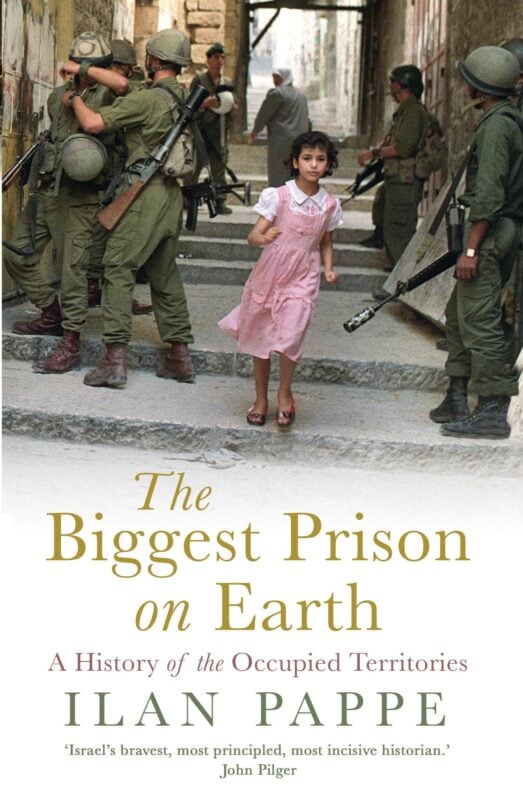
The Biggest Prison on Earth by Ilan Pappé exposes the structural framework and operational logic behind Israel's governance of the West Bank and Gaza Strip since 1967. Anchored in archival documentation and governmental records, the book reconstructs how Israeli leaders, military strategists, and bureaucrats established a comprehensive regime of control, premised on systematic domination over the Palestinian population.
Strategic Planning Before Occupation
The Israeli military began preparing for occupation years before the Six-Day War. In 1963, a covert program code-named the Shacham Plan outlined the legal, administrative, and military apparatus for ruling the West Bank. This plan divided the territory into eight districts and installed a military government modeled on the British Mandate's Emergency Regulations. Legal officers translated Jordanian laws and aligned them with Israeli military needs. These preparations extended to naming specific military governors, drafting infrastructure blueprints, and training personnel at the Hebrew University. By May 1967, operational boxes containing regulatory guides and international legal texts were distributed to commanders. Israel executed this predesigned occupation plan within days of capturing the territory.
Codifying Control Through Bureaucracy
The architecture of the occupation was not improvised. A dense web of legal statutes, military orders, and bureaucratic agencies enabled total surveillance and intervention in Palestinian civic life. Administrative detention, censorship, restricted movement, and closed military zones formed a matrix of containment. The system ensured that governance could occur without integrating the population or granting rights. Palestinians became inhabitants of a territory under absolute external control, governed not by civil institutions but by military decrees enforced by officers often lacking legal training. The mechanisms used had their roots in earlier control regimes applied to Palestinian citizens inside Israel from 1948 to 1966. The extension of this apparatus transformed the West Bank and Gaza into a unified carceral space.
A Mega-Prison in the Zionist Vision
From its founding, Zionism pursued two inseparable objectives: territorial control over historical Palestine and demographic dominance through population engineering. The 1948 war fulfilled much of this vision by expelling hundreds of thousands of Palestinians and dismantling their villages. The 1967 war reopened the possibility of extending sovereignty without absorption. Israeli officials sought to retain the land while excluding the population from citizenship. The mega-prison model emerged from this dilemma. The state built an apparatus that encased Palestinians within defined borders, stripped of political rights and subjected to a matrix of military rule. The plan did not originate from security threats but from ideological continuity and strategic opportunity.
Decisions Taken in the Aftermath of War
In June 1967, the thirteenth Israeli government met repeatedly to deliberate the fate of the newly occupied territories. The government included representatives from every major Zionist faction—Labour, Revisionist, secular, and religious. The consensus was unequivocal. Israel would retain control of the West Bank and Gaza Strip. These decisions, made in the euphoric aftermath of military victory, have remained structurally unaltered for over five decades. No subsequent Israeli government has dismantled the system established then. These foundational meetings installed permanent policies under the guise of temporary occupation, bypassing legal annexation while asserting de facto sovereignty.
False Promises of Autonomy and Peace
The open-air prison model, initially implemented after 1967, offered limited administrative control to Palestinians while maintaining absolute Israeli oversight. It was reintroduced during the Oslo Accords in the 1990s, rebranded as a peace process. Autonomy, self-determination, and independence were invoked rhetorically, but structurally, the model reproduced the same spatial and legal confinements. The Palestinian Authority was embedded into this structure not as a sovereign body but as a subcontractor of control. Israel outsourced policing, civil service, and welfare management while preserving its authority over land, borders, security, and movement. This arrangement created a simulacrum of sovereignty under conditions of dependence.
Maximum Security Retaliation
Resistance—particularly the Intifadas—triggered the replacement of the open-air model with a maximum security framework. Military invasions, home demolitions, curfews, and extrajudicial killings became tools of suppression. In the Gaza Strip, Israel intensified its security paradigm, culminating in the blockade, targeted assassinations, and periodic large-scale bombardments. Gaza evolved into the most fortified sector of the mega-prison. The model imposed collective punishment under claims of managing rebellion. The goal was deterrence through incapacitation. The prison became self-adjusting: resistance prompted closure, compliance allowed limited opening.
Illusions of Temporality and Reform
International discourse continues to frame the occupation as a temporary condition awaiting resolution through negotiation. The book dismantles this premise. The architecture of occupation was never intended as a provisional measure. Its foundations were laid with permanence in mind. Israeli policymakers have never articulated an endpoint beyond the preservation of control. Temporary language has functioned as a diplomatic screen. The system's longevity results from this dissonance between rhetoric and design. Diplomacy, aid, and peace talks have stabilized the structure by legitimizing it in global forums. The prison remains because it fulfills its ideological and strategic purpose.
Civil Society as an Engine of Continuity
Israeli civil institutions—courts, universities, planning departments, and security agencies—are integral to the prison's maintenance. Technocrats, academics, architects, and judges populate the bureaucracy of control. The system operates through administrative professionalism and legal rationalization. Occupation is not a military aberration; it is a national enterprise. The banality of evil resides in this bureaucratic normalization. Orders are issued through civilian channels. Enforcement is legalistic, routinized, and framed as policy. The infrastructure of domination survives through procedural legitimacy. Its architects act within frameworks of institutional duty, not ideological extremism.
Settlements as Spatial Instruments
Settlements function as carceral mechanisms. Their location, design, and expansion compress Palestinian geography, fragment mobility, and expropriate resources. The settlement project converts public land into enclaves of exclusivity. Roads, fences, and military zones extend control beyond settlement boundaries. This network reconfigures the West Bank into archipelagos of confinement. Movement corridors are rerouted. Economic zones are sequestered. Natural growth is suppressed through permit systems and zoning laws. Settlements do not merely expand population—they remap power.
International Indifference and Ideological Immunity
The global response has institutionalized paralysis. Western governments offer declarative opposition to settlements and occupation while funding the mechanisms that sustain them. Aid programs, security cooperation, and diplomatic immunity protect the structure from external pressure. Humanitarian interventions subsidize occupation by reducing its costs. Legal instruments such as the Geneva Convention have been ignored or reinterpreted to accommodate Israeli exceptionalism. Structural complicity extends beyond silence. It includes active participation in the maintenance of the prison system.
The Enduring Logic of Elimination
Zionist settler colonialism functions through displacement and replacement. The mega-prison is a spatial expression of this logic. It contains, monitors, and erodes the presence of the indigenous population. Ethnic cleansing remains a strategic tool, not through mass expulsions but through gradual attrition—land seizure, home demolitions, economic suffocation, and forced migration. The prison’s perimeter tightens not only through walls but through exhaustion. Exit becomes the only relief. Those who stay endure perpetual surveillance and systemic degradation.
Conclusion: The Carceral Continuum
The Biggest Prison on Earth reveals the Israeli occupation as a carceral regime engineered for permanence. It documents how state institutions designed, implemented, and refined a control system that governs millions through legal suspension, spatial fragmentation, and administrative violence. The book challenges the lexicon of occupation, proposing a shift toward frameworks that acknowledge the settler colonial roots of Israeli policy. It presents a history of domination crafted through planning, executed through governance, and sustained through global acquiescence. The mega-prison persists not through force alone but through systemic coherence. Its dismantlement requires confronting not an occupation but an ideology.

About the Book