Irgun: Revisionist Zionism, 1931–1948 (History of Terror)

Irgun: Revisionist Zionism 1931–1948 by Gerry van Tonder investigates the emergence, ideology, and operations of the Irgun Zvai Leumi, a militant Zionist organization that shaped the fight for a Jewish homeland in British Mandate Palestine. The narrative tracks the strategic transformation of Irgun from its inception in 1931 through its disbandment in 1948, foregrounding its role in founding the State of Israel.
Ze’ev Jabotinsky and the Architecture of Revisionist Zionism
Ze’ev Jabotinsky founded Revisionist Zionism in 1925 as a direct response to what he saw as weak conciliatory policies within mainstream Zionist circles. He called for assertive Jewish self-defense, military preparedness, and the creation of a Jewish majority on both sides of the Jordan River. His vision catalyzed the formation of Betar, a youth movement that served as the ideological and tactical training ground for future Irgun operatives. Jabotinsky viewed armed struggle as essential to Jewish liberation, defining it as a moral imperative rooted in historic entitlement and strategic necessity.
The British Mandate and Jewish-Arab Fracture
Palestine under British administration experienced mounting tension as Jewish immigration surged. Arab leaders, unified under the Arab Higher Committee, resisted demographic shifts and land transfers. The Irgun emerged as a paramilitary solution to what its founders saw as existential threats. Avraham Tehomi led its early operations, drawing defectors from Haganah who rejected its doctrine of restraint. The British response to Arab and Jewish violence increasingly alienated Jewish militants, who interpreted White Papers and immigration limits as betrayal.
Transition from Defense to Insurgency
Initially conceived as a defense force, the Irgun rapidly evolved into an offensive organization targeting Arab aggressors and, eventually, British authority itself. It recruited operatives across Palestine’s urban centers, established covert training camps, and acquired arms from European contacts. The intensification of Arab attacks during the 1936–1939 Arab Revolt spurred the Irgun to retaliate with bombings, assassinations, and sabotage missions. These years hardened the group’s identity as a liberation army pursuing independence through armed struggle.
Menachem Begin and Strategic Escalation
Menachem Begin, a Polish émigré and future prime minister of Israel, assumed command of the Irgun in 1943. His leadership marked a new phase of coordination, discipline, and operational daring. Begin announced open war against the British in 1944, framing the mandate as an occupying force. Under his command, the Irgun bombed immigration offices, police stations, and communication hubs. Begin redefined political violence as reciprocal justice, matching British floggings and executions with Irgun reprisals.
The King David Hotel Bombing and Global Shockwaves
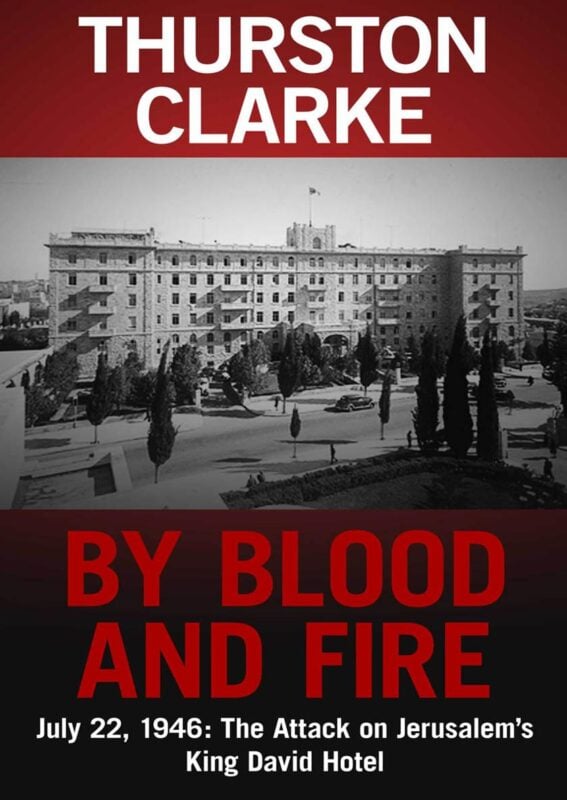
On 22 July 1946, Irgun operatives placed explosives in the King David Hotel, the administrative headquarters of the British in Palestine. The blast killed 91 people, including civilians, military personnel, and government officials. The operation, intended to disrupt intelligence operations and signal British vulnerability, ignited international condemnation. Yet among Irgun ranks and Revisionist circles, it became a defining assertion of Jewish resistance. The scale of destruction and the symbolic target cemented Irgun’s status as both a national liberation force and an international pariah.
Confrontation with the Jewish Agency and the Haganah
The Jewish Agency and its military wing, the Haganah, publicly condemned Irgun’s tactics. David Ben-Gurion authorized the Sezon, or “Hunting Season,” during which Haganah collaborated with British authorities to arrest Irgun members. This intra-Jewish conflict intensified debates over moral legitimacy, strategic efficacy, and the meaning of Jewish unity under colonial occupation. Despite arrests and betrayals, Irgun maintained its autonomy and ideological clarity, drawing deeper support among younger Zionists and Eastern European immigrants.
1947: Year of Climax and Retaliation
In 1947, the Irgun launched its most intense campaign against British forces. Bombings, raids, and kidnappings increased in frequency and impact. British officers were abducted, flogged, and hanged. The Acre Prison break freed incarcerated militants and humiliated British command. International sympathy began to shift as Britain’s hold over Palestine weakened. That same year, the United Nations voted for the partition of Palestine. The Irgun accelerated its operations, asserting territorial claims and preparing for inevitable armed conflict with Arab forces.
Deir Yassin and the War for Partition
On 9 April 1948, Irgun and Lehi forces attacked the Arab village of Deir Yassin, killing over 100 residents. Though framed as a military operation to secure a strategic corridor to Jerusalem, the attack produced a wave of panic among Palestinian Arabs and international rebuke. The operation became a flashpoint in the narrative of the Israeli-Palestinian conflict, shaping collective memory and future hostilities. It also underscored the divergence within the Jewish military landscape, as the Haganah distanced itself from the Irgun’s tactics.
The Altalena Affair and Irgun’s Dissolution
Following the declaration of Israeli independence on 14 May 1948, the Irgun prepared to deliver a weapons shipment aboard the Altalena. A standoff with the newly formed Israel Defense Forces culminated in violence when the IDF shelled the ship off the coast of Tel Aviv. Irgun fighters on the beach engaged in a firefight with state forces. Begin, under immense pressure, ordered his men to stand down. The incident exposed the fragile legitimacy of parallel military commands and forced the final integration of Irgun units into the IDF.
Legacy of Militancy and Political Continuity
The Irgun disbanded in September 1948. Its former members transitioned into political life, forming the Herut party and later the Likud party, which became one of Israel’s dominant political forces. Begin’s ascent to prime minister in 1977 marked the electoral vindication of Revisionist Zionism. The ethos of assertive nationalism, border expansion, and security dominance continued to influence Israeli politics and military doctrine. Irgun’s legacy persists in public monuments, historical debates, and institutional memory.
Narrative Force and Strategic Implications
Irgun: Revisionist Zionism 1931–1948 illuminates how a marginalized ideological movement constructed a disciplined, action-driven insurgency that altered the trajectory of Middle Eastern geopolitics. The book tracks the convergence of ideological fervor, tactical innovation, and historical opportunity. It shows how a movement, born in protest against appeasement, reorganized an entire national strategy around the certainty of armed struggle. It forces readers to confront a central question: how does violence transform from reaction to policy, from exception to instrument of statehood?
Historical Stakes and Political Lessons
The narrative does not seek moral equilibrium. It exposes the mechanics of insurgency, the role of leadership in framing action as destiny, and the consequences of ideological fracture within liberation movements. It demands recognition of how statehood can emerge through confrontation rather than consent. Irgun’s actions shaped international perception, undermined colonial control, and propelled the Jewish question to the center of global diplomacy. Its tactics informed future insurgencies and counterinsurgencies. In the architecture of modern Israel, Irgun remains embedded as a founding trauma and a legitimizing myth.


About the Book