The Plot to Kill King: The Truth Behind the Assassination of Martin Luther King Jr.
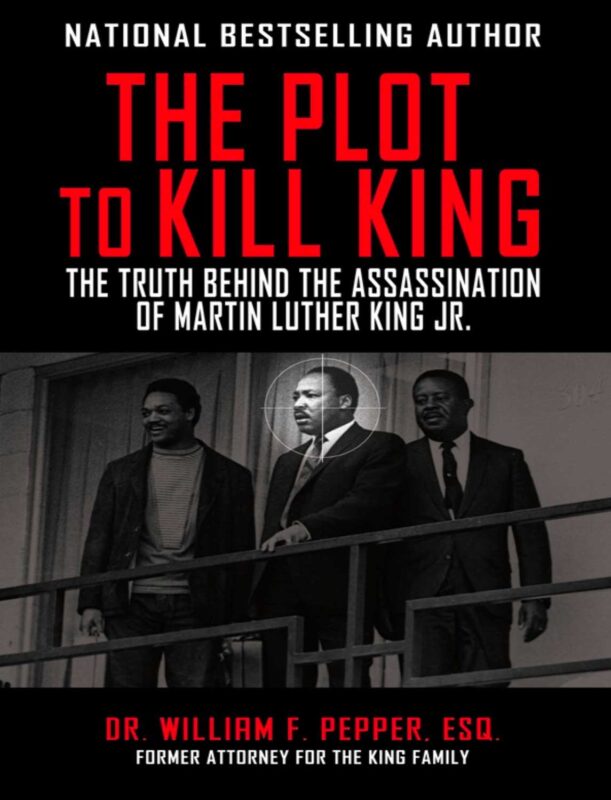
The Plot to Kill King by William F. Pepper redefines the accepted narrative of Dr. Martin Luther King Jr.’s assassination and exposes a complex web of power, collusion, and institutional complicity. Pepper, an attorney and journalist intimately connected to King’s circle, spent nearly four decades pursuing the truth behind the events of April 4, 1968. This book provides a meticulously researched, detailed account that challenges official explanations, reopens the case against James Earl Ray, and places King’s murder in the broader context of American politics, war, and the struggle for social justice.
The Road to Memphis and the Catalyst for Confrontation
In February 1968, Dr. King responded to the escalating sanitation workers’ strike in Memphis, recognizing the struggle as part of his broader campaign for economic and social justice. Ninety percent of the city’s sanitation workforce were Black men laboring under punishing conditions without effective representation. The deaths of Echole Cole and Robert Walker in a malfunctioning garbage truck galvanized support for the strikers, transforming Memphis into a national stage for King’s evolving vision. King’s strategy extended beyond civil rights, reaching toward a structural challenge of poverty and militarism. He mobilized the Poor People’s Campaign, planning to bring hundreds of thousands to Washington, D.C., demanding congressional action for America’s disenfranchised.
Institutional actors observed this mobilization with alarm. The Memphis political apparatus, led by Mayor Henry Loeb and enforced by police chief Frank Holloman—a former FBI agent—refused compromise. As King amplified his antiwar rhetoric and his plans for mass protest grew, federal surveillance intensified. The atmosphere crackled with anticipation and threat. Agents of government and corporate power tracked King’s movements, recognizing the intersection of his domestic agenda with his international condemnation of the Vietnam War.
Convergence of Interests and the Machinery of Power
King’s open opposition to the Vietnam War, coupled with his advocacy for the Poor People’s Campaign, catalyzed powerful interests. His public speeches condemned the United States as the “greatest purveyor of violence in the world.” King’s influence reached into the core of American society, where armament manufacturers, chemical companies, and oil magnates profited from perpetual conflict. Halliburton, Brown and Root, and Texas-based oil families stood to lose billions if King succeeded in shifting public sentiment and congressional priorities. The government’s surveillance and disruption tactics—shaped by the FBI under J. Edgar Hoover—aligned with these interests.
Pepper exposes how military intelligence and law enforcement agencies coordinated with organized crime to monitor, infiltrate, and ultimately neutralize King’s efforts. The National Conference for New Politics, which Pepper directed, attempted to launch a King/Spock presidential ticket to challenge the Johnson administration and the war economy. The Johnson administration, fearing political upheaval, orchestrated covert operations to fragment the coalition and stymie its momentum. Delegates at the 1967 Chicago convention encountered subversion from groups paid and directed by political operatives.
As King’s vision matured, he threatened the financial scaffolding of American power. His plans for a mass encampment in Washington, a tent city demanding justice, evoked deep anxiety among business and government leaders. The possibility of half a million disaffected citizens occupying the nation’s capital raised the specter of uncontainable social unrest.
The Patsy Ritual: James Earl Ray and the Framing of History
Authorities swiftly identified James Earl Ray as King’s assassin. The media published Ray’s image and biography, cementing his status as the lone gunman. Pepper’s investigation, however, exposes a pattern of deception and orchestration. Ray, a small-time criminal, traveled under an alias provided by a mysterious handler known as “Raul.” Pepper presents evidence that Ray operated under manipulation and did not fire the fatal shot.
The investigation reveals an elaborate apparatus designed to position Ray as the scapegoat. Officials ignored exculpatory evidence and suppressed contradictory testimonies. Defense attorney Percy Foreman coerced Ray into a guilty plea, trading promises of leniency for silence about broader conspiracies. Key witnesses identified figures involved in orchestrating the events around the Lorraine Motel, including local mafia operatives, law enforcement agents, and “Raul,” whose identity and role the book meticulously documents.
The Deepening Plot: Mafia, Military Intelligence, and Covert Collaboration
Pepper details the convergence of organized crime and military intelligence in Memphis. The Dixie Mafia, the local branch of Carlos Marcello’s crime syndicate, maintained connections with both city officials and federal agencies. The 902nd Military Intelligence Group, a clandestine Pentagon operation, shared profits with the mob through illegal arms shipments. Pepper’s sources, including operatives and witnesses within both networks, describe the logistical coordination surrounding King’s assassination.
Special Forces sniper teams, code-named Alpha 184, received orders to stand by as backup shooters. Testimony from participants in these covert operations, corroborated by military documents and witness accounts, reveal that multiple shooters waited in position, with the aim of ensuring King’s death regardless of contingencies. Psy-Ops teams photographed the scene, capturing evidence of the actual shooter, which subsequently disappeared from official records. Attempts by Pepper and his associates to retrieve photographic evidence encountered obstruction, intimidation, and surveillance by federal agents.
The Civil Trial and the Pursuit of Accountability
In the absence of progress through criminal courts, Pepper pursued civil litigation on behalf of the King family. The 1999 Memphis civil trial marked a pivotal moment. Seventy witnesses testified over thirty days, providing sworn evidence of collaboration between Loyd Jowers, owner of Jim’s Grill (located behind the Lorraine Motel), government operatives, and organized crime. The jury found Jowers liable for participating in the conspiracy, attributing 70 percent of the responsibility to government agencies and 30 percent to Jowers. The verdict articulated a direct connection between government officials and the orchestration of King’s assassination.
Mainstream media failed to report the trial’s outcome with prominence, allowing the official narrative to persist. Pepper underscores the role of corporate media conglomerates in filtering information, shaping public memory, and insulating the architects of the crime from accountability. By controlling access to broadcasting licenses and editorial priorities, four mega-corporations function as gatekeepers for official history.
Witnesses, Revelations, and the Enduring Consequences
Pepper’s investigation uncovered critical witnesses who revealed details suppressed for decades. Glenda Grabow identified “Raul” as Ray’s handler and described his activities in Houston and Memphis. The testimony of Ron Tyler Adkins, whose family participated in the conspiracy, exposed the motivations and methods of local collaborators. Interviews with police officers, medical staff at St. Joseph’s Hospital, and civil rights activists produced a detailed reconstruction of the plot and its aftermath.
The narrative also exposes the official effort to silence and intimidate witnesses. Threats, job loss, surveillance, and even murder eliminated potential whistleblowers. Medical officials at the hospital where King died played roles in covering up evidence, misrepresenting the trajectory and timing of the fatal bullet. Members of King’s inner circle, some acting as informants, helped to facilitate or misdirect the investigation. Pepper’s persistent legal and journalistic work compelled these stories into public view.
King’s Legacy and the Transformation of American Democracy
Pepper draws the implications of King’s assassination into sharp relief, framing the event as a watershed in American democracy. The removal of King, along with the earlier deaths of President John F. Kennedy and Robert F. Kennedy, signaled a decisive shift in the balance of power within the United States. The consolidation of corporate and financial interests, supported by intelligence agencies and the media, gave rise to an oligarchic system in which representative government yielded to rule by elites. The illusion of democratic process endured, but critical decisions, especially regarding war, civil rights, and the redistribution of resources, now reflected the priorities of entrenched wealth and influence.
King’s campaign for economic justice, peace, and social transformation posed a mortal threat to these interests. His vision demanded a radical redistribution of wealth, the conversion of military resources to social programs, and the empowerment of the poor and marginalized. The planners and executors of his assassination recognized the stakes: allowing King to succeed could have led to fundamental changes in American society. The coordinated operation that ended his life exemplified the capacity of institutions to protect themselves through violence, deception, and obfuscation.
Personal Cost, Historical Memory, and the Demand for Justice
The book also serves as a memoir of Pepper’s own journey. The pursuit of justice cost him friendships, personal security, and the stability of his family. Surveillance, threats, and targeted intimidation followed him across continents. The investigation forced confrontations with the ethical collapse of colleagues and the transformation of public servants into enforcers of institutional self-preservation. The sense of betrayal and loss permeates his account.
As Pepper lays bare the evidence, he raises a fundamental question: What happens when those entrusted with democracy participate in its subversion? The narrative resists closure, instead presenting the struggle for truth as ongoing. He demands that readers consider the broader consequences of the case—not only for the individuals directly affected but for the trajectory of the nation. Can a society claim to serve justice and freedom if it conceals the murder of its visionary leaders behind layers of conspiracy and manufactured consent?
The Plot to Kill King compels readers to interrogate the integrity of the historical record and the health of democratic institutions. The book asserts that the assassination of Dr. Martin Luther King Jr. emerged not from random violence or personal animus, but from deliberate calculation at the highest levels of American power. The synthesis of military, intelligence, criminal, and media forces shaped the event, determined its aftermath, and continues to influence the legacy of Dr. King and the story of American democracy.
Pepper’s work demands recognition and action. The evidence he presents—documented, corroborated, and tested in open court—offers the basis for a new understanding of history and an urgent call for accountability. The convergence of witnesses, forensic analysis, and institutional records yields a structurally coherent account. The persistence of silence and denial, reinforced by corporate media and political inertia, defines the challenge for those who would pursue justice.
The story does not resolve with a single verdict or revelation. It persists as a living challenge to future generations. What happens when a society refuses to face the truth about its defining tragedies? The Plot to Kill King insists that reckoning with history forms the foundation for renewal. Only through a full confrontation with the facts can a people recover their agency and restore the possibility of democracy.