Inquest: The Warren Commission And The Establishment Of Truth
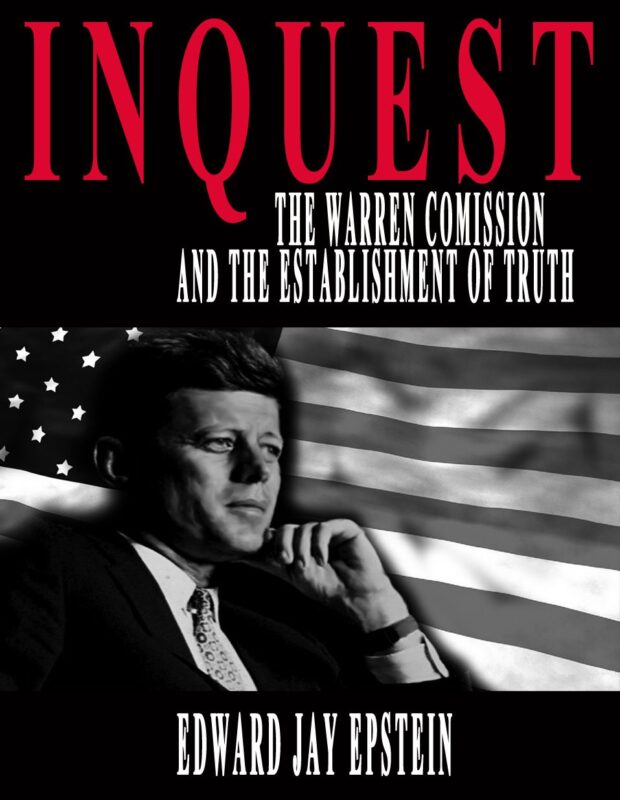
Inquest The Warren Commission and the Establishment of Truth by Edward Jay Epstein investigates the inner workings, pressures, and outcomes of the official inquiry into President John F. Kennedy’s assassination. Epstein interrogates the structure, motivations, and methods of the Warren Commission, revealing the limits of governmental truth-finding in the face of political necessity and institutional self-preservation.
The Genesis of the Commission
President Lyndon B. Johnson initiated the Warren Commission on November 29, 1963, one week after Kennedy’s assassination in Dallas. He summoned Chief Justice Earl Warren to lead the effort, drawing on a cast of eminent figures from Congress, law, and intelligence. The President selected these Commissioners to project authority, inspire public confidence, and channel the investigation through the highest echelons of American society. In the earliest meetings, the Commission set a tone of duty—responding to the urgent demands for facts, unity, and national calm. Johnson, acutely aware of both global scrutiny and domestic unrest, expected the Commission to render an account that could close the narrative wounds of November 22, 1963.
Dual Purposes: Truth and Tranquility
Epstein exposes the Commission’s explicit charge: to “ascertain, evaluate, and report upon the facts relating to the assassination.” Beneath this surface mandate, a secondary imperative shaped the inquiry—to restore order, protect the national interest, and shield the fabric of American institutions from further erosion. Chief Justice Warren accepted Johnson’s request only after understanding the role his leadership would play in “settling the assassination rumors” and stabilizing international perceptions of the United States. The tension between revealing truth and promoting tranquility penetrated the Commission’s every decision, shaping both its scope and tempo. Commissioners, each with formidable public profiles, viewed their responsibility through the lens of statecraft as much as fact-finding.
Staffing, Structure, and the Legal Paradigm
The Commission recruited a legal staff drawn from the country’s elite, many of whom held only temporary or consulting positions due to professional obligations elsewhere. J. Lee Rankin, the former Solicitor General, assumed the operational helm, supported by deputies Norman Redlich and Howard Willens. The lawyers formed teams around key investigative areas: the circumstances of the assassination, the identity and background of Lee Harvey Oswald, possible conspiratorial links, Oswald’s death, and the procedures for presidential protection.
This legalistic structure, though projecting procedural rigor, generated several limitations. The Commission depended on the Federal Bureau of Investigation, Secret Service, and other agencies for nearly all primary investigative work, operating as a reviewing body rather than an autonomous investigative force. Commissioners and senior staff seldom engaged directly with witnesses or evidence; instead, they evaluated findings, deliberated over inconsistencies, and drafted conclusions largely from the desk. The reliance on federal agencies carried implications for independence, as agency priorities and institutional interests filtered the information flow to the Commission.
The Rhythm and Realities of the Investigation
Despite public assurances of exhaustive inquiry, the main period of active investigation lasted less than ten weeks. Staff attorneys and investigators worked under immense time pressure, with internal and external deadlines set in anticipation of the 1964 Presidential election. As the Commission faced persistent demands for closure, speed, and consensus, it adjusted its approach to hearings and evidence gathering. Staff members often operated in isolation from the Commissioners, conducting depositions, reviewing thousands of pages of FBI reports, and drafting memoranda for upper-level review.
The Commission organized its inquiry into distinct zones of responsibility, allowing teams to pursue discrete questions but risking the loss of information at the boundaries between topics. Epstein tracks these logistical and epistemic bottlenecks, showing how procedural convenience, division of labor, and administrative necessity shaped what became the official historical record.
The Dynamics of Evidence and Interpretation
The Warren Commission confronted the task of interpreting an immense volume of data—witness statements, forensic evidence, ballistics reports, and photographs. The challenge resided not only in the analysis but also in the curation and selection of evidence to support definitive conclusions. Staff lawyers debated whether to “prepare” witnesses before testimony, how to resolve inconsistencies, and what to do with evidence that resisted neat integration into an overarching narrative.
One pivotal example arose in the handling of the so-called “single bullet” theory, which posited that a single projectile passed through both President Kennedy and Governor Connally. The timing, trajectory, and wounds recorded in the Zapruder film and medical reports generated skepticism among staff and even among some Commissioners. Epstein recounts the series of tests, re-enactments, and disputes that ensued, underscoring the Commission’s determination to reconcile physical evidence with its central hypothesis of Oswald as lone assassin.
Unresolved Questions and the Scope of Doubt
Within the Commission’s closed meetings, several crucial issues remained unsettled. Commissioners disagreed on the number of shots fired, the path of the bullets, and the potential for other assailants. Epstein details how the Commission classified the available evidence as “persuasive” rather than “compelling,” acknowledging residual doubt while emphasizing the need for a conclusive public account. The process of drafting the final report required repeated revisions, negotiations over terminology, and the exclusion or softening of language that could invite ongoing controversy.
Staff members and legal counsel grappled with allegations—including rumors that Oswald had worked as an FBI informant. The Commission responded by consulting the FBI directly, accepting assurances, and weighing the national interest in stability against the possibility of disclosing damaging or destabilizing facts. In these moments, the imperative to dispel rumors converged with the need to protect government agencies from reputational harm, crystallizing the Commission’s dual allegiance.
The Public Presentation of Truth
Epstein traces how the Commission approached the release of its findings, mindful of the need to produce not just a report but a national verdict. Congressional pressure, financial limitations, and concerns over public confusion shaped the decision to publish the twenty-six supporting volumes alongside the main report. Editors, led by Redlich and Goldberg, labored over language, reorganized chapters, and sought consensus within a body marked by professional eminence and part-time engagement.
The Commission avoided public hearings for much of its inquiry, citing the risk of prejudicing trials and the challenge of controlling the narrative. When hearings did occur, the selection of witnesses and the management of testimony further signaled the desire to maintain order, reduce speculation, and assert control over the public’s understanding of the assassination.
Legitimacy, Institutional Limits, and the Nature of Political Truth
Epstein grounds his analysis in the wider question of how governmental bodies produce political truth in crisis. He observes that commissions rarely function with scientific detachment; instead, they operate within political environments where the stakes involve national identity, institutional credibility, and international perceptions. The Warren Commission, staffed by legal professionals and reliant on existing federal structures, embodied this dynamic. Its explicit function—ascertaining the facts—remained inseparable from its implicit goal of restoring confidence in the stability and integrity of American governance.
The legacy of the Warren Commission extends beyond the particulars of its findings. Epstein asserts that the Commission set a precedent for future investigations, demonstrating the power and perils of merging truth-finding with the imperatives of statecraft. The process by which evidence was selected, weighed, and included in the final report reveals the subjective dimensions of official truth. The exclusion of material, the pressure to conform to deadlines, and the tendency to prioritize consensus over dissent reveal the limits of such inquiries.
Epstein’s Synthesis: Commission as Case Study
Inquest The Warren Commission and the Establishment of Truth presents the Warren Commission as a case study in the institutional management of knowledge during a national emergency. Epstein shows that the procedures, structures, and motivations driving the Commission shaped the public record, influencing how generations would interpret the assassination and its aftermath.
The book draws on interviews with five of the seven Commissioners, legal counsel, and staff, along with extensive archival research in the Commission’s published volumes and internal papers. Epstein’s methodical approach illuminates the tensions, compromises, and ambitions that converged within the Commission’s work, offering a vivid map of how authority, urgency, and expertise intersected in the search for official truth.
Epistemic Authority and Public Faith
As the Commission dissolved after ten months, its conclusions entered American civic life as both a historical document and a source of enduring debate. Epstein articulates the consequences of the Commission’s choices—its reliance on legal process, its management of conflicting imperatives, and its struggles with ambiguity—arguing that the production of political truth in this context involved both genuine investigation and the curation of national myth.
The question persists: How do states balance the imperative for transparency with the risks of uncertainty, rumor, and institutional destabilization? Epstein frames the Warren Commission as both an artifact of its moment and a model for understanding subsequent governmental inquiries. The experience of the Commission invites ongoing scrutiny of how societies construct the boundaries of legitimate knowledge, assign authority, and resolve crises of belief.
Conclusion: The Commission’s Enduring Legacy
Edward Jay Epstein’s analysis imparts a precise and forceful portrait of the Warren Commission as both an investigative body and a political actor. The Commission confronted immense logistical, procedural, and existential challenges—responding to the immediate crisis while also shaping the longer-term fabric of public trust. Its history, as traced in Inquest The Warren Commission and the Establishment of Truth, reveals the inherent complexity of governmental truth-finding, where institutional structure, personal ambition, and national priorities meet.
By dissecting the internal mechanics, external pressures, and final decisions of the Commission, Epstein demonstrates how official investigations define historical understanding, influence collective memory, and establish the template for future crises. The Warren Commission’s legacy persists in the methods, assumptions, and controversies that continue to shape debates over truth, evidence, and the reach of state authority. Epstein’s study stands as a critical resource for those who seek to understand not only what happened in the wake of Kennedy’s assassination, but how societies assign meaning, legitimacy, and closure to the most consequential events of their era.