The Man Who Killed Kennedy: The Case Against LBJ
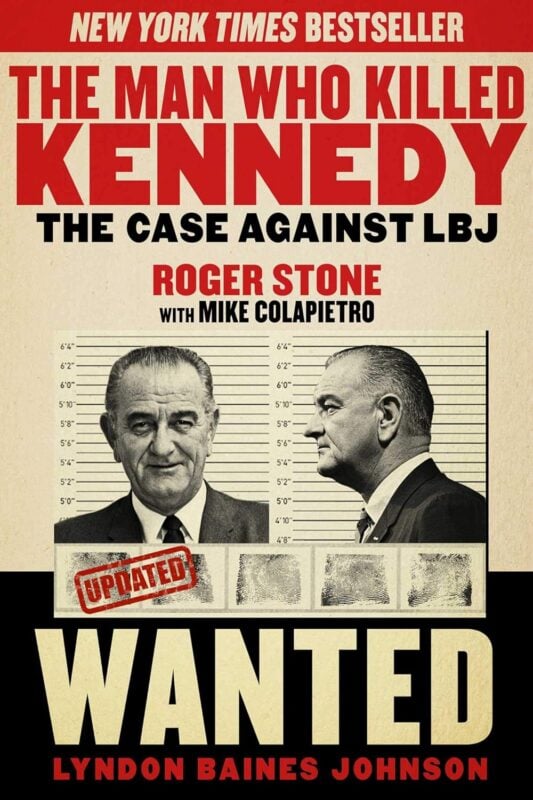
The Man Who Killed Kennedy: The Case Against LBJ by Roger Stone with Mike Colapietro excavates the hidden mechanisms of power behind the assassination of John F. Kennedy, presenting Lyndon B. Johnson as the principal architect and beneficiary of America’s greatest political crime. Stone, an insider to American political strategy, traces the convergence of political ambition, criminal collaboration, and institutional complicity, forging a case for Johnson’s central role in a conspiracy that changed the trajectory of U.S. history.
Origins of Ruthless Ambition
Lyndon Johnson’s rise from the raw edges of Texas politics to the Senate demonstrates a hunger for dominance sustained by calculated violence, intimidation, and electoral manipulation. Johnson’s 1948 Senate race, resolved by the notorious “Box 13” vote scam, reveals a mastery of backroom deals and voter fraud. Political power, to Johnson, functions as both shield and sword—he deploys it to crush enemies, enrich himself, and expand influence. Johnson’s network of loyalists and fixers, nurtured through decades of patronage, forms a protective cordon, concealing transgressions and facilitating darker pursuits.
The architecture of Johnson’s political ascent roots itself in a Texas machine governed by George Parr, the “Duke of Duval.” Parr’s regime, marked by violence and voter coercion, supplies the crucial votes that deliver Johnson to the Senate. Stone details how Johnson wields the levers of patronage and intimidation, converting opposition into submission. Johnson’s methods, characterized by relentless aggression, direct threats, and calculated reward, shape his image among associates as a man willing to override all obstacles.
Power, Personality, and the Politics of Fear
Stone’s portrait of Johnson exposes a psyche driven by insecurity, sexual predation, and cruelty. Testimonies from Secret Service agents, staff, and journalists, as collected by Stone, paint Johnson as impulsive, manipulative, and sexually aggressive. Johnson’s excesses—chronic womanizing, alcohol abuse, public indecency, and humiliation of subordinates—define a leader whose personal appetites reflect a larger pathology: the compulsion to dominate.
Johnson’s private violence extends into his political life. Stone describes Johnson’s response to personal and political threats as unrestrained, sometimes lethal. Associates and enemies who threaten Johnson’s ambitions often face financial ruin, social disgrace, or, in several cases, untimely death. The narrative advances from the specific—accounts of Johnson’s handling of mistresses, secretaries, and political rivals—into the general patterns of intimidation and secrecy that insulate him from consequence.
The Kennedy Problem: Motive for Conspiracy
John F. Kennedy, charismatic and embattled, stands as both obstacle and existential threat to Johnson’s ambitions. Stone argues that Johnson’s motives for conspiracy coalesce in 1963, as criminal investigations, congressional probes, and Kennedy’s intentions to replace him on the 1964 ticket converge into a moment of existential crisis. Legal jeopardy and the prospect of political oblivion force Johnson into a corner.
Stone presents evidence that Kennedy planned to remove Johnson from the vice presidency due to mounting scandals, including investigations into Bobby Baker, a key Johnson aide. Congressional hearings, criminal investigations, and FBI inquiries swirl around Johnson’s orbit. Johnson, facing the possibility of indictment, isolation, and disgrace, perceives the removal of Kennedy as a precondition for survival.
Network of Collaboration: Oilmen, Mobsters, and Intelligence
Stone constructs a network diagram of the conspirators, linking Johnson to powerful Texas oilmen, organized crime bosses, and rogue elements within the CIA. The convergence of interests proves decisive. Texas oil magnates, threatened by Kennedy’s proposed repeal of the oil depletion allowance, supply financial and logistical support. Mob figures like Carlos Marcello, who resent Kennedy’s crackdown on organized crime, participate through intermediaries such as Jack Ruby. Elements within the CIA, angered by Kennedy’s actions in Cuba and Vietnam, provide operational expertise and cover.
Stone details meetings, shared financial interests, and communications that tie Johnson’s associates to these actors. The financial pipelines run through campaign contributions, slush funds, and clandestine meetings in Dallas hotels. Testimony from Johnson’s mistress, Madeleine Brown, and Carousel Club dancer Shari Angel situates Johnson in proximity to Ruby and Texas oil interests shortly before the assassination.
The Dallas Nexus: Operational Planning
As November 1963 approaches, Dallas becomes a crucible for plotters and enablers. Stone tracks Johnson’s maneuvering in the days leading to Kennedy’s visit, highlighting anomalies in Secret Service planning, route security, and the removal of safeguards. Johnson’s relationship with Dallas law enforcement and political leaders enables the manipulation of local conditions. The placement of key figures—police, FBI, and Secret Service—reflects Johnson’s reach.
The narrative turns to the Zapruder film, eyewitness accounts, and forensic details. Stone describes a sequence of actions designed to create confusion, conceal evidence, and frame Lee Harvey Oswald as the lone assassin. Jack Ruby’s murder of Oswald, executed in the basement of Dallas police headquarters, emerges as a linchpin in the cover-up. Ruby’s connections to organized crime and his prior dealings with Johnson’s circle, as revealed through FBI documents and congressional testimony, underscore the planned elimination of a dangerous witness.
Aftermath: Cover-Up and Consolidation
The assassination’s immediate aftermath reveals Johnson’s priorities and methods. Stone documents Johnson’s actions in the hours and days after Kennedy’s death—phone calls to lawyers about personal finances, rapid consolidation of control over the investigation, and the orchestration of the Warren Commission. Johnson leverages his new authority to direct the narrative, suppress contradictory evidence, and reward loyalists.
Stone’s access to Nixon-era officials, White House staff, and FBI records uncovers conversations and documents that point to Johnson’s influence over the official inquiry. Johnson’s management of the investigation, including his instructions to FBI Director J. Edgar Hoover and his intervention with key witnesses, demonstrates a preoccupation with closure rather than truth. The orchestration of the “lone gunman” story, despite conflicting forensic and eyewitness evidence, allows Johnson to neutralize public scrutiny.
Johnson’s Psychological Profile and Criminal Legacy
Stone advances a psychological profile grounded in documented behavior and firsthand accounts. Johnson’s career, according to Stone, expresses an ethic of power as survival, where loyalty is a one-way street and betrayal meets swift reprisal. Stone’s use of insider testimony, including accounts from former aides and family members, highlights Johnson’s capacity for compartmentalization, self-justification, and moral disengagement.
The book recounts Johnson’s sexual relationships, illegitimate children, and abusive treatment of women as symptomatic of deeper pathologies. Johnson’s manipulation of staff, routine humiliation of aides, and unchecked appetites translate into a governing style marked by secrecy, volatility, and exploitation. Johnson’s management of public perception, including the strategic use of civil rights legislation and the war on poverty, operates in tandem with private indulgence and criminal enterprise.
Narrative Convergence: The Evidence of Collusion
Stone’s argument draws power from the convergence of independent lines of evidence. Testimony from Nixon and his inner circle, including John Mitchell and Nick Ruwe, corroborates Johnson’s connections to figures involved in the conspiracy. FBI documents, congressional investigations, and declassified files provide supporting data. Accounts from law enforcement, organized crime, and intelligence officers establish operational links.
The integration of Kennedy’s own political maneuvers adds dimension to the case. Kennedy’s interactions with the CIA, Cuban exiles, and organized crime expose vulnerabilities that Johnson exploits. Stone’s analysis of the 1960 campaign, where Kennedy leverages CIA briefings to outflank Nixon, sets the stage for later betrayals. Kennedy’s engagement with the mob to secure electoral victories, as documented by Stone, positions both brothers in a web of deals and double-crosses that ultimately ensnare them.
Historical Consequence and Cultural Impact
The consequences of Johnson’s actions reverberate through American political history. The escalation of the Vietnam War, the passage of civil rights legislation, and the deepening of public mistrust in government all trace lines to the events of November 22, 1963. Stone’s narrative situates the Kennedy assassination as a pivot point—a coup d’état that recasts the boundaries of legitimate power.
Stone’s treatment of the Kennedy myth interrogates the limits of hero worship and the dangers of unchecked ambition. The book’s synthesis of political, criminal, and psychological evidence generates a framework for understanding how power operates behind the scenes. Stone calls on readers to confront uncomfortable truths, to examine the intersections of personal vice and public policy, and to recognize the enduring legacy of concealed criminality.
The Man Who Killed Kennedy: The Case Against LBJ closes with an assertion that the official story fails to account for the complex, overlapping interests that drove Johnson and his collaborators. The logic of collusion, enabled by money, influence, and ruthless will, drives the plot and secures its outcome. Stone’s account urges a reckoning with the realities of American political history, challenging readers to reconsider the narratives that shape collective memory and to interrogate the costs of power unrestrained by conscience.