UFO Crash at Aztec: A Well Kept Secret
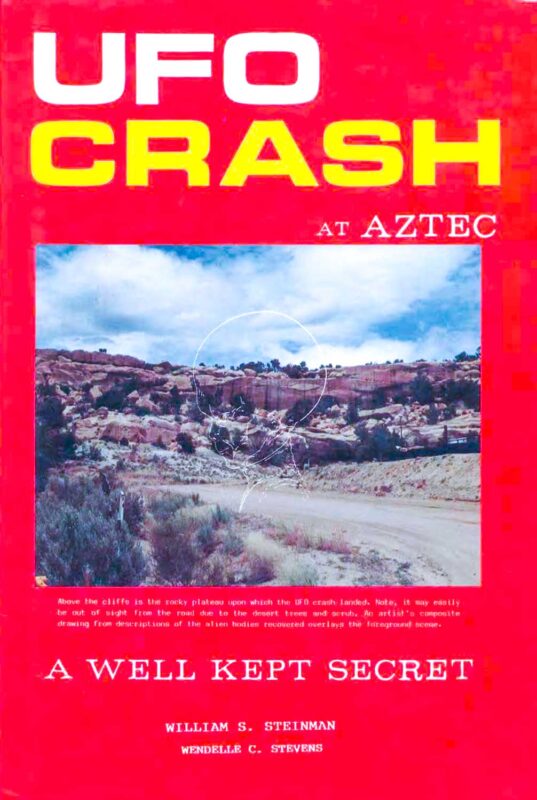
UFO Crash at Aztec: A Well Kept Secret by William S. Steinman exposes a hidden episode in America’s encounter with the unknown, centering on the alleged recovery of a crashed flying saucer near Aztec, New Mexico, in March 1948. Steinman, drawing on years of research and numerous interviews, situates the Aztec incident within a pattern of mid-century UFO crashes and military recoveries, suggesting a coordinated effort by U.S. authorities to manage, contain, and ultimately conceal the presence of extraterrestrial technology on American soil. As the story unfolds, Steinman’s narrative illuminates a world of intelligence operatives, suppressed documents, and a persistent undercurrent of risk that has shaped the lives of those seeking answers.
Origins of the Aztec Incident
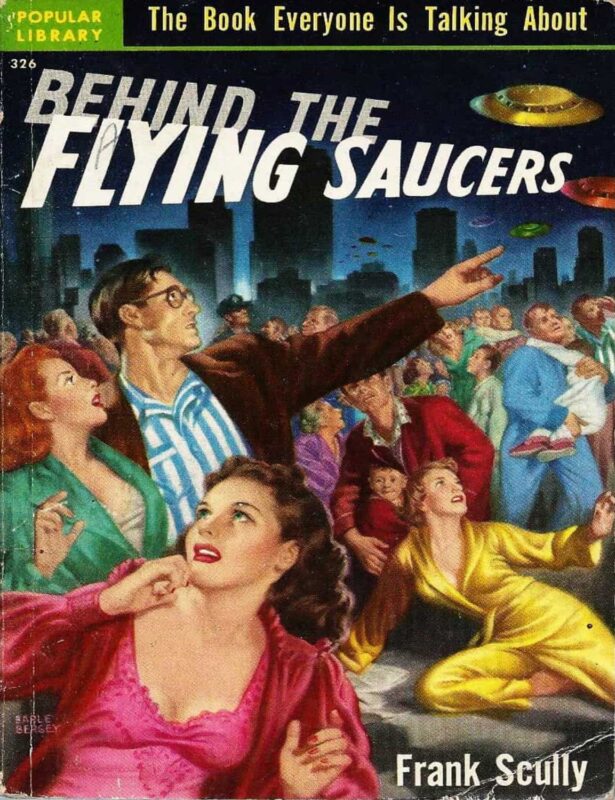
In March 1948, reports surfaced of a disc-shaped craft crashing east of the small town of Aztec, New Mexico. The book traces how stories first reached the public through articles and the 1950 book Behind the Flying Saucers by Frank Scully. Scully’s work, built on confidential informants from within the defense industry, fueled speculation and alarm inside intelligence circles. The initial reactions by U.S. authorities set the stage for a long campaign of obfuscation. Steinman chronicles how government operatives pressured witnesses and enforced secrecy by emphasizing national security, making the event taboo for discussion.
Steinman investigates the geographical and technological factors surrounding the Aztec crash. He connects the event to advances in radar and radio technology, which, according to informant testimony, disrupted the navigation systems of extraterrestrial craft. This causal link between American radar experiments and UFO incidents drives the author’s search for corroborating evidence.
The Anatomy of a Cover-Up
Steinman demonstrates that after the crash, government units swiftly secured the site. Military personnel removed debris and alien bodies, transporting them to classified facilities. The author identifies Wright Field (now Wright-Patterson Air Force Base) as a primary destination for recovered materials and biological specimens. Eyewitnesses describe intense activity as teams cordoned off the area, confiscated photographic evidence, and instructed local authorities to suppress all discussion.
The book uncovers testimonies from scientists and intelligence officers who, under conditions of anonymity, describe direct involvement in the recovery and analysis of alien technology. These sources reveal compartmentalized operations: scientists received limited information, the military controlled access, and intelligence services managed the flow of information to the public. Steinman links the persistent secrecy to the existence of “Majestic 12,” an alleged ultra-secret committee coordinating all UFO crash retrievals since the Roswell incident.
Witnesses, Silencing, and Threat
Central to Steinman’s investigation stand the men and women who claimed to have witnessed the Aztec recovery or possessed privileged knowledge. Silas Newton, an oilman, and the mysterious “Mr. G,” a pseudonymous scientist, provide crucial testimony. Their narratives describe a large metallic disc, the remains of non-human occupants, and government operatives working with methodical precision. The author recounts how these individuals became targets of disinformation campaigns. Legal charges, professional ruin, and orchestrated ridicule followed those who attempted to speak publicly.
The book introduces a pattern: witnesses who revealed details about UFO recoveries faced sudden unemployment, public disgrace, or, in some cases, premature and suspicious deaths. Steinman identifies a high mortality rate among key figures, linking it to the pressure exerted by intelligence services intent on eliminating leaks. The author asserts that the dangers faced by these witnesses create a chilling effect that continues to suppress firsthand accounts.
Disinformation and Institutional Control
Steinman exposes how the U.S. government used the media, academic institutions, and even UFO research organizations to sow confusion. Through planted stories, selective leaks, and targeted debunking campaigns, officials undermined the credibility of legitimate witnesses. Journalists and researchers who approached the truth found themselves isolated, denigrated, or dismissed as cranks. The book highlights the sophistication of this disinformation apparatus, emphasizing the convergence of governmental, military, and intelligence efforts to maintain control over the narrative.
In his analysis, Steinman tracks the evolution of the Aztec incident’s reputation from intriguing possibility to a story widely regarded as a hoax. He explains that this transformation resulted less from factual contradiction and more from strategic attacks on the reputations of informants and researchers. By targeting the personalities of Newton and his associates, officials redirected inquiry away from the incident’s material facts.
Cumulative Evidence and Corroboration
Steinman compiles an array of indirect and circumstantial evidence. He details military orders, transportation records, and anecdotal accounts that, when examined in concert, suggest that something extraordinary occurred near Aztec in 1948. The book cites interviews with secondary witnesses—civilians, local law enforcement, and former military members—whose stories independently confirm the essential elements of the crash and recovery operation.
The book references classified documents, such as the elusive Project Grudge Report No. 13, rumored to contain photographs and physical analysis of crashed UFOs. Though official channels deny its existence, multiple informants describe having viewed its contents. The author highlights the disappearance of such documents from official archives, suggesting a deliberate campaign to erase or sequester crucial evidence.
Majestic 12 and the Structure of Secrecy
Steinman presents evidence for the existence of Majestic 12, a secret committee operating at the highest levels of the U.S. government. According to interviews and document leaks, this group orchestrates all phases of UFO recovery, research, and concealment. Its members include top military officials, scientists, and intelligence directors. The committee reportedly maintains compartmentalization, with each participant knowing only as much as necessary to complete their assigned tasks. Steinman names figures such as General George C. Marshall and Dr. Vannevar Bush as possible members, based on cross-referenced testimony.
The book explains how Majestic 12 exploits institutional barriers to keep information sequestered. By dividing responsibilities among agencies, the committee prevents any single group from assembling a complete picture. This bureaucratic architecture, Steinman argues, insulates decision-makers and facilitates long-term secrecy.
Patterns in Other UFO Crashes
Steinman places the Aztec incident in the broader context of American UFO history. He traces reports of other crashes, including Roswell (New Mexico), Laredo (Texas), and Paradise Valley (Arizona), and finds consistent patterns in the military’s response. In each case, swift site control, removal of debris and bodies, and subsequent silencing of witnesses define the official approach.
The book explores how details of the Aztec crash filtered through the UFO research community, sometimes merging with or amplifying other cases. Researchers such as Leonard Stringfield, who specialized in crash retrievals, compiled evidence from a wide network of informants, adding further corroboration. Steinman suggests that the convergence of independent investigations strengthens the credibility of the Aztec case.
Impact on Ufology and Public Perception
Steinman examines the effect of the Aztec story on both the UFO research community and the broader public. The campaign to brand the incident as a hoax created a climate of skepticism and self-censorship. Mainstream investigators shunned the Aztec narrative, wary of the reputational risk. Nevertheless, the persistence of the story, supported by accumulating testimony and circumstantial details, kept the case alive among a dedicated circle of researchers.
The book explores the role of disinformation in shaping public perception. By flooding the media with conflicting accounts, authorities created confusion, making it difficult for the public to distinguish genuine reports from deliberate fabrications. Steinman concludes that this strategy succeeds because it exploits the natural human tendency to avoid uncertainty and align with authoritative sources.
Call for Disclosure and Open Inquiry
Throughout the narrative, Steinman calls for renewed public scrutiny and institutional transparency. He asserts that the body of evidence, while circumstantial, achieves cumulative weight when analyzed systematically. The book urges journalists, academics, and the public to press for the release of classified documents and to protect the rights of witnesses to speak without fear of reprisal.
The author identifies a need for multidisciplinary investigation, involving not only ufologists but also historians, engineers, and legal experts. By broadening the scope of inquiry, Steinman hopes to shift the discussion from speculative debate to evidence-based research.
Testimonies, Documents, and the Quest for Proof
Steinman draws on personal correspondence, archival research, and direct interviews to assemble the book’s evidentiary base. He cites letters from Dr. Robert I. Sarbacher, a former Defense Department science consultant, who confirmed to researchers that the “Scully book was substantially correct.” Other sources include former intelligence officers and scientists who, after retirement or under conditions of anonymity, described their involvement in UFO research projects.
The book highlights the recurring disappearance of key documents. Project Blue Book files, laboratory reports, and personal notes have vanished from official archives or private collections. Steinman documents the methods by which officials recall, sequester, or destroy sensitive material. He interprets this pattern as an institutional effort to maintain plausible deniability.
Implications for National Security and Society
Steinman considers the broader implications of the Aztec recovery for national security, technology, and society. He argues that the possession of extraterrestrial technology would trigger profound shifts in scientific understanding, military capability, and global politics. The author suggests that secrecy arises from a combination of concerns: technological exploitation, geopolitical advantage, religious and social stability, and the perceived inability of the public to process such revelations responsibly.
He posits that the management of UFO secrets reflects deeper trends in government control over transformative knowledge. The persistence of the Aztec story, despite systematic suppression, demonstrates the resilience of collective curiosity and the capacity for independent inquiry to challenge official narratives.
Legacy of the Aztec Incident
UFO Crash at Aztec: A Well Kept Secret closes by asserting the reality of the 1948 event and the subsequent government operation to conceal it. Steinman maintains that the combined force of eyewitness accounts, material evidence, and institutional behavior compels serious consideration. The book stands as a challenge to journalists, historians, and public officials: examine the record, demand transparency, and confront the structural barriers that obscure the truth.
The Aztec incident, in Steinman’s account, does not exist in isolation. It catalyzes ongoing debates about government secrecy, the boundaries of scientific knowledge, and the limits of public awareness. Through persistent inquiry, strategic focus, and the relentless pursuit of corroborating evidence, Steinman offers a blueprint for confronting the most elusive mysteries of the modern era.