9/11 and American Empire: Intellectuals Speak Out, Vol. 1
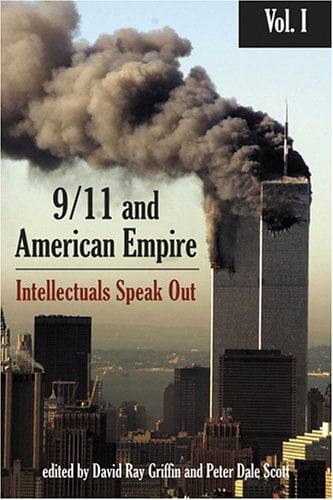
9/11 and American Empire: Intellectuals Speak Out by David Ray Griffin and Peter Dale Scott investigates the events of September 11, 2001, and their profound implications for American foreign policy, moral authority, and the architecture of global power. The contributors marshal evidence, reason, and lived experience to interrogate the dominant narrative, asking whether the official account withstands scrutiny and what deeper agendas may have unfolded beneath the surface.
The Book’s Thesis and Editorial Vision
David Ray Griffin and Peter Dale Scott assemble a diverse group of scholars, scientists, engineers, and former officials to examine September 11 from multiple perspectives. Each contributor advances a distinct angle, yet convergence emerges as their research traces structural anomalies, unexplained financial activity, intelligence agency behavior, and public policy transformations. The book’s editorial framework rests on a core thesis: the events of 9/11 catalyzed a transformation in American governance and global engagement, serving interests that predated the attacks.
The Architecture of Moral Critique
Griffin frames the book’s core argument within the language of “common moral norms.” These elementary, cross-cultural principles—embodied in maxims such as “do not murder” and “do not covet”—anchor the book’s ethical critique. The contributors assert that imperial ambitions, as expressed in doctrine and action, violate these norms. The global reach of American power, when linked to acts of violence justified by deception or pretext, stands in opposition to the world’s great religious and ethical traditions.
Reframing the Empire
Andrew Bacevich, Noam Chomsky, Chalmers Johnson, and others provide analytical scaffolding for the idea of an American empire whose logic extends far beyond self-defense. The contributors position the “global domination project” as an openly declared objective, visible in national security strategies, military planning documents, and the transformation of the U.S. military into a force capable of “full spectrum dominance.” The pursuit of dominance over resources, trade routes, and geostrategic regions is not accidental; it arises from deliberate policy choices, articulated in language that demands control over land, sea, air, and even space.
Challenging Official Explanations
The book scrutinizes the official account of September 11 through empirical, forensic, and eyewitness evidence. Scientists such as Steven Jones investigate the collapse of the World Trade Center buildings, arguing that the speed, symmetry, and nature of the destruction align with controlled demolition. Engineers and whistleblowers, including Kevin Ryan of Underwriters Laboratories, provide technical insight into why prevailing explanations cannot account for the observed outcomes. Their testimony points to procedural violations, physical anomalies, and post-event actions—such as the rapid removal and destruction of structural steel—demanding independent analysis.
Financial Patterns and Foreknowledge
The volume delves into financial markets in the days leading up to the attacks. Unusual surges in “put options” on United and American Airlines, as well as companies housed in the World Trade Center, indicate advance knowledge by parties able to profit from tragedy. These market moves occurred in a system monitored for precisely such activity, suggesting that intelligence agencies would have detected and acted on signs of imminent catastrophe. The logic of market surveillance and state security intersect in ways that defy claims of surprise.
Intelligence, the Military, and the “Stand-Down”
Military timelines and official explanations for the lack of interception raise further questions. The military and FAA provided multiple, contradictory accounts of their response—or lack thereof—to the hijackings. Analysts dissect the shifting stories, noting that routine procedures had succeeded in intercepting off-course aircraft dozens of times per year. The breakdown on September 11 appears as an exception that requires explanation. Subsequent denials and document redactions point to efforts at concealment, not transparency.
The Pentagon Strike and Evidence Suppression
Eyewitnesses at the Pentagon, including retired military officer Karen Kwiatkowski, recount events that diverge from the official description of the attack. She reports an explosion suggestive of ordnance rather than a large commercial airliner. The lack of visible debris, the patterns of damage, and the absence of characteristic aircraft wreckage deepen the sense of unresolved questions. The government’s refusal to release available surveillance footage and the rapid sealing of evidence sites amplify public skepticism.
The Twin Towers and Building 7: Controlled Demolition
The contributors focus significant attention on the physical destruction of the Twin Towers and World Trade Center 7. Citing scientific studies, eyewitness reports of explosions, and the rapid, vertical collapse of the buildings, they present controlled demolition as the only explanation consistent with observed facts. Photographs and videos document fine particulate dust, steel beams cut at angles, and pools of molten metal at the base of the wreckage. The removal of steel without forensic analysis defies investigative norms and federal law regarding crime scenes.
Patterns of False-Flag Operations
The book situates 9/11 within a broader historical context of “strategy of tension” and false-flag operations. Daniele Ganser, among others, documents precedents during the Cold War when Western intelligence agencies orchestrated or facilitated terrorist acts to justify political repression or strategic shifts. The contributors describe how “plausible deniability” and covert manipulation of public perception have long been tools of statecraft, providing the structural template for interpreting recent events.
Academic Silence and the Suppression of Inquiry
Morgan Reynolds and Richard Falk address the role of universities and the media in maintaining official narratives. Intimidation, ridicule, and professional risk serve as barriers to academic discussion of alternative explanations. The book describes a culture of enforced consensus in which faculty avoid public dissent and media outlets echo government lines. This silence, the authors suggest, protects power but impoverishes democratic discourse.
The Transformation of Policy: From Catastrophe to Opportunity
The aftermath of 9/11 saw immediate policy shifts, including the rapid authorization of military action in Afghanistan and Iraq. Documents such as the Project for the New American Century’s Rebuilding America’s Defenses and the National Security Strategy of the United States of America openly frame these actions as opportunities. The contributors draw direct lines between strategic ambitions articulated before September 11 and the policies enacted in its wake. The attacks provided both the justification and the fear necessary to secure public consent for wars and surveillance measures that had long awaited a catalyst.
Moral Responsibility and Civic Duty
The book closes by urging citizens to investigate and share the truth, to expose the gap between proclaimed values and enacted policies, and to anchor political engagement in shared ethical principles. Griffin and Scott argue that action rooted in moral conviction—rather than expediency or tribal loyalty—can catalyze resistance to empire and a return to foundational democratic ideals. The contributors call for a global movement, built on transparent inquiry and moral clarity, capable of challenging structures that use fear and violence to perpetuate dominance.
The Importance of Open Inquiry
The contributors maintain that genuine scholarship flourishes in conditions of openness, skepticism, and critical engagement. The suppression of debate over 9/11 and its aftermath impoverishes both public understanding and academic integrity. The book’s publication signals a challenge to institutional inertia and official narratives, offering the tools, questions, and evidence needed for a broad reassessment.
The Enduring Relevance of 9/11
The legacy of September 11 extends far beyond the initial trauma. The attacks, the wars that followed, and the expansion of surveillance and executive power redefined the relationship between state and citizen. The contributors contend that the struggle over truth, accountability, and justice remains ongoing. The policies justified by 9/11 continue to shape geopolitics, civil liberties, and public trust in government. Addressing unresolved questions, pursuing honest inquiry, and fostering debate constitute acts of both scholarship and civic responsibility.
Conclusion: A Call for Knowledge and Engagement
The book asserts that confronting the events of September 11, 2001, and the uses to which they were put, requires intellectual courage, ethical steadfastness, and a willingness to question entrenched narratives. The contributors invite readers, scholars, and policymakers to engage with the evidence, reflect on the structural patterns of power and secrecy, and act in defense of principles that honor both truth and justice. The convergence of technical analysis, historical context, and moral reasoning in 9/11 and American Empire: Intellectuals Speak Out establishes the work as a foundational resource for those seeking to understand one of the defining moments of the twenty-first century and its ongoing consequences for the world.

About the Book
https://www.c-span.org/video/?194754-1/911-american-empire-intellectuals-speak-out