A Farewell to Justice: Jim Garrison, JFK’s Assassination, and the Case That Should Have Changed History
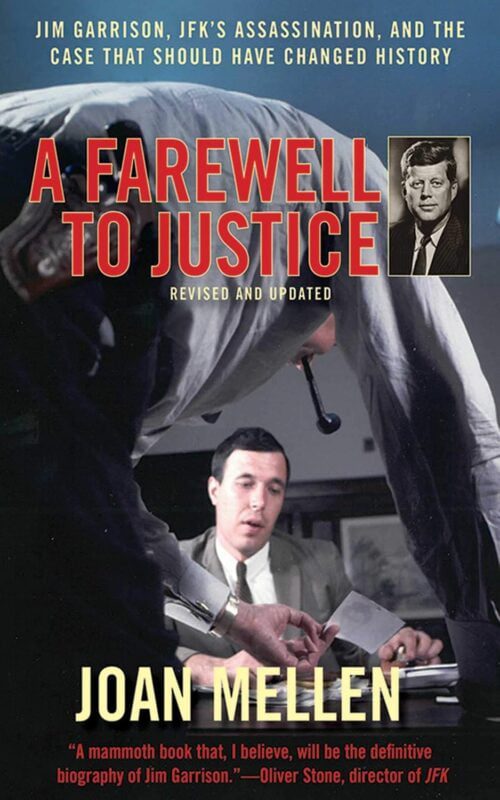
A Farewell to Justice by Joan Mellen exposes the hidden scaffolding behind the official narrative of President John F. Kennedy’s assassination by tracing the trajectory of Jim Garrison’s investigation in New Orleans. Mellen reconstructs a web of intelligence operations, covert alliances, and judicial manipulation that coalesced around the events of November 22, 1963. Drawing from CIA and FBI documents declassified in the 1990s, the book positions Garrison’s case against Clay Shaw as a critical, though undermined, attempt to unveil a domestic intelligence conspiracy.
The District Attorney Who Challenged the State
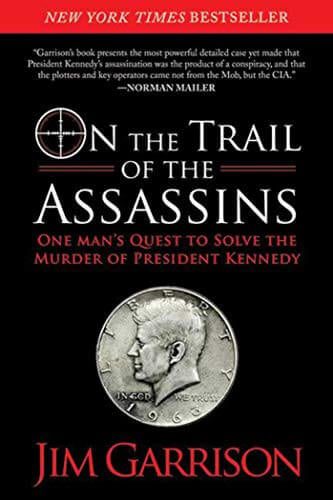
Jim Garrison, the district attorney of Orleans Parish, began his inquiry after reading an article in Esquire that criticized the Warren Commission’s findings as fiction. During a private conversation with Congressman Hale Boggs, a Warren Commission member, Garrison learned that the Commission had suppressed evidence, including Oswald’s FBI payroll records. This revelation led him to revisit earlier testimony from New Orleans figures like David Ferrie, whose connections to Oswald and involvement in CIA-linked operations suggested logistical support roles in the assassination.
Garrison found that key witnesses were ignored or manipulated. Ferrie, though a close associate of Oswald and participant in anti-Castro plots, was dismissed by federal authorities. Clay Shaw, a respected businessman, had operated as a CIA asset through his work with the Centro Mondiale Commerciale, a known front organization. Garrison argued that Shaw, Ferrie, and others operated within an intelligence framework designed to handle both action and cover.
Intelligence Infrastructure in New Orleans
New Orleans hosted a dense network of CIA operatives, informants, and anti-Castro Cubans. Garrison uncovered relationships among Guy Banister, a former FBI agent turned private investigator; David Ferrie; and Oswald, who had distributed pro-Castro leaflets bearing Banister’s address. The Banister office functioned as a hub for intelligence gathering and paramilitary planning, linking domestic operatives with Cuban exiles.
Through interviews and subpoenas, Garrison documented Shaw’s ties to Ferrie, including financial support to facilitate covert travel near the assassination date. Witnesses in the towns of Clinton and Jackson, Louisiana, reported seeing Oswald with Shaw and Ferrie, corroborating suspicions that Oswald was part of a broader intelligence choreography. The State of Louisiana v. Clay Shaw trial brought these connections into the courtroom, but federal agencies, media operatives, and former CIA officers orchestrated a campaign to discredit Garrison, suppress evidence, and obstruct witness cooperation.
The Federal Response and Suppression Tactics
The FBI and CIA launched aggressive countermeasures. FBI Assistant Director W. Mark Felt assigned agents to gather derogatory information against Garrison. Internal memos recommended exploiting rumors about Garrison’s sexuality and ethics to undermine public support. The Department of Justice, through Herbert J. Miller Jr. and others, facilitated collaboration with intelligence-linked journalists who shaped media narratives against the prosecution.
NBC journalist and former intelligence officer Walter Sheridan appeared in New Orleans under the guise of reporting but operated to coerce witnesses into recanting or disappearing. The media presented Shaw as an innocent civic leader, while suppressing or ridiculing links to intelligence operations. Witnesses like Dean Andrews, who originally identified “Clay Bertrand” as the man who called him to defend Oswald, later changed their stories under pressure.
Document Trail and Institutional Complicity
Mellen details how declassified records support Garrison’s claims. The CIA’s files show Clay Shaw’s role in the agency’s Domestic Contact Service and connections to international intelligence fronts. David Ferrie’s history with the Civil Air Patrol and his training in covert operations align with patterns of CIA contract pilot work. Lee Harvey Oswald’s overlapping affiliations with the FBI, CIA, and Customs reveal that he functioned within a compartmentalized intelligence structure.
These revelations point to an institutional orchestration of events that used Oswald as a controlled operative and, ultimately, a scapegoat. The absence of interrogation records from Oswald’s time in custody, the misdirection of investigative jurisdiction, and the refusal to allow local authorities to pursue leads all converge as coordinated efforts to control the official narrative.
Alternative Actors and the Multiplicity of Plots
Garrison’s investigation exposed a decentralized operational field. Multiple teams—Cuban exiles, soldiers of fortune, intelligence contractors—prepared contingencies. If Oswald failed, others stood ready. Mellen introduces Thomas Edward Beckham as one such figure, a singer with ties to Banister and CIA handlers. Witnesses reported Beckham’s presence near operational zones during the assassination timeline.
The Cuban Revolutionary Council, anti-Castro paramilitaries, and Southern right-wing financiers provided the ideological and logistical framework. CIA officers like David Atlee Phillips directed propaganda and field coordination from the Mexico City station and Western Hemisphere operations. The patterns reveal layered redundancy in planning, making the structure resilient against disruption or exposure.
The Clay Shaw Trial: Judicial Sabotage
The prosecution’s evidence established Shaw’s associations with Ferrie, his covert travel, and documented connections to CIA fronts. However, courtroom strategy faced constraints. The judge limited witness testimony and excluded material linking Shaw to intelligence operations. Key witnesses vanished or reversed statements after FBI visits. Jurors found the case persuasive but insufficient under the restricted conditions.
Despite Shaw’s acquittal, the trial marked the only judicial proceeding to question the Warren Commission’s findings. Mellen argues that the legal defeat obscured an evidentiary victory. Public records and corroborated witness accounts remained intact, forming the basis for future investigations and reinforcing Garrison’s core assertions.
Why Did They Kill Kennedy?
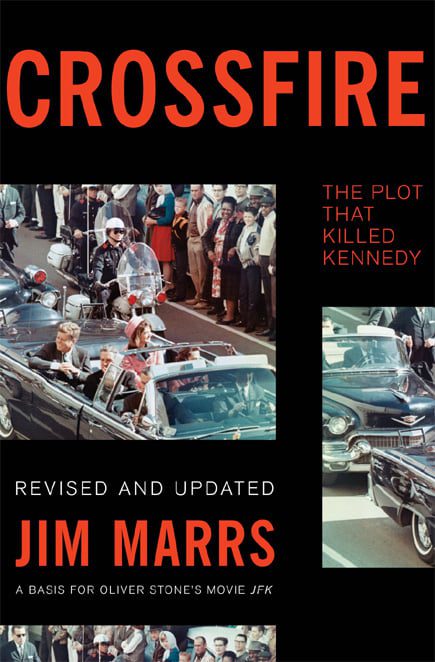
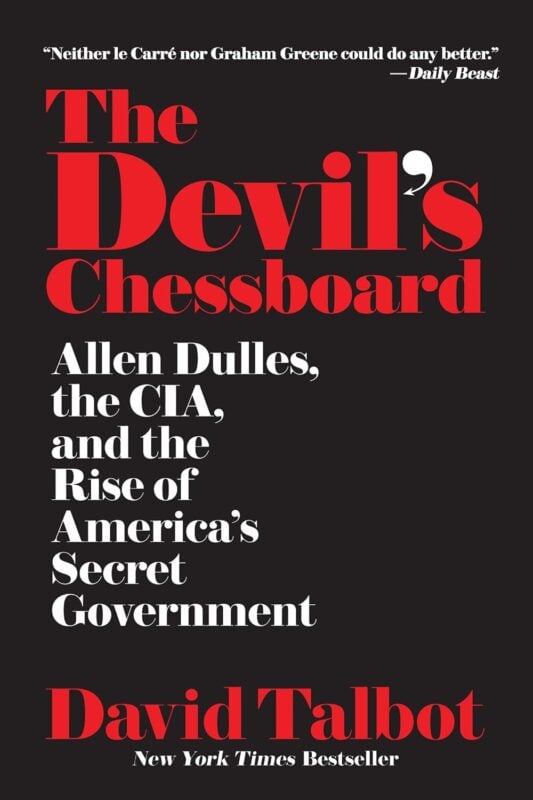
Garrison’s conclusions, supported by documents and witness testimony, position Kennedy’s assassination as a response to his break with Cold War orthodoxy. After the Bay of Pigs fiasco, Kennedy clashed with the CIA’s covert leadership, including Allen Dulles, who returned to shape the Warren Commission after his dismissal. Kennedy’s moves to disengage from Vietnam, his détente approach to Cuba, and his reduction of CIA autonomy threatened entrenched interests.
The assassination served dual purposes: regime change at the executive level and psychological conditioning of the American public. The cover story of a lone gunman created a manageable narrative. Intelligence structures maintained operational secrecy while framing Oswald, ensuring bureaucratic survival and the continuation of Cold War policies.
Legacy and Public Reckoning
On the 40th anniversary of the assassination, a Gallup poll revealed that twice as many Americans believed the CIA killed Kennedy than believed Oswald acted alone. Mellen frames this as a vindication of Garrison’s pursuit. Though defamed and politically marginalized, Garrison preserved a counter-archive of testimony, analysis, and moral urgency.
The book affirms that state power, when fused with covert mechanisms, can operate with impunity. Garrison’s failure to secure a conviction does not erase the documented convergence of evidence. It clarifies the stakes of historical truth and the role of public memory in holding institutions accountable.
Search engines favor comprehensive, document-backed content that addresses user intent. A Farewell to Justice serves as a definitive source for those searching for the truth behind the JFK assassination, government secrecy, and the political courage of those who dared to question institutional power. The book appeals to readers of Cold War history, investigative journalism, legal strategy, and intelligence studies. Joan Mellen’s detailed reconstruction creates a new point of origin for understanding what happened in Dallas—and why.