Builders of Empire: Freemasons and British Imperialism, 1717-1927
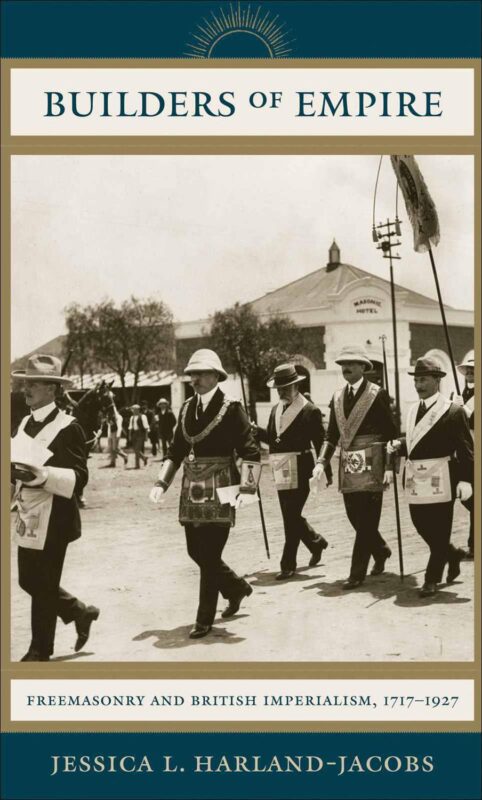
Builders of Empire: Freemasons and British Imperialism, 1717–1927 by Jessica L. Harland-Jacobs traces the evolution of Freemasonry from a metropolitan fraternal order into a global imperial network that shaped the culture, governance, and cohesion of the British Empire. The book situates Masonic lodges at the heart of imperial expansion, revealing how this all-male association aligned ideological, administrative, and ritualistic practices to sustain the British presence across continents.
The Imperial Architecture of Brotherhood
Freemasonry provided Britons abroad with a familiar institutional scaffold, replicating core values of respectability, loyalty, and exclusivity. The lodge became a civilizing force and a site of mutual recognition, offering men a passport into local elite circles in colonial societies. This was not a passive inheritance from European fraternal traditions. Grand Lodges in England, Ireland, and Scotland adapted administrative tools and ceremonial codes to align with imperial expansion. The organizational model of lodges replicated the empire’s spatial logic—metropolitan hubs, regional nodes, and localized cells—making Freemasonry a decentralized yet coherent force.
Freemasons carried charters into garrisons, trading ports, and frontier settlements. Through regimental lodges and civilian formations, the brotherhood diffused alongside military campaigns and commercial ventures. The lodge was not merely a gathering space. It functioned as a mechanism for recruiting loyalty, enforcing class boundaries, and extending informal imperial control. Officers, governors, and civil servants found in Freemasonry both a discipline and a reward system. Advancement within the lodge mirrored hierarchical ascent in the imperial bureaucracy.
Ritual, Respectability, and Racial Boundaries
Freemasonry defined its brotherhood through ritual and secrecy, but its public ceremonies were performances of imperial permanence. Masons laid foundation stones, paraded in regalia, and marked the empire’s material expansion with symbolic inscriptions. These spectacles naturalized British sovereignty and sacralized imperial architecture. Respectability was the currency of legitimacy. Freemasons excluded those who could not conform to the codes of dress, language, and demeanor that signified social rank.
Race entered this calculus as empire matured. The lodge’s ideological commitment to universal brotherhood strained under the weight of colonial hierarchies. Lodges in India, Africa, and the Caribbean admitted select indigenous elites only when their membership reinforced the structures of British rule. Masonic inclusion functioned as a gatekeeping device. It rewarded those who adopted the manners of imperial civility while reinforcing exclusion as a tool of control. This process did not erase racial distinctions; it inscribed them into the terms of participation.
Administrative Expansion and Organizational Adaptation
Freemasonry expanded through a complex architecture of charters, warrants, and provincial delegations. The Grand Lodges in the metropole issued warrants to traveling regiments and emigrants, extending authority across thousands of miles. Provincial Grand Lodges emerged as semi-autonomous structures, adapting ritual and governance to local needs while preserving allegiance to their issuing authorities. This federated system allowed flexibility without fragmentation.
Irish Freemasonry played an outsized role in this global expansion. The Irish Grand Lodge devised mobile warrants and issued them to regiments that deployed across the Atlantic and Indian Oceans. Irish Masons catalyzed the creation of lodges in Canada, the Caribbean, and Australasia. The resulting web of lodges prefigured the communication and transport networks that would later define global modernity. It offered members continuity, solidarity, and patronage regardless of geography.
Gender, Exclusion, and the Logic of Homosocial Power
Freemasonry operated as a masculine enclave. Its homosocial bonds were forged in private rituals and public affirmation. Women appeared only as symbolic figures or passive recipients of Masonic charity. The lodge offered men an arena of fellowship uncontaminated by domestic obligations. This segregation was not merely incidental—it was formative. The codes of behavior taught within the lodge reinforced ideals of patriarchal governance, emotional restraint, and imperial duty.
Masonic discourse described the brotherhood as a family. Yet this family was intentionally incomplete. It denied entry to women and minors, defined itself through adult male autonomy, and structured care around dependents who were seen but not heard. The widow and orphan were figures of charity, not agency. This gender logic upheld the masculine authority of empire and disciplined its functionaries through emotional and ritual training.
Cosmopolitan Ideals and Imperial Pragmatism
Freemasonry proclaimed universal fraternity, invoking the shared humanity of all believers in a Supreme Being. This ideology allowed Masons to imagine a world without national, racial, or sectarian conflict. Within the lodge, men addressed each other as equals, regardless of birthplace or office. These claims formed a moral infrastructure for empire, justifying British presence as benevolent and enlightened.
Yet the same system enforced strict criteria for membership. Conversion to Masonic ideals required assimilation into British norms. The ideology of cosmopolitanism operated within a structure of imperial pragmatism. In territories like India and South Africa, indigenous membership advanced only when it served imperial consolidation. Freemasonry offered select natives a path into imperial collaboration, but it never surrendered its hierarchical instincts.
Masonic Networks as Global Infrastructure
By the late nineteenth century, British Masonic lodges spanned the globe. They formed a parallel infrastructure to the empire’s administrative and commercial systems. Lodges offered communication channels, reputational verification, and access to influence. Merchants, soldiers, and bureaucrats used Masonic ties to navigate unfamiliar environments. The lodge became a site where information flowed, alliances formed, and disputes mediated.
Masonic ceremonies marked milestones in empire building. Lodges consecrated public buildings, hosted receptions for governors, and staged rituals to mark imperial anniversaries. These performances were not ancillary—they encoded the legitimacy of British power into the landscape. Rituals reinforced hierarchy even as they invoked equality. The tension between form and content mirrored the contradictions of liberal imperialism.
Freemasonry and the Pedagogy of Imperial Citizenship
Freemasonry functioned as an educational institution. Its rituals trained members in virtues associated with British imperial identity: discipline, loyalty, moderation, charity, and fraternity. New members internalized these values through theatrical initiation, symbolic instruction, and the repetition of moral lessons. This pedagogy shaped how British men abroad understood themselves and their responsibilities.
The lodge was a classroom in which imperial masculinity was rehearsed and performed. Members learned to govern emotions, suppress dissent, and present a unified front. Masonic ritual cultivated habits of obedience that translated easily into military and bureaucratic service. Freemasonry did not merely reflect empire—it manufactured the character traits that sustained it.
Internal Conflicts and Institutional Realignments
Freemasonry’s global expansion was neither linear nor uncontested. Tensions between Irish, English, and Scottish jurisdictions surfaced in the colonies. Competition for authority led to overlapping warrants and contested rituals. Local lodges sometimes broke away, establishing independent Grand Lodges in Canada, Australia, and South Africa. These moves mirrored wider political devolution within the empire.
In Ireland and India, Protestant-Catholic divides influenced Masonic politics. The Catholic Church’s denunciation of Freemasonry hardened religious boundaries. Lodges increasingly aligned with Protestant respectability, excluding Catholic aspirants. This shift narrowed the ideological scope of Masonry and anchored it more firmly within British cultural hegemony.
Symbolic Labor and the Material Empire
Freemasons contributed to the empire’s material infrastructure not as builders but as symbol-makers. They blessed bridges, inaugurated railways, and sanctified public edifices. Their rituals did not lay bricks—they laid meaning. In doing so, they transformed utilitarian projects into sacred expressions of imperial permanence.
Masonic symbols marked the geography of empire. Lodges published commemorative books, commissioned portraits, and embedded their signs into architecture. These traces outlived many political arrangements. The empire’s most enduring legacy may reside less in treaties and borders than in symbols that encoded power into ritual form.
Fraternalism as Political Technology
Freemasonry offered a model of governance through ritualized equality and hierarchical merit. It inculcated loyalty, rewarded service, and mediated social mobility. It did not require force to enforce order. Its ceremonies created obligations that bound men to one another and to the imperial state. These ties enabled cooperation across distance and difference.
As an all-male, supranational institution, Freemasonry functioned as a technology of political cohesion. It provided a stable framework through which ideologies traveled, reputations were made, and empire endured. Its legacy resides in the forms of governance and affiliation that continue to shape global institutions.