Morals and Dogma of the Ancient and Accepted Scottish Rite of Freemasonry
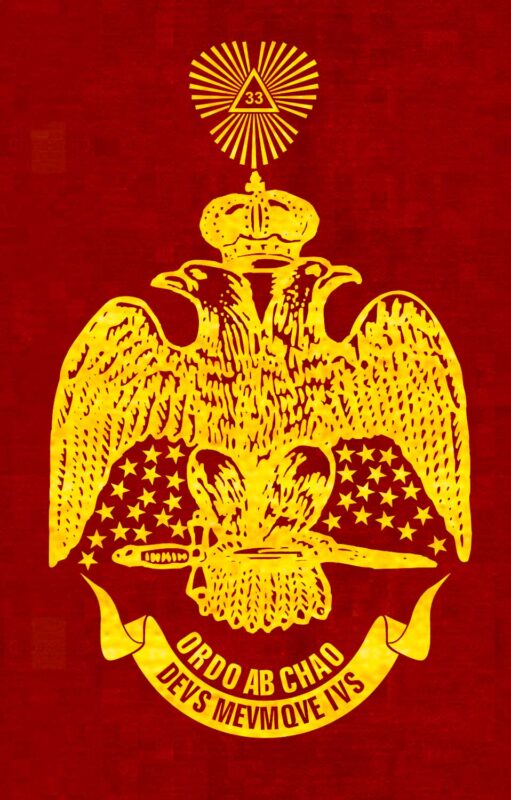
Morals and Dogma of the Ancient and Accepted Scottish Rite of Freemasonry by Albert Pike establishes a philosophical system grounded in ritual, symbol, and historical commentary that defines the Southern Jurisdiction of the Scottish Rite. Pike fuses esoteric traditions with political philosophy, tracing moral imperatives through ancient allegories and Masonic degrees. Written in 1871, the text claims to prepare Freemasons not merely for ceremonial observance but for intellectual, spiritual, and civic transformation.
Philosophy Through Allegory
Pike draws from mythology, religious texts, and classical philosophy to elevate Masonic symbols into vehicles of moral instruction. The volume opens with the Apprentice Degree, where he asserts that unregulated force—like an undisciplined populace—leads to ruin. Pike interprets Masonic tools such as the gavel and the twenty-four-inch rule as instruments of restraint and law, directing raw energy toward just outcomes. This force, once bound by intellect and principle, forms the foundation of liberty and social order.
Initiation as Moral Construction
The Lodge itself becomes a symbol of perfected governance, its geometry representing harmony among legislative, executive, and judicial powers. Pike correlates the transformation of the Rough Ashlar—the unrefined stone—into the Perfect Ashlar with the journey from civic disorder to constitutional government. He insists that ritual alone cannot produce enlightenment. Interpretation, reflection, and disciplined application animate the meaning of each degree. As a moral architect, the initiate must structure his soul and society through will, knowledge, and fidelity to law.
The Symbolic Cosmos
Celestial imagery underpins Masonic cosmology. Pike embeds the Sun, Moon, and Blazing Star in the architecture of the Lodge, assigning them philosophical dimensions. The Sun embodies truth and generative power. The Moon reflects receptivity and form. The Blazing Star becomes both divine presence and individual moral conscience. These elements form the symbolic triad that governs the Lodge’s interior light. This light, according to Pike, is the knowledge of balance—force harmonized by wisdom.
Degrees as Psychological Architecture
Each degree from Apprentice to Sublime Prince of the Royal Secret builds a psychological edifice that moves from individual discipline to social and metaphysical mastery. In the Fellow-Craft Degree, Pike links Masonic teachings to ancient mysteries, where hidden wisdom operated beneath surface religion. He reconstructs this process as a pedagogical method that advances through symbols. Degrees function as intellectual scaffolding, drawing the initiate upward through reflection, service, and self-governance.
Moral Law and Political Will
Pike argues that moral obligations extend from internal conscience to national character. He defines a Mason’s duty as resistance to tyranny and falsehood in all forms. He urges Masons to protest injustice, to confront corruption, and to commit to the elevation of society. The doctrine here is not passive obedience but active struggle against degradation. Justice and mercy, held in equilibrium, create civic harmony. Their union mirrors the twin columns Jachin and Boaz, pillars that frame the Masonic entrance into sacred labor.
Revelation Through Structure
The architectural metaphors of Freemasonry are not aesthetic flourishes. They model divine order translated into human form. The temple represents cosmic order. Its construction parallels the soul’s refinement through initiation. The candidate’s path from darkness to light maps a moral cosmology in which structure produces enlightenment. Each symbol, each angle, each ornament becomes a theological diagram. The cube, for example, reflects universal balance. Its six faces represent the visible structure of government; its hidden core holds the spiritual substance of law.
Religious Pluralism as Ethical Ground
Pike expands the religious scope of Freemasonry by insisting on the inclusion of sacred texts from all traditions. He declares that the Bible, the Koran, and the Pentateuch are equally valid on the Masonic altar. This pluralism affirms a broader moral architecture: religion as a source of ethical energy rather than doctrinal conformity. Prayer, faith, and divine aspiration function as moral forces within the Lodge. They connect internal discipline to cosmic order.
The Decalogue of Masonry
Pike formulates a Masonic decalogue, a tenfold commandment structure that fuses divine reverence with civic responsibility. These commandments emphasize action: do good for its own sake, resist vice, honor family, cherish friendship, restrain passion, forgive enemies, study human nature. The final injunction—love one another—becomes both ethical imperative and political doctrine. This love, defined by truth and justice, anchors the Masonic vision of a moral society governed by law and illumined by reason.
Symbol as Political Instrument
The most charged symbols in Morals and Dogma carry political weight. The Mosaic pavement, black and white tiles, signals the eternal contest between liberty and despotism. The pentagram, the blazing five-pointed star, signifies the possibility of enlightened order rising from revolutionary chaos. These are not abstract emblems. Pike wields them as tools for civic instruction and moral mobilization. They belong not to passive contemplation but to active formation of the just man and the just state.
Spiritual Mechanics of Sovereignty
Pike identifies the spiritual principles that make free government possible. Sovereignty rests not on violence but on harmony among wisdom, strength, and beauty. These three virtues—symbolized by the Masonic columns and officers—constitute a state’s moral geometry. When balanced, they produce liberty. When distorted, they yield decay. Through the compass and square, the Mason learns to measure not only stone but the ethical limits of authority. Through these instruments, the Lodge becomes a republic in miniature, a prototype of moral sovereignty.
Freemasonry as Transformational Discipline
Pike does not position Freemasonry as a static fraternity. He demands transformation. The initiate must become an agent of regeneration, carrying light into political, philosophical, and social darkness. This duty extends beyond ceremony into action. A Mason labors not for ritual precision but for moral clarity. He contends with falsehood, challenges injustice, elevates conscience, and embodies equity. This transformational arc, driven by symbols and degrees, prepares the soul for its civic and spiritual ascent.
Intellectual Ascent and Esoteric Craft
The initiate’s journey through the degrees parallels an ascent through layers of concealed meaning. Pike insists that only through intellectual effort does the initiate earn the insights encoded in ritual. The esoteric craft demands decoding. Philosophical systems, astronomical metaphors, and ancient texts form the labyrinth the Mason must traverse. This intellectual ascent, framed by degrees and guided by symbols, leads toward wisdom. The outcome is not abstract speculation but disciplined vision grounded in historical and civic engagement.
The Eternal Work of the Lodge
Morals and Dogma culminates in the affirmation that Masonry must persist in its duty to truth regardless of opposition. Pike warns of the enduring power of error and the need for constant vigilance. The work of the Lodge is perpetual. It does not end with initiation. It begins. The tools are moral discipline, civic responsibility, and philosophical inquiry. The edifice is built through struggle, guided by light, and sustained by fraternity. In this vision, Freemasonry becomes an eternal labor toward justice, carried forward by those who shape structure into meaning and ritual into reform.