Deep Politics and the Death of JFK
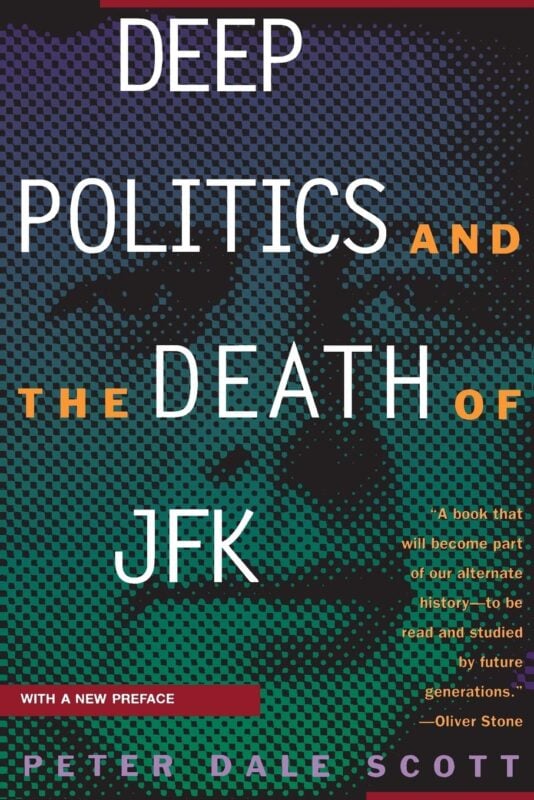
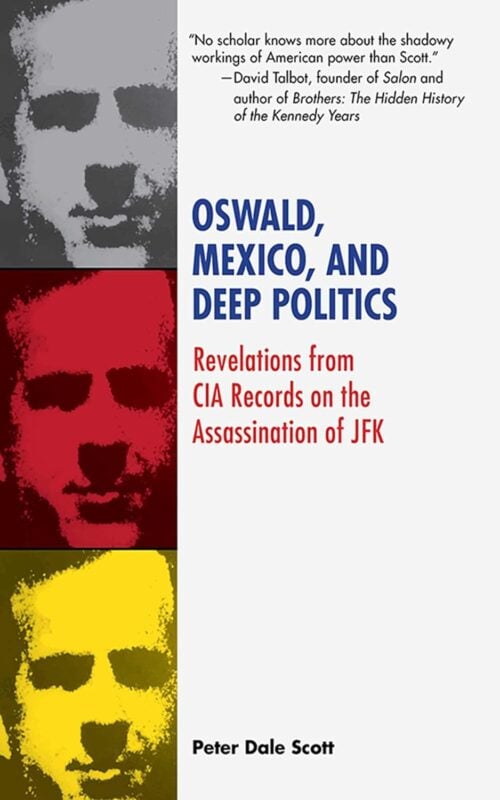
Peter Dale Scott’s Deep Politics and the Death of JFK investigates the assassination of President John F. Kennedy through a lens that reveals systemic corruption, covert alliances, and institutional complicity that extend beyond traditional conspiracy theories.
The Structure of Deep Politics
Deep politics refers to arrangements of power and policy that operate outside, alongside, or beneath the formal structures of government. These mechanisms of influence—covert, informal, sometimes criminal—shape national outcomes while remaining publicly unacknowledged. Scott identifies this framework within intelligence operations, law enforcement, organized crime, and media systems, revealing how they intersect to produce and protect violent events like the JFK assassination.
Unlike standard conspiracy frameworks that hinge on singular plots and orchestrated goals, deep politics introduces complex, adaptive systems. These systems function through relationships among autonomous power centers, such as the CIA, FBI, mob families, and corporate lobbies. They interact through mutual leverage, secrets, and unofficial channels of communication. These structures enable covert operations to flourish while insulating key players from scrutiny or accountability.
How Power Protects Itself
Jack Ruby’s murder of Lee Harvey Oswald, presented in the Warren Commission as an impulsive act by a lone operator, was enabled by police officers who cleared his access path into the Dallas police basement. The FBI suppressed polygraph evidence and concealed Ruby’s mafia affiliations by laundering affirmations through mob contacts presented as neutral sources. These maneuvers demonstrate not error but deliberate operational alignment. The institutions involved acted to manage narrative exposure, not truth.
The same pattern of protective behavior extended to media organizations. The New York Times, Life Magazine, and major television networks consistently endorsed the lone gunman theory, dismissing contradictory evidence, suppressing anomalies, and framing dissenters as unstable. These outlets not only failed to challenge official findings—they fortified them through selective reporting, editorial choices, and discrediting of critics. Public belief in Oswald’s sole guilt required sustained informational discipline.
Oswald’s Manufactured Identity
Oswald's actions, associations, and movements suggest an identity shaped for strategic use. His trip to Mexico City, meetings with Cuban and Soviet personnel, and broadcasted debates on anti-Castro propaganda platforms bear the hallmarks of an intelligence asset under controlled exposure. U.S. intelligence agencies, particularly the CIA, worked to tie Oswald to Soviet agent Valeriy Kostikov. This link, built through misrepresented intercepts and controlled leaks, created a narrative structure that could support Cold War escalation or justify retaliatory foreign action.
The construction of Oswald’s identity aligned with larger psychological operations aimed at Latin American audiences. Government-funded broadcasts, known as “truth tapes,” mirrored his radio appearances and carried scripted messages designed to discredit the Fair Play for Cuba Committee and elevate anti-Castro sentiment. These propagandistic productions were not anomalies—they were embedded within formal government operations and distributed internationally.
Watergate and the Continuum of Deep Political Practice
Scott maps connections between JFK’s assassination and later crises like Watergate, not through ideology but through shared actors and methods. CIA operative Howard Hunt, publicly described as retired, was operating under covert agency contract at a CIA-linked PR firm. Hunt’s reactivation coincided with Nixon’s rise and his subsequent fall. Agency figures involved in Cuban operations during the Kennedy era—Hunt, Frank Sturgis, Bernard Barker—resurfaced in the Watergate burglary. These personnel shifts were not accidental. They reflect internal continuity in the use of deniable assets for political control.
The Helms-Haldeman exchange during Watergate, in which Nixon invoked “the Bay of Pigs” as a code for deeper threats, reveals how memory of the Kennedy assassination served as leverage within elite negotiation. Nixon’s implicit threat—expose CIA involvement in Kennedy’s death—met with Helms’s strategic compliance. The result: temporary suppression of the FBI’s Mexico-based financial investigation. In this context, Watergate was not a separate scandal; it was an outgrowth of an entrenched system where exposure risk functioned as currency.
The Media’s Role in Managing Consensus
Major media institutions helped maintain narrative closure around the assassination by shaping public memory and filtering emerging evidence. Rather than investigating anomalies or engaging critical perspectives, they functioned as validators of the official story. Scott identifies repeated patterns of omission, distortion, and reputational attack targeting independent researchers and whistleblowers. These acts of narrative enforcement enabled the state to avoid legal and political confrontation with evidence that contradicted its position.
The media’s selective amplification of disinformation sources—such as CIA defector Yuri Nosenko and others with agency affiliations—demonstrates alignment with intelligence goals. Journalists were not merely deceived. They were, in documented cases, recruited and directed through operations designed to influence both foreign and domestic opinion. The Church Committee exposed that dozens of journalists and media figures had covert CIA ties. Some of their published materials were written or shaped by agency operatives.
Informants, Corruption, and Structural Accommodations
Deep politics thrives on institutional symbiosis. Law enforcement and organized crime appear opposed, but long-term relationships—often facilitated by informant status—blur this boundary. Informants gain leverage, protection, and access, becoming double agents whose actions serve both underworld and state interests. These relationships lead to systemic corruption, where protection becomes normalized, and policy becomes indistinguishable from compromise.
Scott describes how figures like Jackie Presser, a Teamsters official and mob associate, acted as FBI informants while directing illegal activities. His crimes received cover not in spite of his status but because of it. Presser participated in high-level political functions, including Reagan’s transition team. The logic of state protection extended not just to individuals but to networks that delivered control, information, or plausible deniability.
Institutions such as the FBI and CIA integrated criminal operatives into policy enforcement. In the case of postwar Italy, U.S. officials used mafia figures to counter communist influence. The outcome was not temporary alignment—it was the creation of a deep political infrastructure where coercion, collusion, and corruption became integral to state function.
Intellectual Resistance and Academic Censorship
American universities and academic journals have historically treated topics like the Kennedy assassination with dismissive reluctance. Scholars who challenge official narratives face reputational damage, publishing hurdles, and exclusion from mainstream discourse. Scott documents how his earlier works received hostile reviews not for methodological errors but for their political implications. Foundations with covert ties to intelligence agencies funded think tanks and journals that marginalized dissent and promoted institutional orthodoxy.
The Foreign Policy Research Institute, funded through CIA channels, criticized Scott’s work as conspiratorial despite its sourcing from declassified records. University presses risked political backlash for publishing materials that contested official histories. As a result, intellectual culture mirrored the broader media environment, closing ranks around the myth of lawful continuity and casting doubt on systemic critiques.
Deep Politics as Historical Method
Scott proposes deep politics as a method for understanding historical continuity across crises. This method seeks the persistent mechanisms behind apparent events—the structures, relationships, and convergences that produce state violence and insulate it from accountability. Deep political analysis tracks actors, follow-up actions, and the maintenance of official stories rather than searching for singular plots or discrete moments.
The assassination of John F. Kennedy is treated as a convergence point, not an endpoint. It connects intelligence operations, media control, criminal syndicates, political maneuvering, and bureaucratic secrecy into a functioning system. This system does not depend on centralized orchestration. It operates through mutual accommodation, shared interest, and the suppression of disclosure.
The Conditions of Possibility
What system could allow the President’s murder to remain unresolved despite public attention and legislative inquiry? Scott answers through structural diagnosis. The American state, in its core functions, relies on covert accommodations that cannot withstand exposure. These accommodations—informant cover-ups, media complicity, prosecutorial discretion, political alliances—constitute the deep political system. It is not a theory. It is a recurring pattern of how power manages risk, protects its agents, and controls narrative.
The murder of a head of state, the obfuscation of evidence, the elevation of disinformation, and the silencing of inquiry form a chain of causality. Each link serves a purpose: preserving institutional legitimacy while protecting the actors who serve its covert needs. This system does not dissolve under scrutiny. It adapts by redirecting attention, reassigning blame, and revalidating its own authority through controlled disclosure.
Only by naming this system—deep politics—and tracing its structure across decades can one understand how the assassination of John F. Kennedy became both a rupture and a function of American governance. Peter Dale Scott does not offer closure. He opens a path of inquiry that links historical truth to structural change.