Full Spectrum Dominance: Totalitarian Democracy in the New World Order

Full Spectrum Dominance: Totalitarian Democracy in the New World Order by F. William Engdahl examines how the United States leveraged its position after the Cold War to pursue a strategy aimed at unchallenged global military and economic control. Engdahl traces this doctrine through the lens of geopolitical strategy, military build-up, and economic intervention, asserting that the collapse of the Soviet Union opened the door for an aggressive expansionist agenda rooted in securing control over Eurasia.
The Fall of the Berlin Wall and Strategic Opportunity
As the Berlin Wall crumbled in 1989, geopolitical foundations shifted. The Soviet Union, exhausted from its arms race with the United States, dissolved its ideological and military infrastructure. This collapse offered the U.S. a pivotal chance to reshape global dynamics. President George H.W. Bush’s administration, shaped by Cold War intelligence and defense structures, perceived this not as a chance for reconciliation, but as a strategic void to exploit. Engdahl situates this reaction within the larger context of a permanent war economy, driven by defense contractors, intelligence agencies, and multinational corporations. The U.S. leadership did not reduce its military posture; it refined and expanded it, beginning the incremental execution of a global doctrine termed Full Spectrum Dominance.
From Cold War to Totalitarian Democracy
Engdahl defines “totalitarian democracy” as a system where democratic language masks geopolitical conquest. The United States advanced its hegemony not through open colonization but through economic coercion, regime change, and strategic alliances. Under this model, nations are reshaped to serve U.S. interests, often under the banner of human rights or market reform. NATO expansion, despite prior agreements with Russia, became a linchpin of this strategy. Each step eastward undermined Russian security guarantees, laying the groundwork for tension and conflict. These actions, disguised as democratic support, operated through NGOs, financial instruments, and direct political interference.
Color Revolutions and Synthetic Uprisings
A significant tactic in the execution of Full Spectrum Dominance came in the form of orchestrated uprisings. The so-called Color Revolutions in Eastern Europe and Central Asia used local grievances as fuel but relied heavily on foreign funding, strategic communication, and organizational models designed in Washington. Engdahl identifies entities like the National Endowment for Democracy and USAID as instruments of subversive diplomacy. These interventions fostered new elites aligned with Western interests, dismantled public sectors, and opened economies to global capital flows. Electoral processes became mechanisms for validating externally managed transitions.
The Eurasian Chessboard
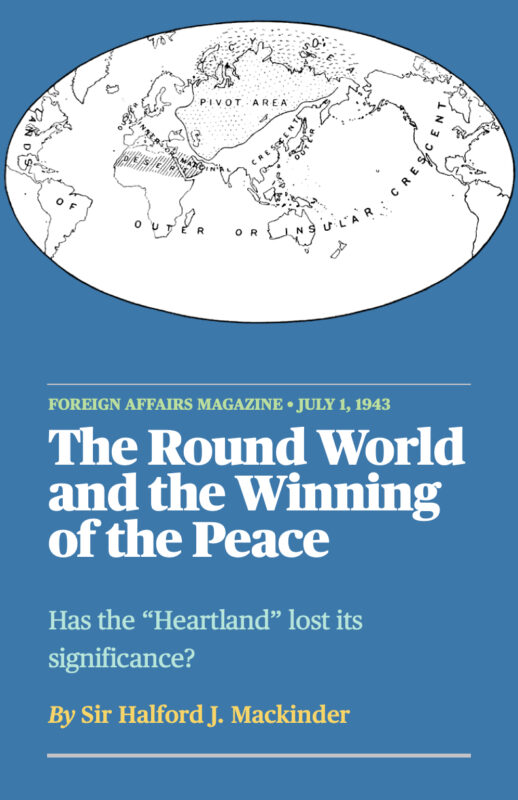
Geopolitical theory underpins Engdahl’s narrative. Drawing from Halford Mackinder’s “Heartland Theory,” he details how U.S. foreign policy centers on denying any rival power the ability to consolidate Eurasia. This imperative manifests in continuous pressure on Russia and China, not as isolated antagonists but as potential integrators of a vast resource-rich continent. The strategic rationale involves pipelines, rare earths, logistics corridors, and financial systems. Every war, sanction, and treaty becomes a move in a broader chess game where the stakes include global monetary control and military reach.
Military Bases and the Infrastructure of Hegemony
The global deployment of U.S. military bases constitutes a central pillar of Full Spectrum Dominance. Engdahl documents the proliferation of installations from the Balkans to Central Asia, creating a lattice of logistical superiority and rapid deployment capacity. These bases function as political levers and as pre-positioning points for future conflicts. The military-industrial complex, in Engdahl’s view, drives this proliferation not solely for defense but as a business model where the enemy is perpetual. The war on terror provided a durable justification, expanding U.S. military roles in Africa, the Middle East, and Southeast Asia.
Weaponizing Human Rights
Engdahl presents humanitarianism as another tool of strategic influence. From Darfur to Tibet, narratives of oppression become catalysts for intervention or diplomatic isolation. Western media, think tanks, and advocacy groups produce a consensus that aligns moral outrage with military or economic pressure. These campaigns, he argues, lack consistency but serve geopolitical ends. Countries that resist U.S. influence often face condemnation, sanctions, or insurgency framed in terms of democracy and freedom. The real metric of concern is alignment with U.S. strategic interests, not the condition of civil society.
The Missile Shield and Nuclear Primacy
Central to the doctrine of Full Spectrum Dominance is the revival of nuclear first-strike capability. Engdahl explores how missile defense systems in Poland and the Czech Republic destabilize the doctrine of mutual assured destruction. Rather than protect against rogue states, these systems close the response window for Russian retaliation, undermining strategic stability. The Pentagon’s aim is to render any counter-force obsolete, allowing for unreciprocated strikes if necessary. These moves reignite the arms race under a new guise, increasing the risk of miscalculation and pre-emptive war.
From Iraq to Georgia: Tactical Execution
Wars in the Middle East and interventions in the post-Soviet space demonstrate the application of Full Spectrum Dominance. Engdahl views the 2003 invasion of Iraq as a test case for controlling energy corridors and reshaping regional orders. The 2008 conflict in Georgia revealed the consequences of pushing NATO influence to Russia’s doorstep. Each flashpoint reflects a unified doctrine where military, political, and economic tools converge. These engagements serve broader aims: denying regional powers strategic depth, controlling resources, and testing military doctrines in live environments.
Permanent War and the National Security State
The institutional structure behind Full Spectrum Dominance maintains a state of continual war readiness. Engdahl traces this lineage to the early Cold War, where planners envisioned perpetual geopolitical competition. In this model, peace becomes structurally impossible because it threatens the system’s justification. Intelligence agencies, defense contractors, and policy think tanks form a closed ecosystem where threats must persist to secure funding and relevance. Laws passed in the name of security erode civil liberties, creating domestic environments where dissent is equated with disloyalty.
The Strategic Role of Energy Control
Control over energy supplies underpins the economic strategy of dominance. Engdahl illustrates how oil pipelines, production contracts, and currency regimes intersect with military objectives. Securing transit routes and influencing energy pricing enables the United States to shape global markets and punish defiance. Petrodollar recycling reinforces U.S. financial supremacy, binding producers to American debt markets. Countries that attempt independent energy policies—such as Iraq under Saddam Hussein or Iran—face direct or indirect retaliation. Energy policy becomes indistinguishable from national security doctrine.
Space, Cyberspace, and the Next Frontier
Dominance extends into emerging domains. Engdahl explores how the militarization of space and the digitization of warfare form the next phase of strategic expansion. Satellites, cyber operations, and AI-integrated defense systems are not technological sidelines but central components of a strategy that seeks preemption and surveillance superiority. The ambition encompasses global positioning, real-time battlefield management, and control over information flows. These systems redefine the theater of war, erasing geographic limitations and integrating civilian infrastructure into combat calculations.
The Continuity of Doctrine Under Changing Administrations
Despite political changes, Engdahl sees continuity in strategic aims. From Bush to Obama, and beyond, the personnel and policies shaping military and economic dominance remain structurally aligned. Key appointments, legislative priorities, and budget allocations reflect consensus on maintaining supremacy. Presidents may modify rhetoric, but the doctrine persists. Military budgets grow, interventions continue, and NATO expands. This consistency reflects institutional inertia, where policy stems not from ideology but from entrenched interests with decades-long horizons.
Conclusion: The Logic of Empire
Full Spectrum Dominance functions not as a defensive measure but as an affirmative project of global rule. Engdahl argues that this logic sustains itself through a cycle of threat inflation, technological escalation, and geopolitical engineering. The consequences include perpetual instability, strategic confrontation, and the erosion of democratic institutions both abroad and at home. The doctrine does not adapt to a multipolar world; it attempts to prevent one from forming. Its success depends on managing perception, suppressing alternatives, and projecting force in every domain of human activity.